



Set against an expansive mountain and forest landscape, traditional cultural traits of the Hmông people were vibrantly recreated through arts performances, folk games, handicrafts, and signature cuisine. These experiential activities are paving a new path, transforming cultural identity into a vital resource for community-based tourism development across the highlands of Điện Biên.
.jpg)
Upon arriving at Tù Lu - Tìa Ló Community Tourism Village, delegates and visitors were greeted by the bustling resonance of panpipe melodies, graceful dances, and vibrant ethnic costumes worn by the Hmông villagers. The welcoming arts program, rich in ethnic identity, cultivated an intimate and warm exchange between the local Hmông community and visiting delegations. Throughout the tour, cultural features ingrained in daily life were dynamically showcased, serving as focal attractions that captivated travelers.
.jpg)
Tù Lu - Tìa Ló is a Hmông village situated in Pu Nhi commune at an altitude exceeding 1,200m above sea level. Established around 1966 with just nine households, the village has expanded to 166 households and 781 residents, 100% of whom belong to the Hmông ethnic group. Nestled at the foothills of the Phù Lồng mountain range, the village possesses pristine natural scenery, a cool year-round climate, undulating mountain slopes, and distinctive cultural spaces of the Hmông community. The name “Tù Lu - Tìa Ló” is closely tied to indigenous culture, where Tù Lu refers to a traditional spinning top, while Tìa Ló denotes the geographical terrain and regional flora. These natural, historical, and cultural elements laid the groundwork for local authorities to orient the development of a community tourism model, positioning the village as an alluring destination along exploratory journeys through highland Điện Biên.
.jpg)
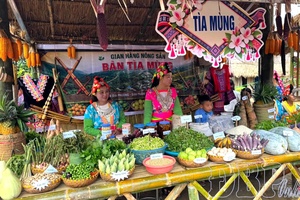
During the tour, the Tù Lu - Tìa Ló tourism market space became a favored stop for numerous delegates and visitors. Stalls displaying local agricultural produce and traditional handicrafts alongside folk music performances generated an animated highland atmosphere. Tourists immersed themselves in daily village life, exploring blacksmith knife-forging and brocade weaving; donning traditional Hmông attire; and watching excerpts of rituals praying for peace, bumper harvests, and ancestor worship. Each activity embodied distinct cultural values, helping participants gain deeper insights into local customs, beliefs, and spiritual traditions.
Folk games - such as playing tù lu (spinning tops), throwing pao, crossbow shooting, and pounding giầy cakes - fostered lively interactive exchanges. Crowds gathered around the playing grounds, while cheerful cheers and active tourist participation rendered the Hmông cultural atmosphere vibrant and approachable. Through firsthand experiences, visitors gained a more profound appreciation of traditional heritage while observing how locals preserve and leverage cultural assets to serve tourism development.
.jpg)
As one of 36 members of the Thanh Hóa delegation participating in the program, Thao Thị Du, a Hmông resident from Pù Nhi commune, Thanh Hóa province, expressed admiration for the tourism approach of the Hmông community in Tù Lu - Tìa Ló. She shared: “The Hmông people in Điện Biên have preserved distinctive cultural traits. What impresses me most is that locals know how to harness traditional values to develop tourism in a methodical, modern manner. In Thanh Hóa, our natural scenery is breathtaking, yet community tourism models among the Hmông remain underdeveloped. By visiting and directly partaking in activities like giầy cake pounding, pao throwing, and top spinning, I find the approach in Tù Lu - Tìa Ló well worth emulating. The crucial element is that residents retain traditional culture while updating economic mindsets to advance tourism.”
Impressed by the landscape and hospitality, artisan Thao Văn Lâu, a Black Hmông resident from Nhi Sơn commune, Thanh Hóa province, stated: “This is my first visit to Tù Lu - Tìa Ló. The scenery is magnificent, and the atmosphere is lively and festive. The people, traditional garments, and numerous cultural traits share strong affinities with our Hmông community in Thanh Hóa, making it feel very close and familiar. I particularly admire how villagers organize experiential activities for tourism, which both preserves culture and draws travelers. As part of an official delegation, my time for exploration this trip was limited. Given the chance, I will certainly bring my family back to visit and experience more.”
.jpg)
Alongside cultural activities, traditional culinary experiences left lasting impressions on visitors. Distinctive Hmông dishes - such as thắng cố, mèn mén, and boiled chicken - were served in dining spaces steeped in highland flavor. Preparation techniques, authentic tastes, and community dining customs contributed to the appeal of exploring Tù Lu - Tìa Ló. For many travelers, savoring traditional food provides an intimate gateway to understanding local cultural life.
Hoàng Thị Lan, from Quảng Lâm commune, Cao Bằng province, commented: “I was very impressed with the traditional food of the Hmông people in Tù Lu - Tìa Ló Community Tourism Village, especially thắng cố, mèn mén, and boiled chicken. Each dish carries a unique flavor reflecting local culinary customs and habits. What I enjoyed most was enjoying rustic dishes within a traditional cultural setting, feeling the warmth and hospitality of the people. I believe cuisine is a key strength for developing community tourism, as visitors wish to explore scenic landscapes, learn about culture, and enjoy authentic Hmông dishes. With enhanced promotion, these specialties will undoubtedly add allure, enticing visitors to linger longer in Tù Lu - Tìa Ló.”
.jpg)
Organizing the tour to experience Tù Lu - Tìa Ló within the framework of the 4th Hmông Ethnic Cultural Festival in 2026 carries practical significance for tourism promotion across Pu Nhi commune. It serves as an occasion for the locality to showcase natural and cultural potentials, while gathering feedback from delegations and tourists to refine tourism products and elevate service quality. Through these experiences, traditional cultural values are closely linked with economic development, heightening residents’ awareness of their core role in building and sustaining community tourism.
Although the festival has drawn to a close, the echoes of panpipes, spinning tops, colorful costumes, and flavorful Hmông cuisine linger with delegates and visitors. The experiences at Tù Lu - Tìa Ló on October 11 helped promote the image of a culturally rich, hospitable, and promising Hmông village. Buoyed by positive reception from tourists and collective efforts from authorities and residents, Tù Lu - Tìa Ló is gaining fresh momentum to perfect signature offerings, progressively affirming its appeal as a premier community tourism destination in the highlands of Điện Biên.
Diệp Chi
.jpg)
.jpg)


.jpg)
.jpg)


.jpg)


.jpg)

.jpg)
.jpg)
.jpg)
You have 500/500 characters left
Please enter 5 or more characters!!!