



Efforts to improve medical examination and treatment, manage community health and promote digital transformation are receiving greater attention, helping local healthcare facilities play a stronger role in protecting and improving public health within their communities.
Early in the morning, residents were already arriving at Pu Nhi commune health station for medical services. Some were having their blood pressure checked, others were picking up medication, while others received advice from healthcare workers on diet, medication use and health monitoring. This familiar daily routine includes medical examinations, infectious disease prevention and control, and the monitoring and management of chronic conditions.
Following the administrative restructuring, Pu Nhi commune health station is now responsible for 16 villages with a combined population of more than 10,100. Its service area is extensive and its workload has increased, requiring healthcare workers to take on a wide range of responsibilities, from medical examinations and treatment, disease prevention and control, and vaccination to the management of noncommunicable diseases and public health education to encourage residents to take a more active role in caring for their health.
Vũ Văn Quân, deputy director in charge of Pu Nhi commune health station, said the facility has 19 healthcare workers, including one doctor with a Level I specialist qualification, six public health graduates, four midwives, two pharmacists, three nurses and three general medical practitioners. The staff are assigned to specific areas of responsibility, while closer coordination is encouraged to ensure the effective delivery of medical services and healthcare for local residents.
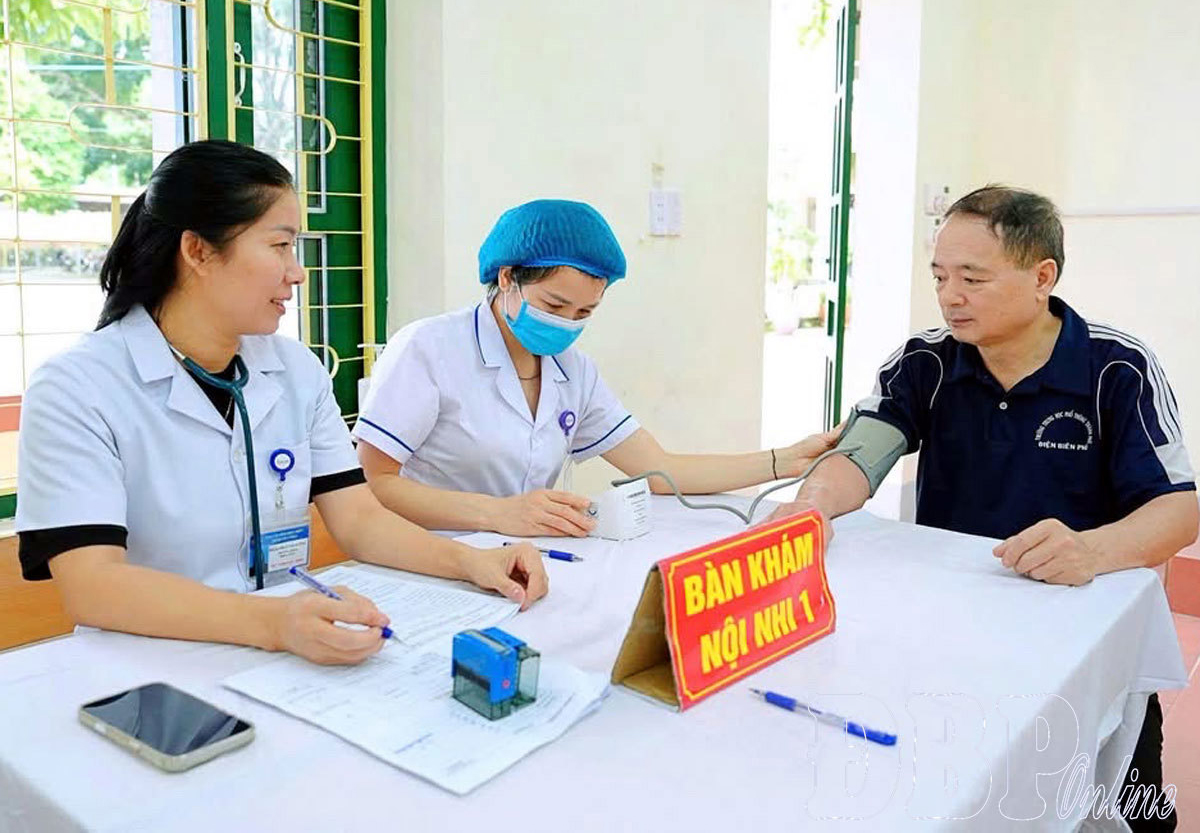
Healthcare workers do more than provide medical services at the station. They also proactively bring health education activities to individual villages. During the first nine months of 2026, Pu Nhi commune health station conducted in-person outreach activities in all 16 villages, providing information on disease prevention and control, nutrition, maternal and child healthcare, and the prevention of noncommunicable diseases. Residents were also encouraged to adopt measures to protect their health. These efforts have helped raise public awareness and foster a stronger habit of disease prevention within the community.
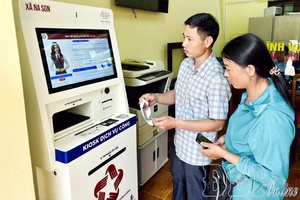
At Na Sang commune health station, patient management was previously based mainly on paper records. Today, health data are updated and accessed through an electronic system, making it easier for healthcare workers to monitor patients' treatment histories.
Phạm Văn Thảo, a healthcare worker at Na Sang commune health station, said information technology has made patient management more systematic and efficient. When patients arrive for examinations, healthcare workers can simply scan their citizen ID cards to access their medical histories, including records of treatment at higher-level healthcare facilities. This makes it easier to monitor disease progression, dispense medication and provide treatment advice.
Integrating health insurance information with electronic health records also reduces administrative procedures for residents. Instead of carrying multiple documents, they can use their citizen ID cards to complete procedures for medical examinations and treatment. Healthcare workers can then update patient information, review treatment histories and maintain continuous patient records.
The province currently has 45 commune-level health stations and 67 satellite health facilities, forming a healthcare network that extends across residential areas. Alongside improvements to infrastructure and operational methods, these facilities are gradually enhancing service quality, making it easier for residents to receive medical examinations and have their health monitored and managed close to home.
Lường Thị Phích, a resident of Huổi Chan 1 village in Mường Pồn commune, said: “I have high blood pressure, so I come to the health station every month to collect my medication. The doctors and healthcare workers here are very dedicated. They advise me to eat less salt and avoid certain foods so I can manage my condition safely. That gives me great peace of mind.”
To strengthen its capacity to provide medical services, Mường Pồn commune health station has been gradually upgrading its facilities and equipment. In early 2026, it received a general-purpose ultrasound machine, giving healthcare workers additional support in detecting and screening for certain abnormalities involving the abdomen, pregnancy-related conditions, tumors, kidney stones and gallstones. Based on examination results, patients receive medical advice and follow-up care or are referred to higher-level facilities when specialized treatment is needed.
Quàng Thị Dung, Deputy Head of Mường Pồn commune health station, said the new equipment provides healthcare workers with an additional tool for examinations, screening and early disease detection at the grassroots level. More importantly, it gives residents greater access to technical medical services in their own communities, particularly those who face difficulties traveling to healthcare facilities.
According to the Ministry of Health’s results for the nationwide free periodic health check-up program in October 2026, a cumulative total of 622,993 people in Điện Biên province had received health examinations, equivalent to 92% of the population and ranking the province third nationwide. All 45 of the province’s communes and wards had implemented the program. These results highlight the increasingly important role of grassroots healthcare services in providing primary care, enabling residents to receive examinations and consultations, benefit from early disease detection and have their health monitored within their own communities.
Alongside efforts to improve medical examination and treatment, commune health stations are stepping up disease prevention, chronic disease management and proactive community healthcare. Direct management by commune-level People’s Committees helps ensure that healthcare activities are more closely aligned with local conditions and residents’ needs, while the health sector continues to provide professional and technical support and guidance. These efforts are gradually strengthening grassroots healthcare capacity and helping residents, particularly those in mountainous areas, gain convenient and timely access to healthcare services where they live.
Minh Thảo



You have 500/500 characters left
Please enter 5 or more characters!!!