



Mường Nhé Secondary Ethnic Semi-Boarding School, Mường Nhé commune, currently has 148 cadres, teachers, and staff; of which 139 hold university degrees and 4 hold college degrees. Identifying staff quality as an important factor determining educational quality, the school focuses on professional and vocational training, raising the sense of responsibility and self-study spirit of each teacher.
Professional groups and teams maintain regular activities, focusing on exchanging issues arising during teaching, organizing class observations, model lessons, lesson study, and drawing experience. Teachers are facilitated to participate in training courses organized by the sector, undergoing regular refresher training under the requirements of the 2018 General Education Program, and renewing teaching, testing, and assessment methods toward developing student qualities and competencies.
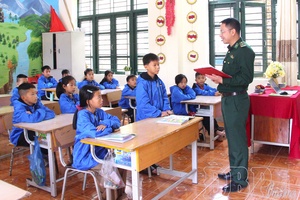
Đoàn Thu Hà, a biology teacher at Mường Nhé Secondary Ethnic Semi-Boarding School, shared: “Given the characteristics of students in remote and isolated areas whose knowledge reception and expression skills are uneven, teachers must flexibly innovate teaching methods. In each lesson, I focus on organizing discussion and exchange activities, encouraging students to express thoughts and promote proactiveness; while dedicating time to guide and tutor students who still have knowledge limitations.”
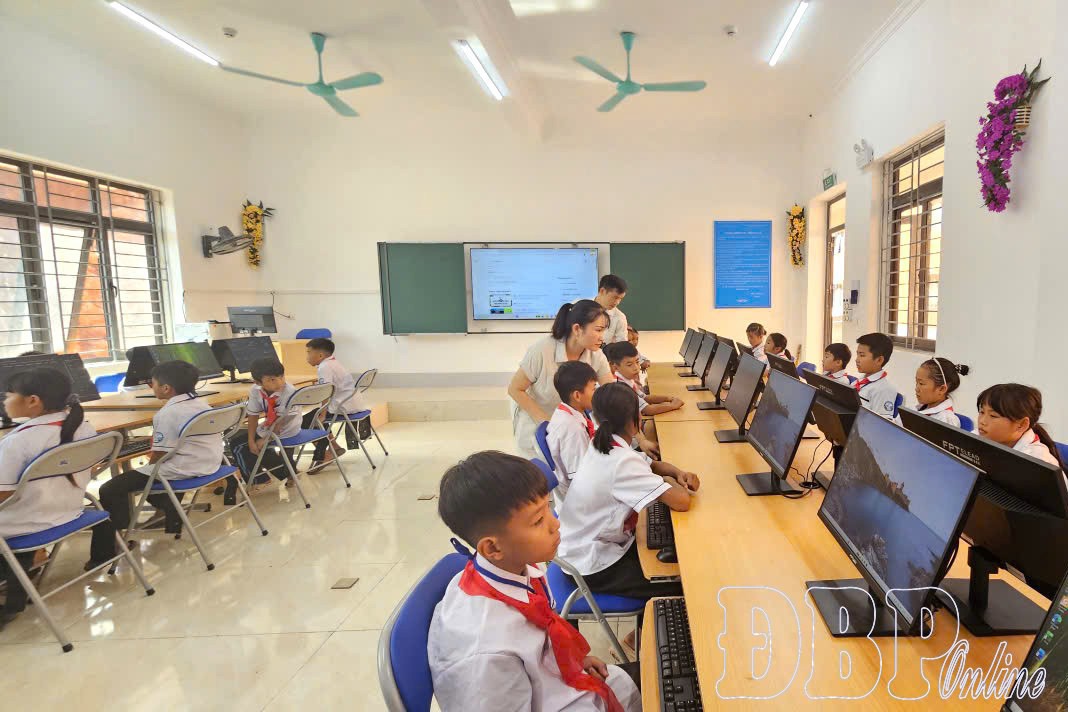
The quality of the teaching staff is gradually reflected through students’ academic and training results. In the 2025 - 2026 school year, in the 9th-grade cultural subject competition for excellent students, the school’s students won 42 school-level prizes and 13 provincial-level prizes. In the Internet Olympiads in English (IOE), they achieved 7 school-level prizes, 29 commune-level prizes, and 23 provincial-level prizes. In particular, at the provincial science and engineering competition, the school had a student win 1 Fourth prize. Out of a total of 449 secondary school graduates, 354 students continued to high school, reaching a rate of 78.8%. Of these, 3 students were admitted to Lê Quý Đôn High School for the Gifted, and 20 students were admitted to the Provincial Ethnic Boarding High School.
Principal of Mường Nhé Secondary Ethnic Semi-Boarding School Dương Tiến Công said: “The school identifies building a teaching contingent solid in expertise and vocational skills as a regular task. Beside creating conditions for teachers to attend the sector’s training courses, the school focuses on improving the quality of professional activities, strengthening inspections and class observations, and promptly assisting teachers in overcoming limitations. Concurrently, it continues paying attention to applying information technology and renewing teaching methods to meet the requirements of improving educational quality in the new situation.”
Building and improving the quality of the teaching contingent is identified by the provincial Department of Education and Training as a focal task. Currently, the entire sector has 13,004 public preschool, general education, and continuing education teachers, compared to the demand of 13,945 people. After adjustment and rearrangement, the province still lacks 941 teachers, mainly in English, Information Technology, and Music. In addition, 155 managers and teachers have not yet met training standard qualifications as prescribed, of which 117 have registered to attend training to upgrade standards. These are challenges posed in the process of arranging, employing, and improving staff quality, especially in mountainous, border, remote, and isolated areas.
Faced with this reality, the provincial Department of Education and Training focuses on renewing the content and methods of training and fostering. Training courses focus on innovating teaching, testing, and assessment methods oriented toward developing learners’ qualities and capacities; improving capacity to implement the 2018 General Education Program, training teachers of new subjects, integrated subjects, STEM/STEAM education, inclusive education, and ethnic minority student education.
In 2025, the Department of Education and Training deployed an artificial intelligence application training program in education with more than 13,000 managers, teachers, lecturers, and related subjects. Thereby, teachers developed over 35,700 AI application projects, contributing to promoting technological application in management and teaching activity organization. In 2026, training work continues to be rolled out with many practical contents such as: Innovating teaching, testing, and assessment methods, improving school governance capacity, digital transformation, and boarding school management; and enhancing management and operational capacity for educational institutions after rearrangement.
The Education and Training sector strives that by 2030, 100% of teachers and managers will meet standard training qualifications. It maintains annual regular training, improves foreign language and digital capacity, and AI application; develops core teacher teams, and promotes professional activities following lesson study. Thereby, contributing to improving comprehensive educational quality, narrowing the educational divide between regions, and meeting the province’s educational development requirements in the new phase.
Anh Nguyễn










You have 500/500 characters left
Please enter 5 or more characters!!!