



In response to the campaign, the Việt Nam Fatherland Front committees at all levels across the province have stepped up public awareness and mobilization efforts, encouraging organizations and individuals to uphold the traditional values of mutual support and solidarity, while raising society’s awareness and responsibility for helping the poor. Contributions to the Fund for the Poor have been mobilized in conjunction with social welfare programs, with assistance directed toward those facing the greatest hardship and their most essential needs.
Support from agencies, organizations, businesses and individuals over the years has provided additional resources for the province’s poverty reduction efforts. From September 2025 to August 2026, the Fund for the Poor at all levels received more than VND 18 billion in contributions. These donations, together with the funds remaining from previous periods, have been allocated to social welfare activities and assistance for poor and disadvantaged people.
The province currently has more than 25,000 poor households and 18,748 near-poor households. More than 7,200 households need housing assistance, including nearly 6,000 requiring new homes and over 1,200 needing repairs. Against this backdrop, every contribution, large or small, can provide meaningful encouragement, ease hardship and help poor families achieve greater stability in their lives.
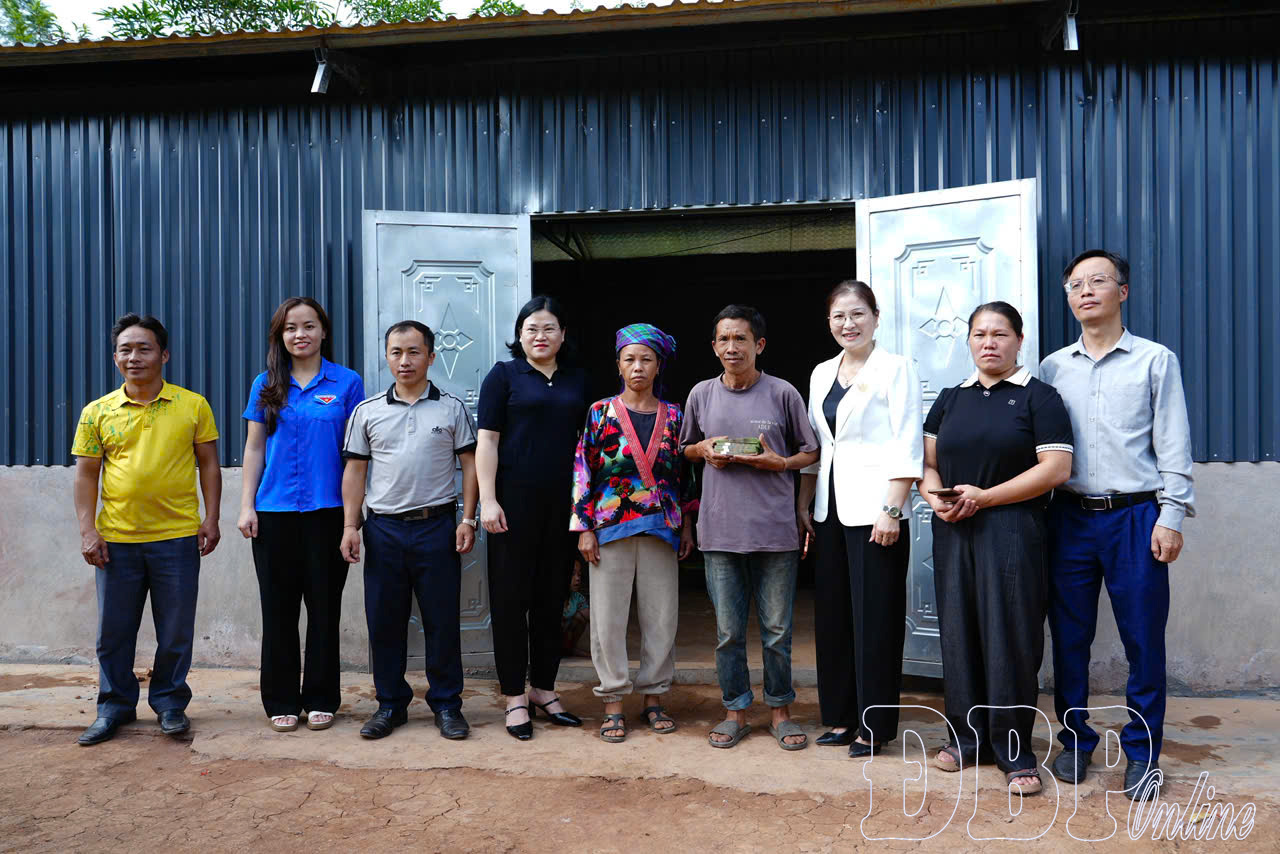
Following the launch of the 2026 Month of Action for the Poor, the campaign quickly gained momentum among agencies, organizations, local authorities, businesses and communities across the province. By 5 p.m. on November 13, the provincial Fund for the Poor had received contributions from 86 organizations and 90 individuals, totaling more than VND 1.7 billion. This response reflects strong community support for efforts to care for disadvantaged people and provides additional resources for the Fatherland Front committees to implement assistance programs in the coming months.
Housing support for poor and near-poor households, particularly in border areas, has been identified as a top priority. Under Plan No.131/KH-MTTQ-BTT issued by the Standing Committee of the Việt Nam Fatherland Front Committee of Điện Biên province, the province plans to provide funding for the construction of 100 Great Solidarity Houses for poor and near-poor households in 15 border communes in 2027 (Phase 1), with a total budget of VND 5 billion. Each household will receive VND 50 million.
The program contributes to the goal of eliminating temporary and dilapidated housing, ensuring that poor families have safe and stable homes. It also demonstrates the care and support extended by the Party, State, Việt Nam Fatherland Front and wider community to residents in border areas. The impact of these collective efforts is already evident in the homes completed and handed over to families at the grassroots level.
In the border commune of Mường Nhé, as part of the 2026 program to eliminate temporary and dilapidated housing, the commune’s Việt Nam Fatherland Front Committee reviewed and selected nine poor and particularly disadvantaged households to receive VND 60 million each toward building new homes.
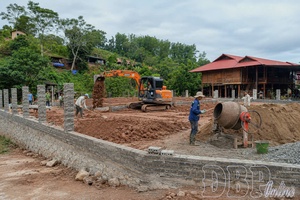
To help these families settle into their new homes as soon as possible, particularly ahead of the Great National Unity Festival, the Standing Committee of the commune’s Việt Nam Fatherland Front Committee worked closely with local authorities, socio-political organizations and other local forces to establish a task force. The team regularly visited the area to monitor and expedite construction.
Alongside financial assistance, the commune mobilized residents to contribute labor, helping level building sites and transport construction materials to facilitate the work. Phạm Thị Hà, Chairwoman of the Mường Nhé commune Việt Nam Fatherland Front Committee, said the program had received active cooperation from local authorities and organizations, as well as strong support from residents. Each completed home not only helps address housing difficulties but also strengthens solidarity and community bonds in the border area. Thanks to these coordinated efforts, all nine houses were completed, handed over and put into use on October 30, 2026.
In Thanh An commune, a review identified two poor and particularly disadvantaged households in Noong Ứng village to receive a total of VND 100 million to build Great Solidarity Houses. During the recent Great National Unity Festival, Lường Thị Hải and her family in Noong Ứng village joyfully received their new home.
As a single mother raising her child, Hải had been facing particularly difficult circumstances. Her previous temporary house had seriously deteriorated and no longer provided adequate living conditions, especially during the cold and rainy season. Thanks to timely assistance, she and her child now have a sturdy home, easing their worries about housing and giving them better conditions to care for their lives and the child’s future. Meanwhile, construction of another assisted house for Lò Văn Đông and his family in the same village is being expedited so that it can be handed over soon.
Across communes and wards, fundraising for the Fund for the Poor has taken various flexible approaches suited to local conditions. Nà Tấu commune, for example, has proactively encouraged agencies, organizations, schools, production facilities, business households and residents to contribute.
Mùa A Vừ, Chairman of the Nà Tấu commune Việt Nam Fatherland Front Committee, said the locality had initially set a fundraising target of VND 80 million for this year’s Month of Action for the Poor. However, by November 16, total contributions had reached VND 125 million, exceeding the target. Of this amount, agencies, organizations and schools contributed VND 42 million. Contributions from local production facilities, business households and residents also played an important part in this positive result.
Caring for the poor and achieving sustainable poverty reduction are ongoing, long-term responsibilities. Given the province’s still considerable number of poor and near-poor households and the high demand for housing assistance, authorities, agencies and Fatherland Front committees at all levels need to continue mobilizing, managing, allocating and using resources effectively.
Every new Great Solidarity House and every disadvantaged family receiving support is further proof of the strength of community solidarity. These efforts provide a foundation for localities to continue mobilizing public participation, promoting social responsibility and improving people's living conditions, working toward the goal of sustainable poverty reduction.
An Biên









You have 500/500 characters left
Please enter 5 or more characters!!!