



To help women truly master technology, Việt Nam Women’s Union branches at all levels across the province are stepping up communication, equipping skills, and supporting members in applying technology to life and economic development.
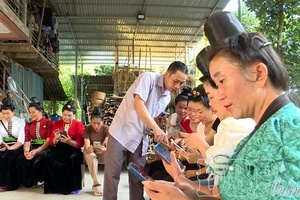
In many highland villages, using smartphones to look up information, communicate, make payments, and conduct online transactions has gradually become familiar to women. Instead of relying entirely on cash, some women have learned how to use QR codes to receive and transfer money when trading goods and paying for daily expenses.
Giàng Ly Só, from Xẻ village, Mường Nhà commune, shared that in the past, she usually used cash for each transaction. When guided on how to install and use banking applications on her phone, she learned how to transfer and receive money via QR codes, making buying, selling, and daily life much more convenient.
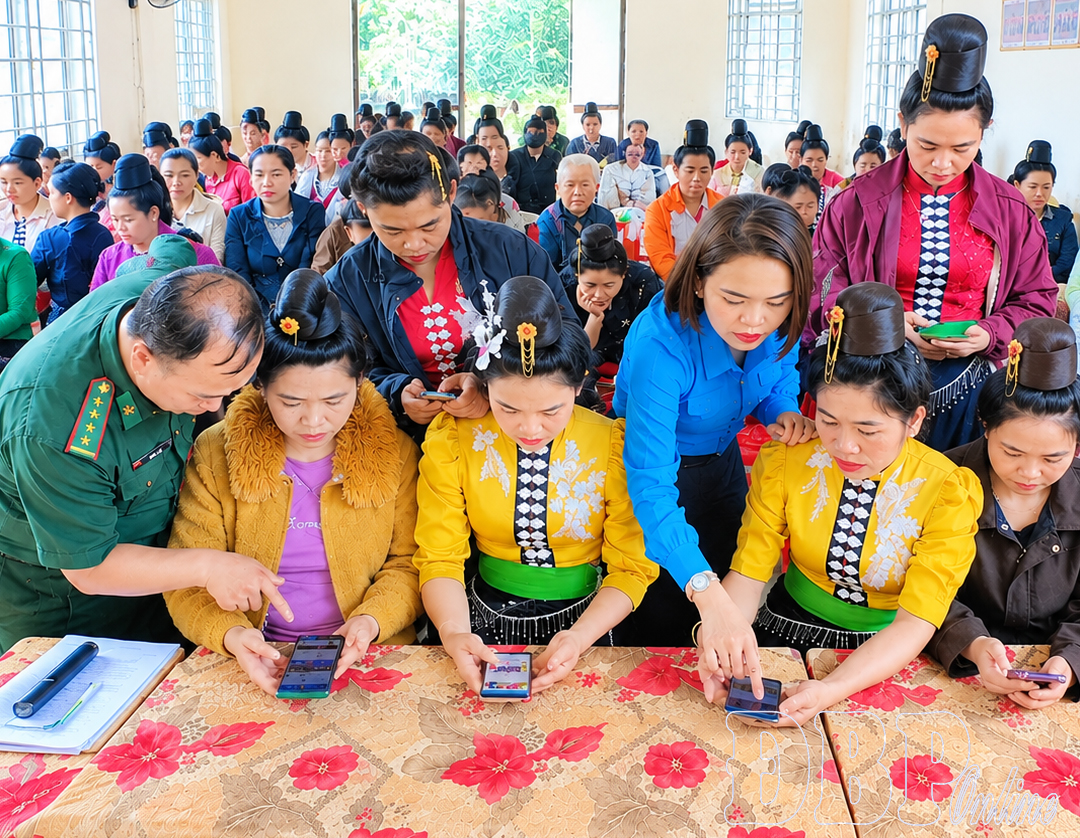
Along with digital payment, many women have started using social networks to introduce and promote local products. For small household businesses and production facilities, this is a way to reach customers beyond the village, expanding opportunities to sell products.
Lò Thị Phương, owner of Bếp nương Hà Bạc establishment in Tuần Giáo commune, shared: “Bringing products onto online platforms helps our facility reach more customers and introduce products more conveniently. However, to do business effectively, sellers need to know how to post information and images, consult, and respond to customers.”
In reality, the ability to access technology among women across localities remains uneven. A segment of members is not yet proficient in using smartphones and does not know how to harness applications for work; skills in protecting personal information and identifying fraudulent links and calls online are still limited. Therefore, guidance needs to be tailored to practical needs, avoiding remaining merely at general communication.
Originating from that demand, Women’s Union branches at all levels focus on guiding members in practical skills such as using smartphones, taking product photos, posting content, interacting with customers, protecting personal accounts, and identifying online fraudulent tactics. This approach helps women gradually turn technological knowledge into tools serving life, production, and business. In particular, the “Digital Branch” and “Digital Family” models are being vigorously deployed to bring digital utilities closer to members. In Phú Ngam hamlet, the Women’s Union of Núa Ngam commune established the model with 40 members. Through smartphones and Zalo groups, women exchange work, receive information, update union activities, and share useful life knowledge.
Quàng Thị Tuyết, Chairwoman of the Women’s Union of Núa Ngam commune, said: “The model creates conditions for members to get accustomed to technology, improve their capacity to access information, and use utilities in the digital environment. The Union also guides and supports members who still have limited skills so that everyone can participate and use them more effectively.”
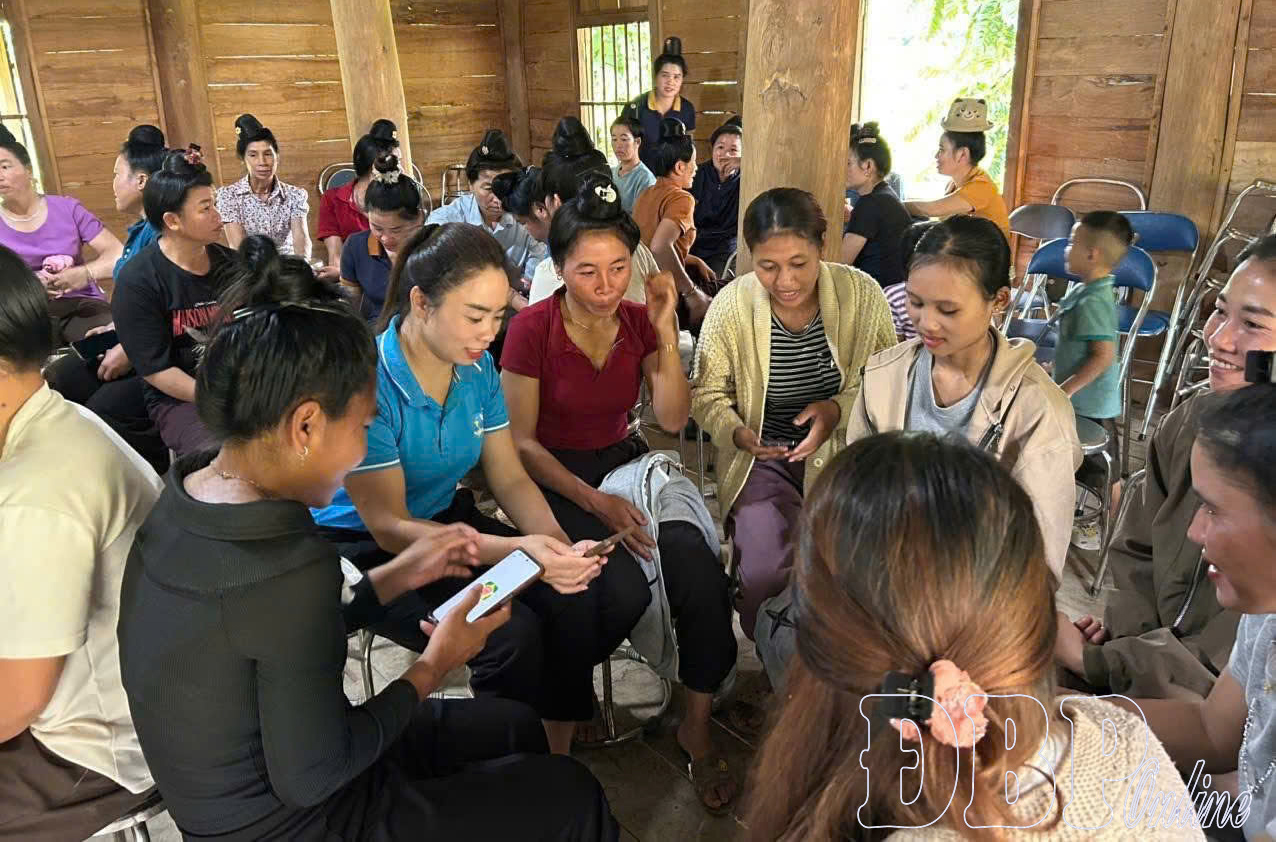
According to Vừ Đào My, Vice Chairwoman of the provincial Women’s Union, equipping digital knowledge and skills for highland women helps them proactively access and use utilities in life and production; makes it easier to look up information, use services, develop family economy, and adapt to digital transformation requirements. Union branches at all levels need to continue promoting communication and guidance with contents that are practical and suitable for members’ conditions and needs.
Since the beginning of the year, the provincial Women’s Union has coordinated with provincial and central agencies such as the Department of Culture, Sports and Tourism, the Department of Industry and Trade, and the Department of E-Commerce to organize 3 training courses equipping digital skills. The training contents are aligned with the Scheme “Supporting women’s entrepreneurship in the 2026 - 2035 period”, aiming to support women in improving their capacity to apply technology in production and business.
For highland women to truly master digital utilities, training needs to be maintained regularly, accompanied by direct guidance and post-training support. When knowing how to use online public services, access official information, make safe payments, and promote products on digital platforms, women will be more proactive in life and have more opportunities for economic development. This is also a practical direction to narrow the digital divide across regions.
Lan Phương








You have 500/500 characters left
Please enter 5 or more characters!!!