



After nearly 20 years of making and selling cement, Điện Biên Cement Joint Stock Company has expanded its production capacity and established itself in the market. Its plant can produce about 2,000 metric tons of cement a day, equivalent to 450,000-500,000 metric tons a year, and its production line is 90% automated. The company employs more than 260 people. All are enrolled in social insurance, and average monthly income exceeds VND 10 million. The company expects to contribute more than VND 30 billion to the state budget in 2026.
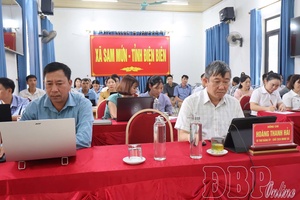
Keeping production steady and reaching new markets will depend in part on business conditions. At a meeting with a provincial delegation, company leaders asked the province to continue encouraging contractors to give preference to Điện Biên cement. They also asked for help joining trade promotion programs, connecting with buyers, promoting products and expanding sales in Việt Nam and northern Laos.

Hương Linh Điện Biên Co., Ltd. develops specialty products using tea grown in Tủa Chùa. It has 200 hectares of tea-growing land and produces about 10 metric tons of dried tea a year. Four of its six tea products are recognized under the One Commune One Product (OCOP) program. Company Director Nguyễn Mỹ Linh said it planned new product lines for a wider range of customers. The company hopes the province will continue to help it build its brand, promote its products and reach more buyers, she said.
In recent years, the private sector has grown in both the number and scale of businesses, supporting economic growth, job creation, higher budget revenue and changes in the structure of the economy. In 2020-2024, the province averaged 120-150 new businesses a year, including three to five conversions from household businesses. In 2025, 270 new businesses were established. In the first 10 months of 2026, 299 businesses registered with more than VND 3.232 trillion in combined capital. That was 97 more businesses than a year earlier and 119.6% of the annual target. October alone saw an estimated 41 new businesses with more than VND 1.343 trillion in registered capital. Điện Biên now has 1,798 businesses with more than VND 45.038 trillion in registered capital and about 18,000 household businesses. New business registrations rose 48% from the same period a year earlier, exceeding the target.
Most businesses in the province are small or micro enterprises with limited finances, management capacity and access to legal, scientific and technological information. Few household businesses have incorporated, and market entry costs remain a barrier. Innovation and adoption of new technology and digital tools vary by company. Businesses make limited use of intellectual property registration, protection and commercialization. Many flagship, OCOP and local specialty products still receive too little investment in branding and intellectual property protection, making it harder to compete, commercialize products and expand into new markets.
To address these constraints, the Điện Biên provincial Party Committee issued Resolution No.13-NQ/TU on December 31, 2025, on private sector development in 2026-2030, with a vision to 2045. By 2030, the province aims to add 2,500 effectively operating private businesses. It also aims for private sector growth to average about 11% a year in 2026-2030 and for the sector to account for about 40% of gross regional domestic product (GRDP).
The provincial People’s Committee is drafting a resolution on targeted private sector support for the provincial People’s Council to consider and adopt. It proposes measures to encourage new businesses, support household businesses that incorporate, help startups enter the market and promote science, technology and innovation in production and business. The measures are intended to lower initial barriers, improve operating capacity and help businesses adapt as conditions change. Support for household businesses that incorporate is particularly important to expanding the formal business sector and giving producers and sellers better access to resources, markets and investment opportunities.
By removing barriers, improving policies and working with businesses, Điện Biên is making it easier for its private sector to grow. The province sees this as a way to mobilize resources, support growth and improve competitiveness.
Phạm Trung















You have 500/500 characters left
Please enter 5 or more characters!!!