



Growers are paying more attention to product quality and adopting improved techniques as they move toward safer, more organic farming. These practices help households make better use of their land, secure steadier livelihoods and earn more from coffee.
On a visit to Mường Ảng in early November, the reporting team met Lường Văn Xuân and his family in Mánh Đanh village. Xuân had furnished his well-kept stilt house with modern conveniences.
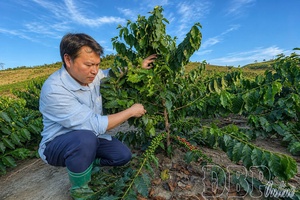
As they talked, Xuân showed the reporters around his farm. Rows of lush coffee trees lined the slope, their branches heavy with ripe red cherries. Macadamia trees grew among the coffee, with space set aside for livestock. Work had picked up during the harvest. Pointing to trees that had been producing for years, Xuân said his family began by planting coffee on a trial plot of 6,000 square meters in 2007. The crop suited the local climate and soil, so the family expanded the planting area and invested in tending the trees. They kept the farm going through periods of low prices and disappointing returns. The family now grows six hectares of coffee.
Xuân said fresh coffee cherries had often fetched between VND 15,000 and VND 25,000 per kilogram in recent years, peaking at nearly VND 30,000. Those prices encouraged growers to keep investing in and tending their trees. In 2025, his family harvested more than 50 metric tons of fresh cherries from six hectares and sold them for more than VND 20,000 per kilogram. After expenses, the family made a profit of about VND 1.2 billion.
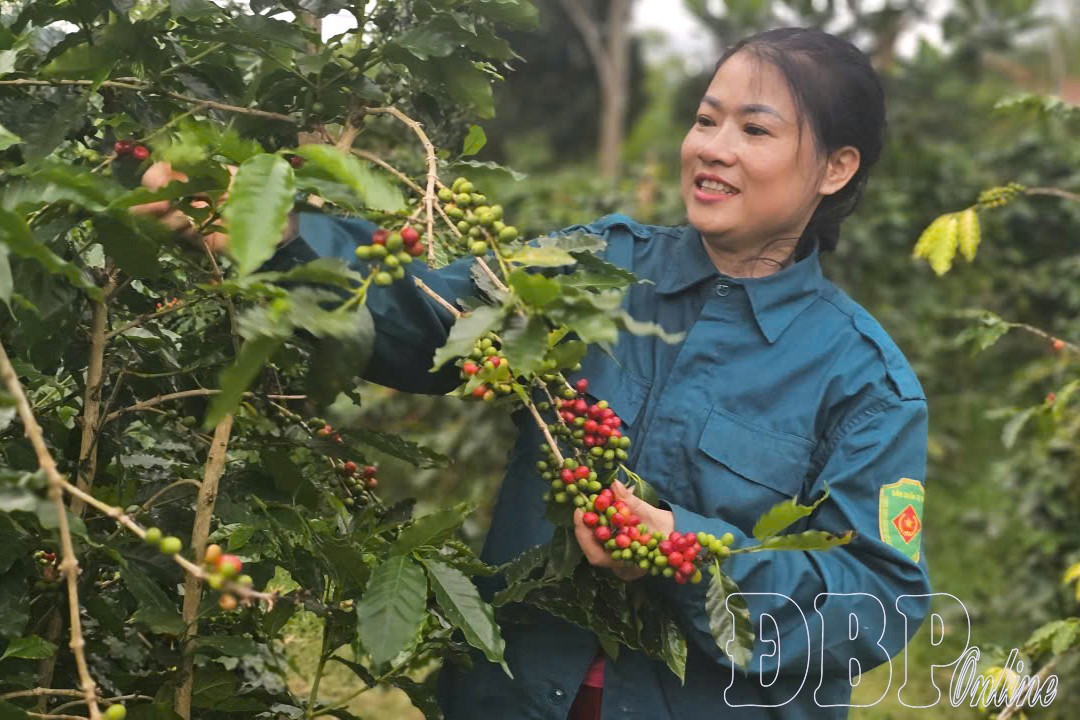
Farming is exposed to shifts in weather and markets. To keep income steady, growers need to make good use of their land and choose a mix of crops and livestock that improves returns on the same acreage. Xuân’s family began raising more than 300 free-range chickens on the hillsides. In 2019, the family intercropped two hectares of macadamia to shade the coffee trees and bring in extra income. The macadamia trees have begun producing, bringing in about VND 30 million to VND 40 million per harvest. Combining crops and livestock has helped the family make better use of its farmland, diversify income and rely less on any single product.
Xuân said coffee required long-term investment and proper care to produce good yields and high-quality cherries. Raising livestock and growing macadamia helped his family make better use of its land and earn more. The mix brought in income throughout the year, with other sources cushioning the effect of price swings in any one product, he said. The family now earns about VND 1.5 billion a year in total.
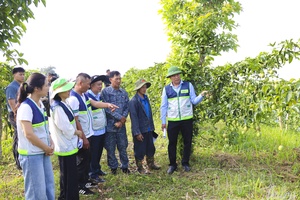
In Hòa Bình hamlet, Lại Đức Thành’s household is among those that have diversified their farms. The family expanded from 5,000 square meters to four hectares and built an integrated system of crops, fish ponds and livestock suited to local conditions. Using its existing coffee trees, fruit trees and ponds, the family added livestock to its crop production. The farm now has 300 chickens, 200 ducks, five fish ponds and four hectares of coffee and fruit trees. Its output is worth about VND 1 billion a year. Thành said the family had adopted improved techniques to raise product quality and joined the Clean Fruit Cooperative and the Green Agriculture Cooperative to build connections and secure stable markets for its produce.
The two farms show how coffee growers can earn more from the same land by changing how they farm. Households can choose intercrops suited to their soil and water supplies, combine crops with livestock, make use of agricultural byproducts and adopt growing techniques that cut input costs and improve yields and quality. Particular attention should go to safer, more sustainable practices that move toward organic farming.
Mường Ảng commune has 2,112 hectares of coffee, according to local figures. Of that total, 1,662 hectares are in production, 150 hectares are still being established and 300 hectares are newly planted. This year’s harvest is estimated at about 17,000 metric tons of fresh cherries, equivalent to 3,800 metric tons of parchment coffee. Coffee is now a mainstay of the local agricultural economy, providing jobs and income for many households and helping shift the mix of agricultural activity. As Mường Ảng expands its coffee acreage and encourages growers to earn more from existing plots, it is also working to improve quality and build a brand for its coffee.
The value of coffee beans depends heavily on the quality of the cherries and how they are handled at each stage of production, as well as on the size of the harvest. Picking cherries at the right stage of ripeness and sorting, processing, drying and storing them properly yields a better product. Mường Ảng is therefore encouraging growers to follow safe cultivation practices, use more organic fertilizer and avoid overusing fertilizers and pesticides. The aim is to build a production area that can supply coffee of consistent quality to processors and buyers.
As the reporting team left Mường Ảng, the afternoon sun stretched across the coffee-covered hills. Growers were busy picking ripe cherries and preparing for a new season. Coffee has raised living standards for farmers such as Xuân and Thành. To sustain and build on those gains, growers need to keep improving their practices, tend their trees sustainably, make sound use of their land and take an active role in networks linking producers, processors and buyers.
Anh Nguyễn








You have 500/500 characters left
Please enter 5 or more characters!!!