



Alongside expanding commercial production zones, the locality emphasizes innovating production methods, strengthening linkages, and sparking the proactive spirit to rise up among every citizen, heading toward the goal of sustainable poverty reduction.
The Resolution of the 1st Na Sang commune Party Organization Congress for the 2025-2030 term set the target of building the locality into an economically fairly-developed commune within the province. Accordingly, the commune strives to reduce the poverty rate to under 10% by 2030, with an average annual decrease of over 4%; and per capita income reaching VND 50 million/year or higher.
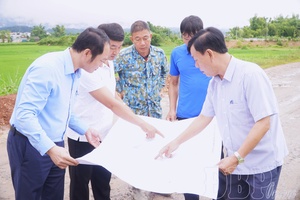
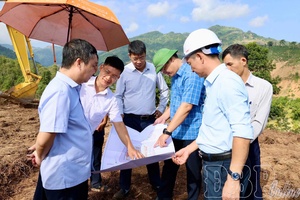
To realize the set targets, immediately following the Congress, the Executive Committee of the Commune Party Organization proactively formulated plans and assigned cadres in charge of each specific area; concurrently stepping up communication and disseminating the focal contents of the Resolution right from the grassroots level. Through this, it creates unity in awareness and action, bringing into play the role of the people in economic development and poverty reduction.
Trần Hồng Quân, Chairman of the Na Sang commune People’s Committee, stated: “The locality determines that poverty reduction must be based on available potentials and advantages, while promoting the internal resources of the people. Na Sang possesses a relatively large agricultural land area, and its residents are industrious with production experience, which are favorable conditions to develop commercial agriculture. To exploit these advantages effectively requires the solidarity, unity, and determination of the entire political system alongside the proactivity of each citizen. Only when people change their mindsets and working methods will support programs and policies promote their full efficacy.”
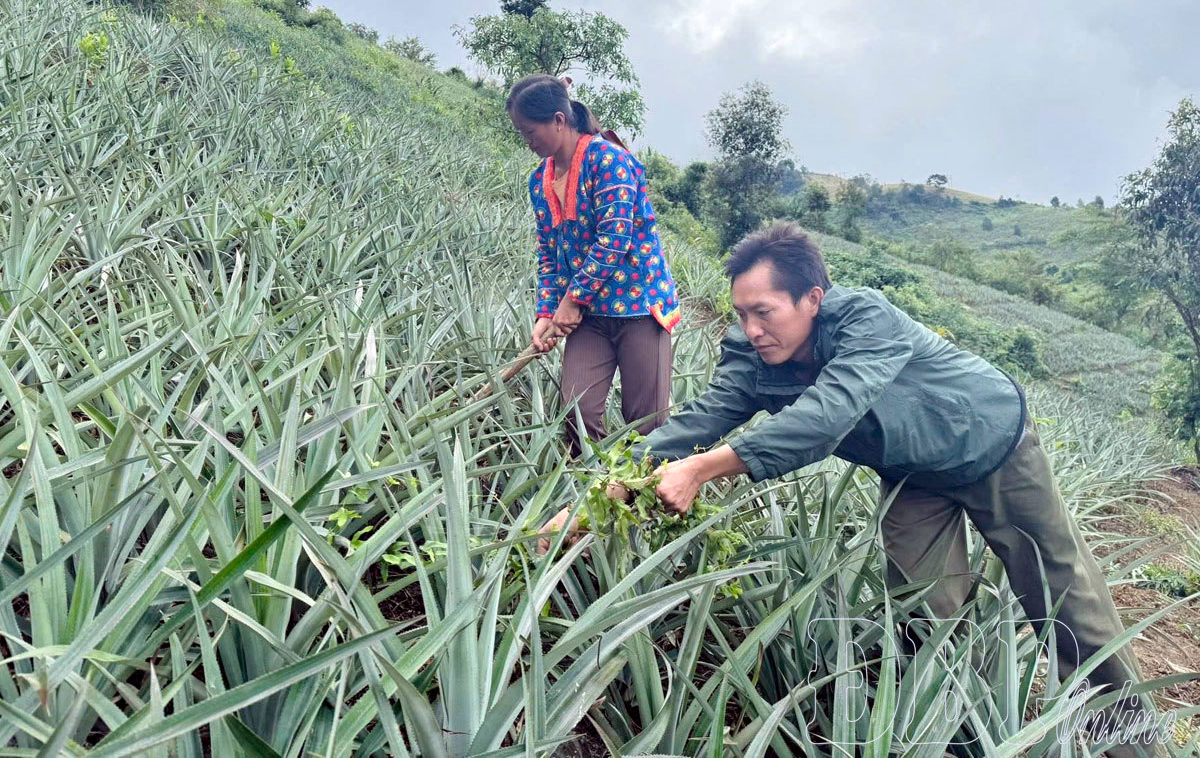
Na Sang commune identifies agro-forestry development as the foundational driver for the economy, concentrating on exploiting the advantages of flagship crops and forming concentrated production zones linked to consumption markets. One of the locality’s prominent strengths is its pineapple growing zone covering over 380ha, concentrated in the villages of Na Sang, Co Đứa, Sa Lông 1, Sa Lông 2, and Hin 1. The commune strives to expand this growing zone to over 500ha by 2030; while simultaneously attracting enterprises to invest in processing plants to elevate product value.
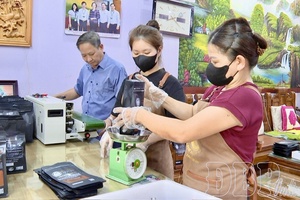
The Na Sang Pineapple Cooperative plays a vital role in linking production, consumption, and the development of pineapple growing zones. Established in 2017, the cooperative currently has nearly 70 members with a production area of approximately 320ha, contributing to connecting pineapple growers with the market. Alongside the proactivity of local residents and the cooperative, support resources from the State contribute to accelerating production. Recently, over VND 9 billion from national target programs has been disbursed to support seeds, materials, and production conditions for hundreds of households. Notably, the Queen pineapple production and consumption linkage project has supported poor and near-poor households in developing 11ha of pineapples under a chain linkage model, progressively increasing incomes.
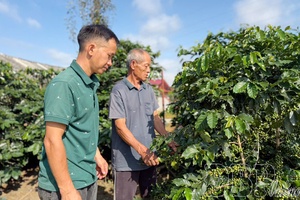
In tandem with pineapples, Na Sang is accelerating the diversification of crops and livestock, creating additional livelihoods for residents. By 2030, the commune strives to maintain 2,197ha of food crops with a total output reaching 5,890 tons; convert degraded swidden land to newly plant 500ha of coffee and 200ha of macadamia; while effectively exploiting existing rubber acreage. Regarding forestry, the commune emphasizes forest protection, natural regeneration zoning, and protection forest planting intertwined with developing medicinal herbs beneath the forest canopy. The commune continues to maintain and develop certified OCOP products, striving to have 1 to 2 additional products attain 3-star OCOP standards each year.
In animal husbandry, Na Sang orientates toward developing grass-fed livestock herds through concentrated rearing, stall-feeding, and semi-grazing models. The target by 2030 is for the buffalo herd to reach 5,500 - 6,000 heads, and the cattle herd from 2,500 - 3,000 heads. The locality encourages developing semi-industrial farm models and strengthening consumption linkages to elevate product value and secure stable off-take outlets.
Nguyễn Trường Giang, Secretary of the Na Sang commune Party Committee, stated: “To realize the target of poverty reduction based on agro-forestry, the Commune Party Organization has set forth 7 focal solution groups. Among them, priority is given to communication and raising awareness about developing agro-forestry production along modern, efficient, and sustainable lines; elevating the responsibility of agencies and units in managing, deploying, and supervising the implementation of plans, schemes, and projects; and integrating tasks into annual socio-economic development plans. Simultaneously, the commune focuses on building concentrated agro-forestry production zones, linking flagship agricultural product development with sustainable consumption linkages.”
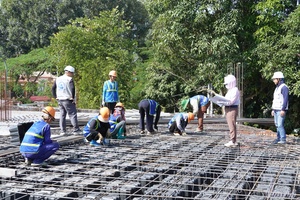
Regarding resources, Na Sang determines to efficiently utilize investment support resources from the State budget, capital from national target programs, enterprise capital through investment projects, and capital from organizations and individuals participating in linkages. It aims to effectively execute the public investment capital plan for the 2026-2030 period to invest in building infrastructure that meets agricultural production requirements. As for human resources, the locality emphasizes training and fostering to elevate the quality of the cadre contingent working in the agricultural sector, and enhancing management capacity for cooperatives and cooperative groups to meet the requirements of agricultural restructuring and new rural construction.
From the implemented solutions for agro-forestry development coupled with exploiting local advantages, poverty reduction efforts in Na Sang commune have achieved positive results. The poverty rate across the commune decreased from 28.93% (at the time of initial merger) to 23.76% by the end of 2025; it is estimated to further decline to 18.44% in 2026. This serves as the foundation for Na Sang to unleash its potentials, continue mobilizing and efficiently utilizing resources, and spark the citizens’ drive to rise up, heading toward the goal of reducing the poverty rate to under 10% by 2030.
Đào Phương








You have 500/500 characters left
Please enter 5 or more characters!!!