



Through practical implementation, many models initially show positive prospects. This serves as a foundation to continue transferring techniques, replicating suitable practices, and progressively establishing commercial production zones.
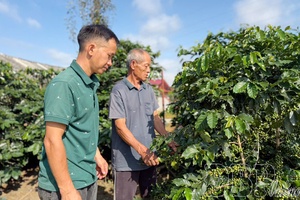
The family of Vàng A Chí in Pa Pốm village, Điện Biên Phủ ward, is one of 7 households participating in the passion fruit trial planting model deployed by the provincial Agricultural Extension - Seed and Animal Breeding Center. From having no experience with this crop, his family received technical guidance covering soil preparation, planting, crop care, fertilization, and pest monitoring. Vàng A Chí stated: “Joining the model, my family received support in seedlings and materials, alongside instructions on how to build trellises, care for the plants, and prevent pests and diseases. Thanks to following the instructions, the passion fruit is growing well and has yielded a harvest. We will continue tending it so the vines produce stable yields.”
The passion fruit trial planting model, implemented by the provincial Agricultural Extension - Seed and Animal Breeding Center since November 2025 in Pa Pốm village, Điện Biên Phủ ward, and Huổi Hua village, Núa Ngam commune, spans a total area of 10.4ha with 7 participating households. Within this, 2 households in Pa Pốm village planted 2.4ha; 5 households in Huổi Hua village planted 8ha. The households received technical training and 70% financial support for the cost of seedlings, fertilizers, materials, and plant protection chemicals; concurrently, they received hands-on guidance from agricultural extension officers throughout the care process. According to initial assessments, passion fruit yields are projected to reach 29.2 tons/ha. With an average selling price of VND 15,000/kg, estimated revenue reaches VND 438 million/ha; after deducting expenses, the projected profit is approximately VND 220 million/ha. This result unlocks prospects for developing a new crop across the two localities.
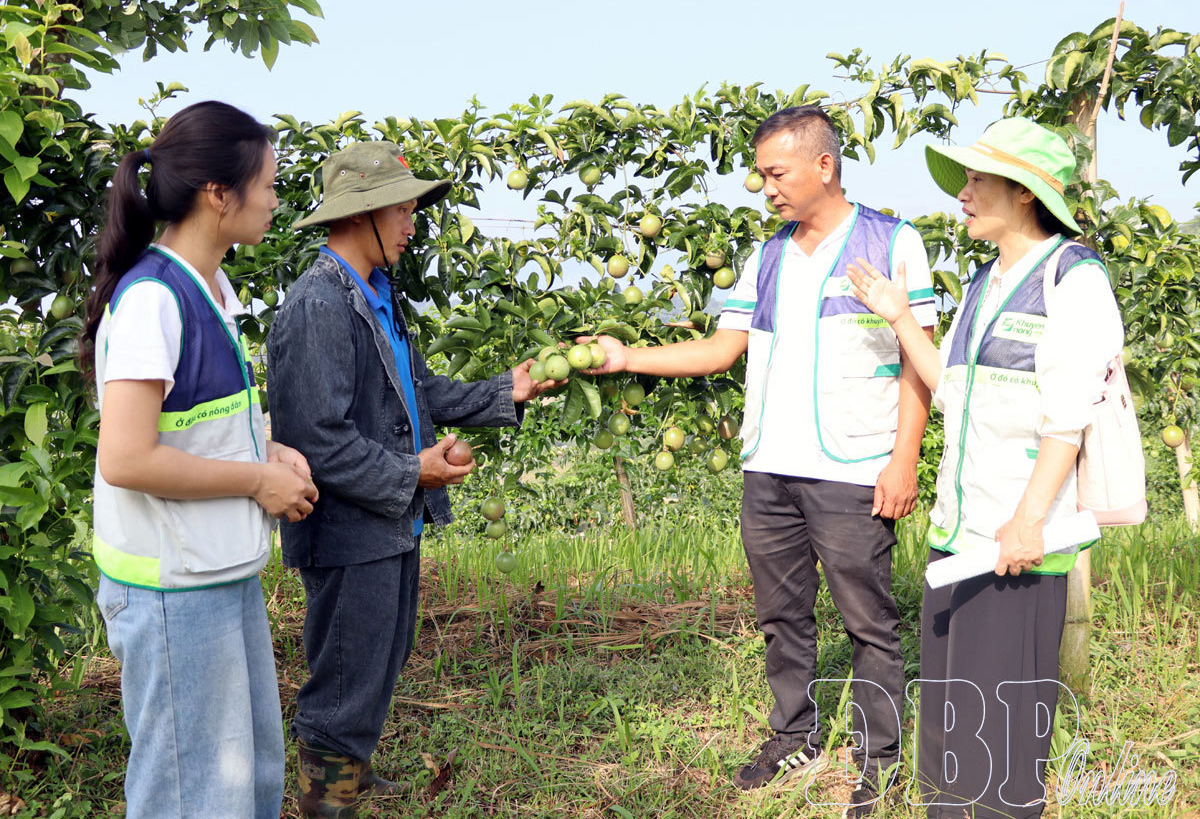
Engineer Lò Thanh Nhàn, a cadre at the provincial Agricultural Extension - Seed and Animal Breeding Center in charge of the passion fruit model, noted: “Through monitoring, the passion fruit vines are growing and developing quite well. During execution, technical cadres regularly guide households in tending, pruning, fertilizing, and monitoring pests and diseases. For the vines to continue flowering and setting fruit, the unit will continue instructing growers to tend them according to standard protocols, maintain moisture, and detect and treat pests and diseases promptly.”
Alongside passion fruit, coffee planting models are being deployed across numerous localities. In Nà Hỳ commune, the 2025-2027 coffee planting model spans 24.5ha, drawing the participation of 37 households. Technical cadres coordinate with commune extension officers to guide residents in crop care, moisture retention, proactive irrigation, and pest monitoring. Through inspections, the coffee trees are developing well, and macadamia trees planted for shade are demonstrating stable growth. Quàng Văn Xuyên, from Phiêng Ngúa village, Nà Hỳ commune, shared: “Participating in the model, our family was guided by cadres on planting and tending techniques, so we now know how to monitor the orchard, clear weeds, retain moisture, and detect pests to apply timely treatments.”
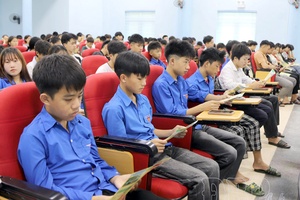
Sharing information regarding agricultural extension outcomes over the recent period, Lê Xuân Cảnh, Director of the Department of Agriculture and Environment, stated: With the directing attention of the provincial People’s Committee and the responsible engagement of the agricultural extension workforce across the area, during the 2021-2025 period, Điện Biên organized 376 training and capacity-building classes for farmers and extension workers at all levels, reaching 114.29% of the plan, with a total of 14,882 participants.
The province also organized agricultural product introduction events, conferences, seminars, technical advisory dialogues, and field study tours to learn from production experiences in local districts and neighboring provinces. Notably, the province replicated 283 agricultural extension models across cultivation, animal husbandry, aquaculture, and forestry along organic, VietGAP, and biosecure lines intertwined with consumption linkages. These models contribute to elevating productivity and quality, helping citizens access technical advances and progressively transition from small-scale farming to market-driven commercial production.
Evaluating the agricultural sector’s contribution to local economic growth, Lò Văn Cương, Standing Vice Chairman of the provincial People’s Committee, noted: The average GRDP growth rate of Điện Biên during the 2021-2025 period was 8.76%/year. Among this, outstanding growth belonged to the agriculture, forestry, and fishery sector at a rate of 4.1% (accounting for roughly 13.65% of GRDP). The achieved results bear the vital contribution of agricultural extension work. Harnessing the outcomes achieved, for the 2026-2030 period, Điện Biên is oriented to innovate extension activities aligned with the demands of the people and the market; supporting farmers in shifting from an agricultural production mindset to an agricultural economic mindset, and progressively organizing production along value chains.
Under Decision No.949/QĐ-UBND dated May 8, 2026, issued by the provincial People’s Committee approving the agricultural extension program for the 2026-2030 period, total implementation funding is estimated at approximately VND 60.06 billion from the provincial budget and counterpart funds from organizations and individuals. This resource serves to organize 75 training and fostering classes; communicate and replicate models; and build models cultivating flagship industrial and fruit trees. Concurrently, the provincial People’s Committee directs the commune level to annually prioritize a minimum allocation of VND 1.5 billion to deploy agricultural extension activities, ensuring they match the aspirations and production levels of local residents.
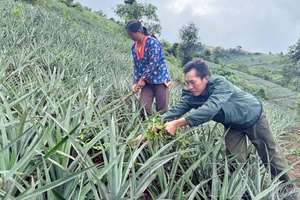
During this period, the province aims to build production models based on flagship crops such as macadamia, coffee, pineapple, and passion fruit, with an estimated scale of roughly 316ha. The models seek to synchronously apply technical protocols, guarantee product quality, food safety, and environmental protection; striving to increase economic efficiency by 10% or more compared to mass production, reduce input material costs, and establish a foundation for broader replication.
The selection and deployment of agricultural extension models in Điện Biên over the recent period consistently adheres to the orientations of the Executive Board of the provincial Party Committee under Resolution No.11-NQ/TU dated December 31, 2025, on restructuring the agricultural sector toward concentrated, green, smart, and sustainable commercial production. Along with ensuring resources, enhancing the quality of technical transfers, and tying production to product consumption will contribute to replicating effective models and elevating incomes for the people.
Đào Phương
You have 500/500 characters left
Please enter 5 or more characters!!!