



Paying adequate attention to the region’s contributions in protecting forests and water sources
Deputy Tạ Thị Yên fundamentally agreed with the reports of the Government and verifying agencies; simultaneously, she highly appreciated the direction and administration of the Government, the Prime Minister, and the concerted efforts of ministries, sectors, and localities. Amidst lingering hardships, the national economy maintained a high growth rate with fundamental macroeconomic stability, establishing a foundation to strive for a growth target of 10% or higher in 2027.
From the perspective of the Northern Midlands and Mountainous Region, the deputy argued that the region’s contributions to national development must be more fully recognized. This region holds a particularly critical position in national defense and security, encompassing vast forest areas and numerous vital river basins. Headwater forests help regulate water flows, mitigate erosion and landslides, and guarantee water sources for production, daily living, and the operation of hydropower plants.
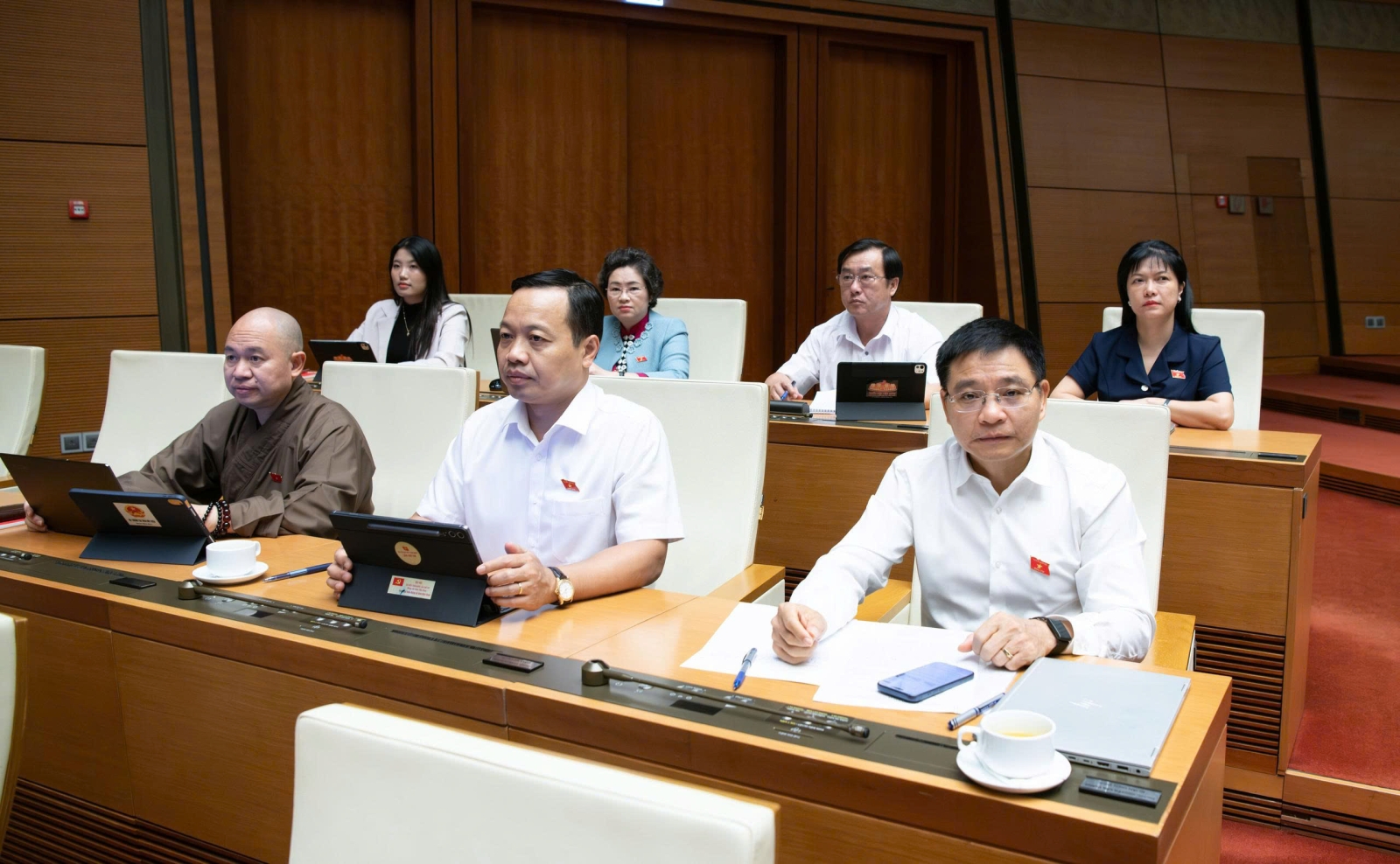
According to the deputy, these contributions bear immense significance for the entire country but are not always fully reflected in the economic growth indicators of individual localities. Meanwhile, mountainous residents, especially ethnic minorities, directly participate in protecting vast forest areas under difficult living conditions. Therefore, when formulating regional development policies, adequate attention must be given to these contributions, while concurrently creating additional livelihoods and income for the people.
The deputy requested the Government to continue directing the effective implementation of the payment for forest environmental services policy and regulations on forest carbon absorption and storage services; evaluate the actual benefit levels of residential communities and direct forest protectors; and ensure that revenue collection is managed and utilized in a public, transparent, and compliant manner. This serves as a practical solution to both improve the livelihoods of mountainous residents and safeguard water sources and the ecological environment for the entire country.
Linking transport investment with production development and enterprise attraction
Addressing transport infrastructure and conditions for investment attraction, deputy Tạ Thị Yên noted that although the State has paid attention to investing in numerous vital transport works, the commercial agricultural development potential in many localities remains ineffectively tapped. Enterprises still face difficulties when investing in product preservation, processing, and consumption due to high transportation costs, scattered raw material zones, and a lack of preservation facilities, cold storage, and logistics services.

The Standing Vice Chairwoman of the Board for Deputy Affairs emphasized that transport infrastructure investment must be tied to production development needs and the capacity to attract enterprises. The deputy requested the Government to continue prioritizing critical projects already included in the master plan, especially transport routes connecting raw material zones with pre-processing, preservation, and processing facilities, border gates, and consumer markets.
Coupled with infrastructure investment, the deputy recommended effectively executing policies that encourage enterprises to invest in agriculture and rural areas, especially agricultural produce processing, preservation, and logistics projects in mountainous terrains. Synchronously resolving these stages will help unleash regional advantages, generate additional jobs, and elevate incomes for the people.
Harnessing new development spaces, strengthening regional linkages
Deputy Tạ Thị Yên observed that the reorganization of provinces and cities has created added conditions to connect production zones with industrial centers, urban areas, and consumer markets. However, to effectively exploit these new development spaces, it is necessary to continue reviewing and adjusting planning following the reorganization, ensuring alignment with regional and national master plans.
The deputy requested the Government to direct the selection of genuinely necessary projects with effective connectivity and alignment with available resources. For the Northern Midlands and Mountainous Region, it is vital to continue harnessing strengths in specialty agriculture, forestry economics, medicinal herbs, processing industries, and tourism tied to natural landscapes and the cultural identities of ethnic minority groups.
The deputy suggested continuing the effective implementation of promulgated policies, creating conditions for enterprises and cooperatives to link with producers, thereby ensuring citizens benefit from the development process. Concurrently, when executing the Politburo’s Resolution No.27-NQ/TW and the 2027 socio-economic development plan, the Government must pay adequate attention to the distinct characteristics, roles, and advantages of each region, identifying appropriate priority tasks.
According to the deputy, economic development in the Northern Midlands and Mountainous Region must be strictly tied to protecting forests, safeguarding water sources and ecological environments, and ensuring national defense and security, thereby making practical contributions to the nation’s overarching development.
Mai Hồng


You have 500/500 characters left
Please enter 5 or more characters!!!