



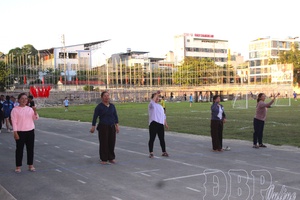
The border commune of Nà Bủng currently hosts 39 cadres, civil servants, and public employees - including 34 holding bachelor’s degrees, two holding master’s degrees, and three holding intermediate or college diplomas. However, the locality still lacks one public employee in charge of physical education and sports under the commune General Service Center. Lacking a single position directly impacts advisory work, organizing mass sports activities, managing facilities, and fulfilling reporting regimes according to regulations. In addition, the workload of other public employees increases due to holding concurrent duties, affecting task execution quality and efficiency.
To ensure specialized operations remain undisrupted, the Nà Bủng commune People’s Committee requisitioned and mobilized public employees from public service units under commune management to participate in advising, organizing, and deploying sports activities as required by tasks. Nevertheless, this serves only as an immediate fix because mobilized employees must handle concurrent duties, leaving specialized depth, continuity, and advisory efficiency unassured.
Nguyễn Văn Tiếp, Chairman of the Nà Bủng commune People’s Committee, stated: “To overcome specialized cadre shortages, in the immediate term, the commune has proactively assigned and utilized existing human resources suited to local practical conditions. Concurrently, the commune requests competent authorities to consider early positioning of a public employee with appropriate expertise in sports at the commune General Service Center to meet task requirements in the current situation.”
.jpg)
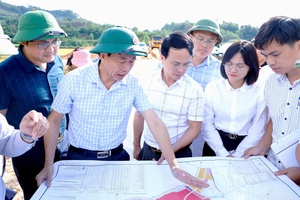
Facing human resource demands at the grassroots-level recently, the provincial Party Committee’s Organization Commission and the provincial People’s Committee executed secondments and reinforcements, dispatching 124 civil servants and public employees from provincial departments and sectors down to communes and wards. Among these, 52 cadres from provincial-level agencies were directly seconded to support 34 communes and wards.
Prioritized fields include information technology, information and communications, digital transformation, construction, transport, finance, budget, agriculture, land management, and culture. Evaluated results show that the reinforced team has helped unblock numerous grassroots-level difficulties, particularly in digital transformation, administrative reform, construction investment management, finance, and advising on newly arising tasks following administrative unit rearrangements. At present, localities basically guarantee cadre quantities according to quotas, yet shortages persist in selected specialized, deep-level fields.
A review reveals that 34 communes and wards province-wide currently propose reinforcing a total of 141 civil servants and public employees from the provincial level to support grassroots-level tasks. Needs concentrate heavily in information technology, information and communications, digital transformation, sports, construction, transport, finance, and budget.
Executing the policy to reinforce grassroots-level human resources, the Department of Home Affairs drafted a plan, advising the provincial People’s Committee to issue Plan No.4508/KH-UBND dated June 2, 2026, to continue transferring and reinforcing 30 specialized civil servants to support communes and wards. Among these are 17 civil servants in information technology, information and communications, and digital transformation; five in construction and transport; and four in finance, budget, and planning.
Human resource reinforcement is executed via fixed-term transfers and rotations, prioritizing localities lacking specialized cadres or facing difficulties in local manpower arrangements. Concurrently, the province continues stepping up training and capacity building for grassroots-level cadres, step-by-step meeting task demands in the new era.
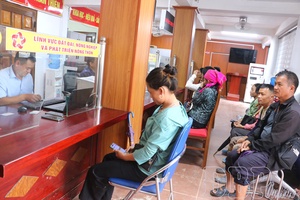
One year of implementing the two-tier local government model has demonstrated positive shifts in grassroots-level government apparatus operations. However, to maximize this model’s efficiency, alongside perfecting physical facilities and IT infrastructure, guaranteeing sufficient human resources - especially in scarce specialized fields - remains a pressing requirement. When human resource “bottlenecks” are unblocked, grassroots-level governments will gain added conditions to serve citizens and enterprises increasingly well.
Anh Nguyễn

.jpg)
.jpg)
.jpg)

.jpg)
.jpg)
.jpg)
.jpg)
.jpg)
.jpg)
.jpg)
You have 500/500 characters left
Please enter 5 or more characters!!!