



In Điện Biên, localities emphasize professional training, fostering a spirit of self-study, applying technology, and innovating working methods for commune-level cadres, striving to serve citizens and enterprises increasingly better.
At the Na Son commune Public Administrative Service Center, Quàng Văn Sươi is assigned as the focal point for controlling administrative procedures, overseeing multiple domains such as cadastral affairs, construction, agriculture and environment, finance, and justice and civil status. Each domain has specific regulations and resolution sequences, while citizens’ dossiers often involve various distinct situations. This demands his capacity to oversee tasks comprehensively, accurately determine jurisdiction, and classify and process dossiers suited to each specific case. Particularly during citizen receptions, accurately grasping needs and clearly explaining related issues are critical requirements for civil servants directly performing the mandate.
Quàng Văn Sươi shared: “When implementing the two-tier local governance model, commune-level cadres have a heavier workload and higher professional requirements. Therefore, I always strive to study independently and update new documents and regulations, especially in assigned domains. Participating in training and fostering courses helps us firmly grasp professional operations, mitigate errors during dossier processing, and serve citizens better.”
Out of nearly 2,100 dossiers received by the Na Son commune Public Administrative Service Center from the beginning of the year to date, over 1,600 were submitted online; the before-deadline resolution rate reached 99%. Within this, Sươi alone directly received and resolved over 700 dossiers, all accurately and ahead of schedule. This result demonstrates the proactivity of civil servants in task execution, particularly as the scope of work expands, demanding the capacity to process dossiers across multiple professional fields.
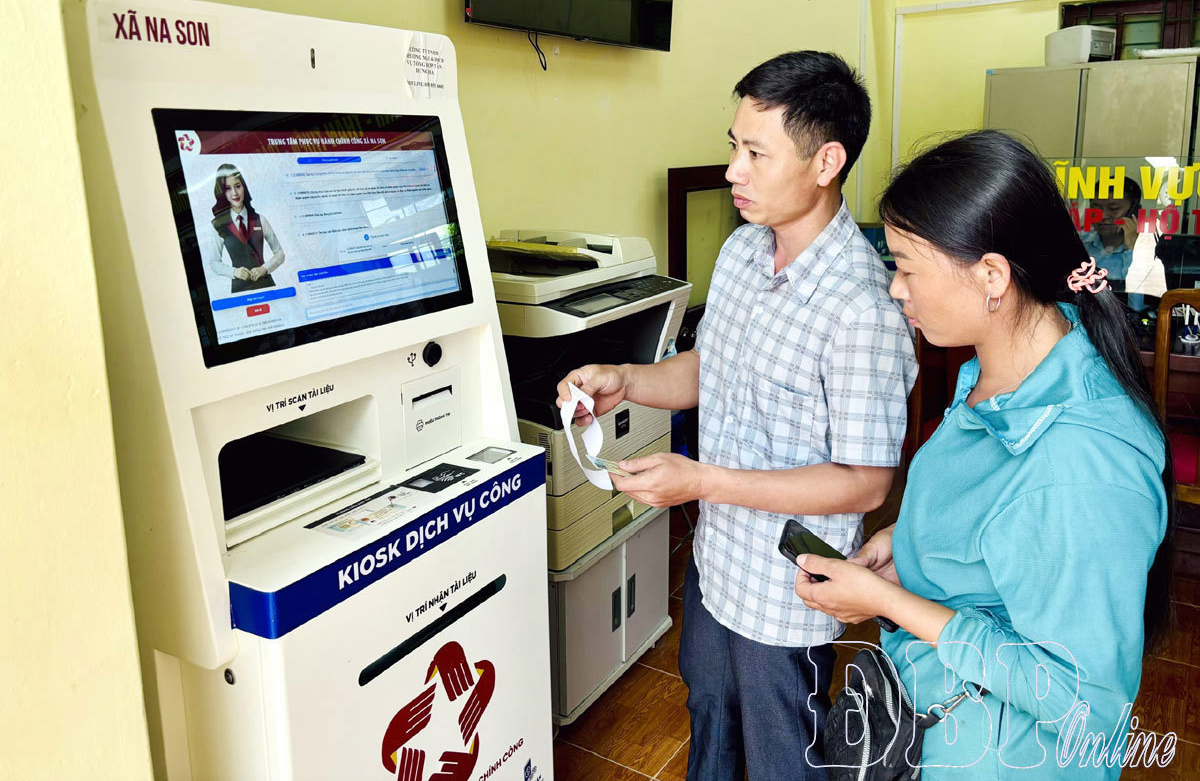
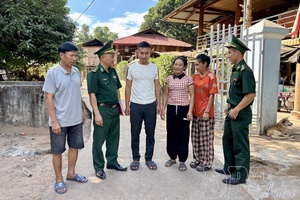
From the beginning of the year to date, all 5 out of 5 cadres and civil servants at the Mường Tùng commune Public Administrative Service Center have participated in over 10 training sessions on professional operations and technological applications. The acquired knowledge is applied to processing electronic dossiers, exploiting specialized software, and assisting citizens in utilizing online public services. The Center regularly dispatches civil servants to villages and hamlets to guide residents in preparing documents, declaring information, and submitting dossiers online. Direct, hands-on support activities help citizens familiarize themselves with administrative procedure resolution methods, creating opportunities for the public service execution contingent to hone communication and situational handling skills right at the grassroots. During the first nine months of 2026, the Center resolved over 800 dossiers, 100% ahead of schedule.
Khoàng Văn Biên, from Mường Tùng village, Mường Tùng commune, shared: “Previously, when needing to make a birth certificate for my child or authenticate documents, we often didn’t know what to prepare and had to go to the commune to ask. Now, with cadres coming directly to the village to guide each procedure, how to declare information, and how to submit dossiers via mobile phones, villagers understand much better. When we have business to resolve, we know in advance what to prepare, saving travel time.”
For Búng Lao commune, enhancing the capacity of cadres and civil servants is carried out right during the organization and administration of work. The commune Public Administrative Service Center assigns suitable tasks based on the professional qualifications, experience, and strengths of each individual. Technology application and dossier digitization are maintained regularly, tied to workflow reviews and evaluations of each processing stage’s efficiency. Through practical execution, the civil servant contingent has conditions to accumulate experience, perfect professional skills, and meet the increasingly high demands of resolving administrative procedures.
Lò Văn Quân, Director of the Búng Lao commune Public Administrative Service Center, stated: “We require every civil servant to firmly grasp regulations, proactively resolve cases, and bear responsibility for assigned dossiers. Any arising bottlenecks must be discussed and agreed upon for timely handling to avoid delays and backlogs. Consequently, nearly 100% of dossiers are resolved ahead of schedule; the digitization rate reaches 100%.”
Identifying the quality of cadres and civil servants as a vital factor in operating the two-tier local governance model, Điện Biên province accelerates training and fostering tailored to job positions and decentralized mandates. In 2026, the provincial People’s Committee plans to provide training and fostering for over 19,200 participants, focusing on state management knowledge, science and technology, innovation, digital skills, and professional operations.
In the domain of administrative procedure resolution, the provincial Public Administrative Service Center has advised the organization of training for civil servants and public employees of specialized agencies under the provincial People’s Committee and communes and wards on using the National Public Service Portal, the administrative procedure resolution coordination system, the petition feedback system, and online payments. Guidance and professional support for 45 commune-level public administrative service centers have been intensified.
During the first 10 months of 2026, the entire province reviewed 112 administrative procedures (44 commune-level procedures); thereby recommending the retention of 59 procedures, halting the review of 29 procedures due to changes or abolishment, and proposing the central government amend and supplement 24 procedures to ensure consistency and suitability with reality. Simultaneously, the Center appraised and submitted to the Chairman of the provincial People’s Committee to promulgate 171 decisions approving 1,433 internal processes for resolving administrative procedures, creating a basis for localities to implement them uniformly and strictly according to jurisdiction.
The operational efficiency of grassroots governance is reflected through every dossier resolved on time, every bottleneck untangled, and the satisfaction of citizens and enterprises. Realities in Điện Biên show that when each cadre and civil servant unleashes their capacity, sense of responsibility, and proactivity at work, service quality will progressively be elevated. That is also the substantive measure of a professional, efficient administration centered on citizens and enterprises.
Phương Dung












You have 500/500 characters left
Please enter 5 or more characters!!!