



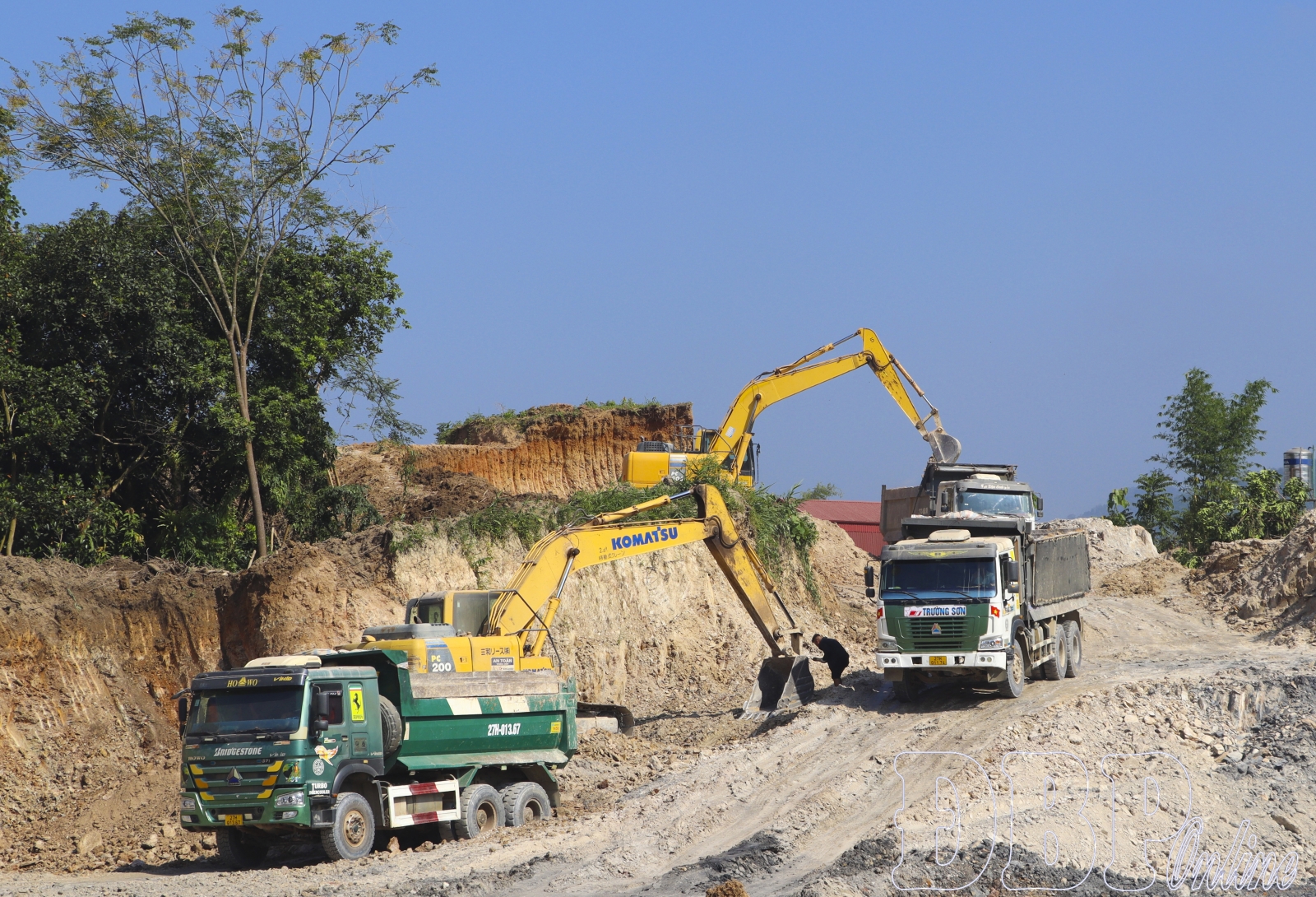
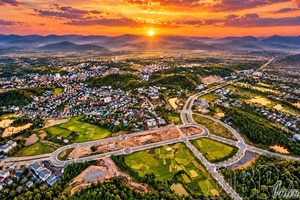
The Bắc Hồng Cúm New Urban Area Project (Zone A), a privately funded investment project, is currently a priority for Mường Thanh ward as it works to resolve obstacles to land clearance. The project requires compensation and land clearance for 45.58 hectares within the ward, affecting 315 households and individuals and three organizations. The large area to be acquired and the number of affected households, combined with complicated land-use histories in some cases, have made verification, documentation and the preparation of compensation plans challenging.
According to a report by the Mường Thanh ward People’s Committee, some households have used land for purposes other than those permitted, complicating efforts to verify its origin and legal status. In addition, cadastral records for the basin area, based on surveys conducted in 1995, differ in several respects from current survey and landownership records. Many households have acquired land through successive transfers without completing all required legal procedures, making verification a time-consuming process.
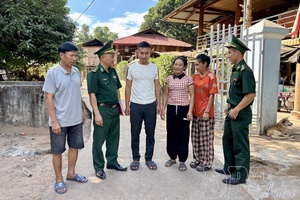
In response, Mường Thanh ward has identified public communication, outreach and consensus-building as key priorities. The ward Party Committee and People’s Committee have mobilized the entire local political system, including residential groups, villages and specialized agencies, to directly engage with individual households.
Trần Sỹ Quân, Vice Chairman of the Mường Thanh ward People’s Committee, said: “Our approach is to begin communication efforts early, reach every household, and understand each family’s circumstances and specific concerns. When residents do not fully understand certain issues, specialized agencies explain them directly on the basis of records, data and legal regulations. Any unresolved matters are compiled for consideration and resolution by the competent authorities.”
Through coordinated efforts, Mường Thanh ward has gradually overcome obstacles to project implementation. To date, it has largely completed surveying and identifying landowners and users, and has inventoried 370 land plots belonging to 264 of the 315 affected households, individuals and organizations, covering nearly 36 hectares. The ward has also verified the origins and use of 133 plots, covering more than 16.5 hectares.
The ward People’s Committee has prepared and publicly disclosed the compensation and land clearance plan and coordinated with the investor to make compensation payments to affected residents. As of October 15, the locality had handed over more than 12.3 hectares to the investor, including land belonging to organizations, households and individuals.
Residential groups have also actively participated in outreach and public engagement, helping residents better understand the project and its implementation. Trần Văn Thuận, Head of residential group 11 in Mường Thanh ward, said: “More than 100 households in our residential group fall within the project area. We have held numerous meetings, provided information and visited households directly to encourage them to cooperate. To date, many households have reached a consensus and received their compensation payments.”
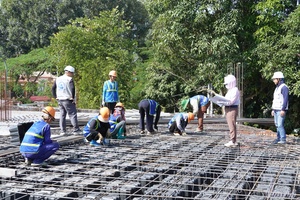
In Điện Biên Phủ ward, work is also underway on the province-wide investment project to build the Điện Biên provincial Sports Center. The project has faced persistent obstacles for years. It requires the acquisition of more than 13.5 hectares of land for compensation and clearance, affecting 198 households and individuals and six organizations. In December 2025, the province assigned Điện Biên Phủ ward responsibility for serving as the project investor.
Immediately after taking over the project, the ward established working groups and mobilized officials and Party members to visit residential groups and meet with individual households to explain the project and help resolve outstanding difficulties. It also established a land clearance steering committee, a team to verify land origins and dedicated public outreach teams. Dialogue with residents was stepped up to address their concerns, including the creation of a Zalo group for households in the land clearance area to facilitate communication.
As of October 14, the ward People’s Committee had handed over 9.94 hectares to the investor, covering land belonging to 138 of the 198 affected households and individuals and all six organizations.
Nguyễn Quang Hưng, Secretary of the Điện Biên Phủ ward Party Committee and chairman of the ward People’s Council, said: “The ward has mobilized the entire local political system, from the Vietnam Fatherland Front and mass organizations to residential-group Party secretaries and heads, to regularly visit local communities, meet residents, discuss their concerns and provide answers. As a result, many households have now expressed their support for the project’s implementation.”
Beyond the central wards, land clearance in Mường Phăng commune also involves a substantial workload. Five major provincial projects are currently being implemented in the commune, covering transport infrastructure, tourism, renewable energy and drug rehabilitation facilities. In response, the local authorities have mobilized the entire political system, maintained close contact with communities, listened to residents’ concerns and worked to resolve issues of public interest.
Recently, Mường Phăng commune, in coordination with the project investor, completed land clearance for two resettlement sites in Lọng Luông and Xôm villages as part of the Sơn La-Điện Biên-Tây Trang Border Gate Expressway Project. The two sites cover a total of 4.48 hectares and affect 53 households, individuals and organizations.
Trần Văn Tuấn, Chairman of the Mường Phăng commune People’s Committee, said: “Throughout the process, from surveying, inventorying and collecting declarations to preparing compensation plans, information has been made public and residents have been consulted in a democratic manner. When people clearly understand the process and agree with and support it, subsequent implementation becomes much smoother.”
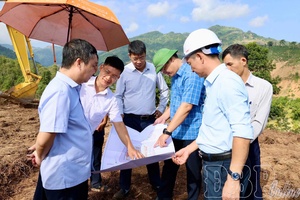
Experience across these localities shows that each project faces its own challenges, ranging from verifying land origins and completing documentation to addressing petitions concerning compensation, support and resettlement. Removing these bottlenecks therefore requires authorities to closely monitor each project, clearly identify individual issues, assign specific responsibilities and coordinate closely with specialized agencies, investors and grassroots organizations.
As Điện Biên works to meet its growth targets for the final months of the year, provincial authorities are prioritizing efforts to accelerate project implementation, with land clearance remaining a key task. Localities are increasing direct dialogue with residents, shifting from one-way communication toward listening to concerns and addressing individual petitions in detail. At the same time, they are making project information public and ensuring that every stage of the process complies with regulations and protects residents’ legitimate rights and interests.
Resolving land clearance obstacles is not simply about handing over land to investors as quickly as possible and speeding up project schedules. It also requires a balance between development needs and the interests of local residents. When emerging issues are clearly explained and petitions are considered and resolved by the competent authorities in accordance with the law, public consensus can be strengthened. This helps unlock resources, enables major projects to proceed as planned and contributes to Điện Biên’s socioeconomic development goals.
Phạm Trung






You have 500/500 characters left
Please enter 5 or more characters!!!