



Given the vast territory, scattered population and difficult living conditions in many areas, authorities, sectors and agencies across Điện Biên province are working to modernize their outreach content and diversify methods of legal communication and education. The aim is to make legal provisions more accessible to local residents and tailor outreach to the practical conditions of each locality.
In Phượn village, Thanh Yên commune, legal education sessions organized by the commune’s Women’s Union are held directly in residents’ homes. Union officials meet with local people to discuss and explain legal provisions relevant to their daily lives. Topics include the Law on National Borders, the Law on Marriage and Family, and the Law on Drug Prevention and Control. These provisions are explained in an approachable, easy-to-understand manner, helping residents grasp the information and apply it in practice.
Nguyễn Thị Nhâm, Deputy Chairwoman of the Thanh Yên commune Women’s Union, said that the union has recently coordinated with local agencies, departments and mass organizations to disseminate practical legal information, helping raise legal awareness and compliance among its members, women and the wider community. These efforts have gradually encouraged residents to take a more proactive role in preventing violations, building happy families and maintaining solidarity within their communities.
Since the beginning of the year, the Thanh Yên commune Women’s Union has held more than 60 legal education sessions in 20 villages, attracting over 3,000 attendances. By focusing on issues relevant to everyday life and combining information-sharing with direct discussion, the sessions have made legal knowledge more accessible and helped residents better understand their personal responsibilities in complying with the law.
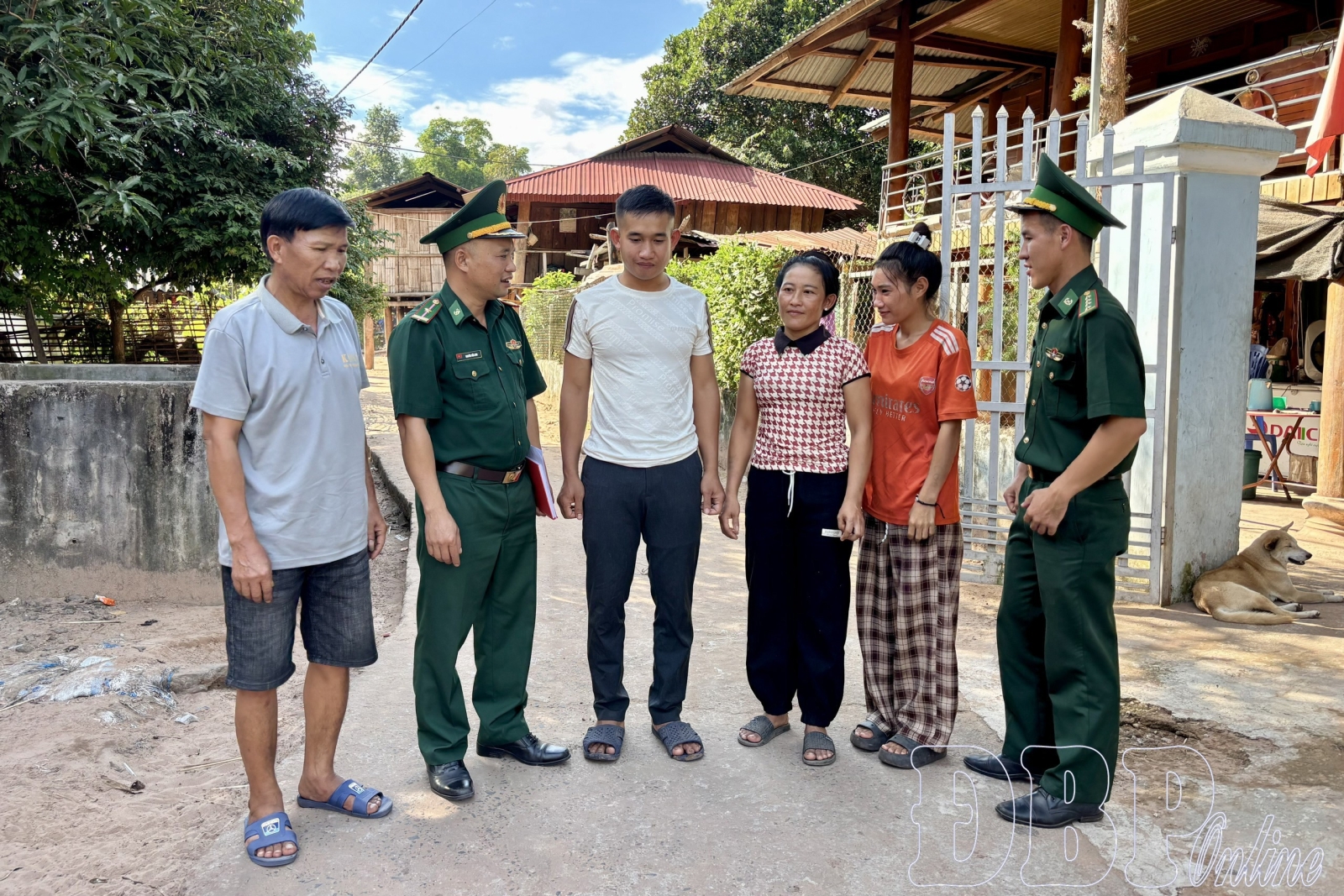
Lường Thị Hặc, a resident of Phượn village in Thanh Yên commune, said: “Through the information shared by the union’s officials, I have learned more about the harmful effects of drugs, issues related to domestic violence, and everyone’s responsibility to prevent violations. I will continue sharing this information with my children and grandchildren and encouraging other villagers to strengthen their awareness of and compliance with the law.”
The Nậm Kè Border Post, under the provincial Border Guard Command, is responsible for managing a 12.192-kilometer stretch of the national border and overseeing 14 villages in Nậm Kè commune, home to more than 1,500 households and nearly 9,000 people. The area is extensive, its population unevenly distributed, and living conditions remain difficult for some residents, whose livelihoods depend mainly on upland and hillside farming. Legal awareness among some residents remains limited, making it necessary to provide regular legal education through methods suited to local circumstances.
To improve the effectiveness of its outreach, the Nậm Kè Border Post has introduced a range of approaches tailored to conditions in the area. Officers and soldiers visit households directly and incorporate legal education into village meetings. They also work with local authorities and relevant organizations and forces to encourage residents to comply with the law.
The border post also maintains its “Border guard loudspeaker” program and shares legal information and guidance through Zalo and Facebook, enabling residents to access information more quickly and conveniently.
In addition, the border post places particular emphasis on legal education for students through its “Borderland classroom lesson” model. Topics include national sovereignty, the border line, boundary markers and citizens’ responsibilities in protecting the national border. Information is delivered in Vietnamese and local ethnic languages to suit students’ levels of understanding.
Alongside explaining legal requirements, officers and soldiers encourage residents to take greater responsibility and actively cooperate with law enforcement agencies in detecting and preventing violations, thereby maintaining public order and security in their communities.
Major Vũ Đức Toàn, Deputy political officer at the Nậm Kè Border Post, said: “For legal outreach to be effective, officers and soldiers must stay close to the people, understand their concerns and identify the difficulties they face in understanding and complying with the law. This allows us to choose appropriate ways of communicating and provide clear explanations so that residents can understand, remember and gradually develop a voluntary commitment to compliance.
“It is particularly important to draw on the influence of respected community members and build consensus so that residents actively participate in maintaining public order and security and protecting the border line and boundary markers. When people clearly understand their rights and obligations, they are better able to prevent violations and work proactively with the relevant authorities to address issues that arise in their communities.”
Through outreach that is closely connected to local people and grounded in real-life conditions, the law is gradually becoming part of everyday life. These efforts help strengthen legal compliance, build public trust and a sense of responsibility, and mobilize the collective strength of communities to maintain public order and security while firmly safeguarding national territorial sovereignty and border security.
Thùy Trang










You have 500/500 characters left
Please enter 5 or more characters!!!