



Implementing the two-tier local government model represents an important reform step in perfecting a modern administration, aiming to build a streamlined apparatus that operates smoothly, clearly delineates functions and tasks, and elevates the autonomy and accountability of grassroots-level authorities. After one year of deployment, the organizational structure of agencies and units across the province continues to be consolidated reasonably, reducing intermediate steps while enhancing the validity and efficiency of state management.
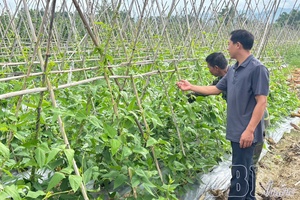
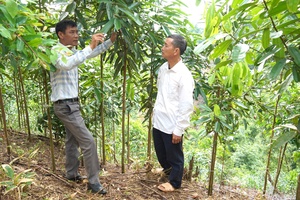
In Chiềng Sinh commune, the effectiveness of the two-tier local government model manifests comprehensively across various fields. The economy maintains stable growth, with cultivation area, total livestock herds, and budget revenue all exceeding set plans, while the poverty rate has declined beyond targeted goals. Cultural, social, and environmental protection sectors exhibit positive changes, while national defense, political security, and social order are constantly maintained.
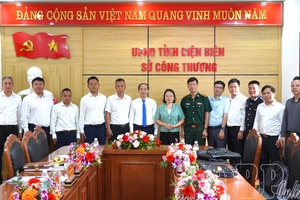
Đỗ Văn Sơn, Chairman of the Chiềng Sinh commune People’s Committee, noted that the commune proactively consolidated its cadre team while synchronously investing in information technology infrastructure and equipment at the Public Administrative Service Center to guarantee that all administrative procedures are received and processed quickly and accurately in a digital environment. Concurrently, every cadre is required to view citizens and enterprises as service recipients, listening fully to feedback, guiding attentively, and resolving work strictly according to regulations and deadlines.
.jpg)
As the westernmost border commune of the Fatherland, Sín Thầu once faced numerous difficulties regarding geographical conditions, infrastructure, and distance to access administrative services. However, following the implementation of the two-tier local government model, the commune government apparatus quickly stabilized its organization and unleashed operational efficiency. Leadership and operational work have been renovated scientifically and synchronously, guaranteeing the principle of democratic centralism. Assigning cadres to oversee specific fields and areas has been executed clearly, contributing to keeping close to the grassroots-level, grasping demographic situations firmly, and promptly resolving difficulties arising during organizational restructuring.
Nguyễn Văn Thắng, Chairman of the Sín Thầu commune People’s Committee, stated: “Right from operating the two-tier local government model, the commune People’s Committee identified serving the people better as the highest goal. Therefore, all administrative procedure resolution workflows were reviewed and standardized to be convenient, open, transparent, and cost-effective. Crucially, the contingent of cadres and civil servants performs official duties with a high sense of responsibility and standardized attitudes, guiding attentively and regarding the convenience and trust of citizens as motivation to continue innovating service methods.”
Transformations in organizational structure and administrative procedure reform are clearly reflected through public recognition. When the government operates efficiently, work resolution workflows become increasingly transparent, service attitudes improve, and public trust is fortified.
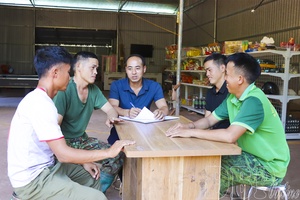
Chang Khừ Pứ from Tá Miếu village, Sín Thầu commune, shared that residents feel the changes clearly after implementing the two-tier local government model. Commune cadres proactively go to the grassroots-level more frequently, receiving and resolving citizen petitions quickly. When coming to handle administrative procedures, people receive attentive guidance through clear processes and timely resolutions, creating peace of mind because the government constantly listens, respects, and serves the people with a responsible spirit.
It can be observed that the post-restructuring administrative apparatus operates stably step by step, coordination mechanisms between levels and sectors grow tighter, administrative discipline is heightened, and the operational capacity of grassroots-level governments is consolidated. The prominent highlight of the new model lies in governance methods shifting toward professional, scientific practices that emphasize individual responsibility. Decentralization and delegation are executed more clearly alongside strengthened inspection and supervision, enabling commune-level authorities to proactively handle arising issues right from the grassroots-level. This serves as a vital foundation to materialize the goal of building a service-oriented administration centered around citizens and enterprises.
Hand in hand with organizational consolidation, the province concentrates on perfecting institutions, accelerating administrative reform, and driving digital transformation in official duties. The province issued Administrative Reform Plans alongside Administrative Procedure Review Plans, deploying workflow restructuring in digital environments, increasing data reuse, and step-by-step reducing paperwork to shorten processing times and limit costs for citizens and businesses.
In 2025, the province’s Public Administration Reform Index (PAR INDEX) reached 87.67 points, ranking 29th out of 34 provinces and cities, while the Satisfaction Index of Citizens with Public Administrative Services (SIPAS) achieved 83.31 points, ranking 19th out of 34 provinces and cities. These figures reflect efforts to elevate public governance quality while demonstrating the initial effectiveness of operational innovation and administrative reform.
One year is not a long journey for a foundational reform, yet it is sufficient to affirm the positive momentum of the two-tier local government model across the province. The post-restructuring apparatus operates with growing stability, management methods are modernized, official duties accountability is heightened, and service quality is affirmed through practice, steering toward building a streamlined, effective, and efficient administrative apparatus that serves local development and the people’s lives.
Diệp Chi

.jpg)
.jpg)
.jpg)
.jpg)

.jpg)
.jpg)
.jpg)
.jpg)
.jpg)

You have 500/500 characters left
Please enter 5 or more characters!!!