



Part 3: The bond of blood connecting reunion days
After more than half a century of waiting, each DNA sample not only opens up the hope of reunion for a family but also contributes to completing a sacred journey of gratitude: restoring the names of those who sacrificed for the nation’s independence and freedom.
Restless longing
In Hoàng Công Chất village, Thanh An commune, Ngô Văn Thừa carefully preserves the death notice of his older brother, martyr Ngô Quốc Dư, as the family’s most precious keepsake. Martyr Dư fell in January 1973 at the age of just 19, before marrying. The place of sacrifice was recorded simply as “K5” (zone 5), making the journey to find him over the past half-century start almost from scratch.
Carrying those scanty clues, Ngô Văn Thừa’s family persevered through four exhaustive searches across martyr cemeteries from Quảng Trị to the former Quảng Nam. Over a decade ago, the family found his name in a burial list at a cemetery in Quảng Nam (now Đà Nẵng city). Even so, the exact grave of martyr Ngô Quốc Dư remains unconfirmed. Each time they have the opportunity to return, relatives can only send their longing through incense sticks amidst the vast cemetery. Ngô Văn Thừa choked up, sharing that knowing which cemetery he rests in brings his parents peace of mind, as they believed he had comrades by his side, yet before passing away, his parents’ deepest regret remained failing to find his exact grave.
.jpg)
In Mường Thanh ward, Phí Văn Quang continues his late mother’s unfinished wish: finding his maternal uncle, martyr Trần Văn Tộ, a native of Hưng Yên. Their maternal grandparents passed away when his mother was only seven years old, leaving the two siblings orphaned and relying on each other to grow up. When the country faced perilous times, the younger brother enlisted and fell during the French resistance war at less than 20 years old. The death notice stated only that he died during an enemy sweep along Road 10 in Nam Định (now Ninh Bình province). Such sparse information led his sister to search tirelessly across cemeteries in Ninh Bình and neighboring provinces, yielding no results to this day.
In 1968, Phí Văn Quang’s family moved up to Điện Biên to build a new economic zone. Life in the new land remained challenging, yet every time she returned to her hometown, his mother continually inquired about her younger brother. Until the end of her life, her deepest obsession remained not knowing where her brother rested. Phí Văn Quang emotionally recounted that his mother carried that regret until her dying breath, and the family buried her in her hometown, hoping she could rest near the younger brother she had longed for her whole life, even though his exact burial place remains unknown.
Two stories, two lives sharing a common waiting period spanning multiple generations. Across the land of Điện Biên today, families of martyrs still carry unanswered questions about where their loved ones rest.
Kindling hope through DNA
During the 500-day-and-night campaign to accelerate the search, collection, and identification of martyr remains, in the final days of last July across commune clusters throughout the province, hundreds of martyr relatives arrived to provide biological DNA samples for matching and identifying martyr remains. In their hands were death notices and martyr dossiers yellowed with age, preserved by families across generations. This time, they placed their trust in scientific achievements to seek out their loved ones after decades of separation.
At the sample collection point in Điện Biên Phủ ward, Lò Thị Nênh from Tà Lèng village and her son arrived to provide biological samples. Her older brother, martyr Lò Văn Sim, fell while fulfilling international duties in neighboring Laos at a very youthful age. Tearful after completing procedures and sample collection, Lò Thị Nênh expressed that if her brother’s remains have been repatriated, the DNA matching results will help the family find him and welcome him back to his homeland and loved ones after years of separation.
In Mường Chà commune, Lường Văn Xoong from Pa Tần village nervously awaited his turn to provide samples. His older brother, martyr Lường Văn Chịch, fell on February 7, 1979, while performing border defense duties. Since receiving the tragic news, the family has had no further specific information nor the opportunity to visit the place where he fought. Lường Văn Xoong shared that for many years, relatives have continuously yearned to know where his grave lies, so when participating in DNA biological sample collection, the entire family placed high hopes on forensic technology, wishing for a day when his identity can be confirmed and he can be brought home.
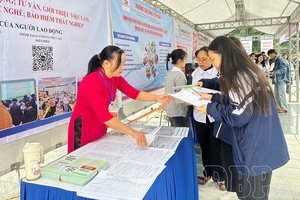
According to reviews by the provincial police, Điện Biên currently records 553 martyrs whose burial information remains unidentified or whose graves no longer contain remains. In the first phase of DNA biological sample collection, 435 eligible relatives were identified, with 426 agreeing to participate. Task forces from the provincial police coordinated with Genestory Company and commune and ward police forces to organize 10 collection points, gathering 392 DNA samples. Among them, 7 elderly or frail relatives had samples collected at home. To ensure synchronized collection, grassroots police forces previously conducted reviews, established lists, visited each family to notify and guide information declaration, and assisted distant relatives lacking transportation as well as elderly individuals with mobility difficulties. For numerous ethnic minority relatives, police officers and soldiers also provided language support, accompanying residents throughout the sampling process.
Captain Phạm Minh Thắng, Head of the Residence Management, ID Issuance and Management Team under the PC06 Division of the provincial police, stated that the greatest difficulty during campaign implementation was that most martyr relatives are elderly, frail, living dispersedly, or residing outside the locality. Therefore, the provincial police closely coordinated with local authorities and grassroots police to review and verify information, selecting convenient sampling locations to provide the best conditions for all eligible relatives to participate.
Every set of remains collected, every biological sample gathered and matched, and every identity confirmed marks another family given the chance to close years of longing. This is also how today’s generation expresses gratitude to those who dedicated their youth to the nation’s independence and freedom. The journey of “calling the names” of martyrs thus continues so that soldiers of the past may return with their names, ages, and the memories of their families and comrades.
Nguyễn Hiền
.jpg)
.jpg)
.jpg)
.jpg)
.jpg)
.jpg)
.jpg)
.jpg)
.jpg)
.jpg)
.jpg)
.jpg)
You have 500/500 characters left
Please enter 5 or more characters!!!