



At the 4th Session of the 16th Điện Biên provincial People’s Council (held from July 15 to 16), the draft Resolution stipulating support levels for executing production development projects utilizing national target program funds for the 2026-2030 period stood as one of the contents receiving significant attention from delegates and voters.
.jpg)
According to the draft resolution, policies are structured to specifically regulate support levels across three project groups: value-chain linked production development projects, community production development projects, and task-based production development projects. For poor households, near-poor households, newly escaped poverty households, and families with members who contributed to the revolution, maximum support equals 100% of supported contents funding; other households receive maximum support of 50%.
For leading linking entities such as enterprises and cooperatives, state budget support covers up to 30% of investment costs for specific designated items. Notably, the draft stipulates that a minimum of 70% of linked project support funds must be directly used for production activities of local residents, ensuring resources concentrate on the correct beneficiaries.
Offering opinions during panel discussions, Mùa A Vảng, Alternate Member of the Party Central Committee, Deputy Secretary of the provincial Party Committee, and President of the Vietnam Fatherland Front Committee of the province, emphasized that issuing a specific support mechanism for production development projects is extremely necessary. This serves as a basis for localities to proactively build and deploy appropriate production development models, contributing to the efficient utilization of national target program resources. He requested that policies focus support on correct subjects, encourage public participation in production linkages, step-by-step establish concentrated commodity production areas, and contribute to raising incomes and creating sustainable livelihoods for local ethnic groups.
.jpg)
Agreeing on the necessity of issuing the resolution, provincial People’s Council delegate Mùa Thị Kía suggested that drafting agencies continue researching expanding support scopes for crop structure transformation. According to the delegate, many swidden land areas currently cultivate crops with modest economic efficiency such as corn, cassava, and arrowroot, while demand to convert to high-value crops is growing. Therefore, considering appropriate support mechanisms for swidden land when converting to high-value crops will create conditions for residents to boldly transform production, efficiently exploit land resources, and elevate incomes.
This policy also received agreement from individuals directly organizing national target programs at the local level. Vice Chairman of the Mường Nhé commune People’s Council Pờ Hùng Sang evaluated that the draft resolution specifically regulates subjects, support levels, and execution principles, creating favorable conditions for local implementation. According to Sang, with a unified policy framework, communes will act more proactively in selecting production models suited to local advantages while elevating management efficiency for support capital. The key requirement during execution remains ensuring openness, transparency, and selecting the right beneficiaries and needs so that each completed project yields practical results.
.jpg)
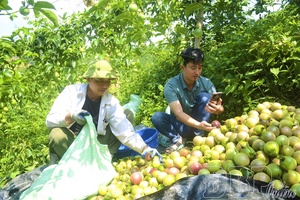
Many opinions during panel discussions focused on project participation conditions to ensure alignment with grassroots-level production realities. The draft directs priority toward developing the province’s key crops - such as macadamia, coffee, pineapple, and passion fruit - linked with building concentrated raw material areas starting from 30 ha upward, with participating households possessing a minimum production area of 0.2 ha. The goal is to step-by-step shape large-scale commodity production areas and ensure stable raw material supplies for processing and consumption, as fragmented production land in many highland communes creates difficulties if participation conditions are regulated too strictly.
Another point receiving widespread consensus is prioritizing direct resources for producers. Regulating that linked projects must allocate a minimum of 70% of support funds directly for public production activities is expected to limit funds scattering into indirect expenditures, thereby elevating budget utilization efficiency. This also serves as a foundation to increase supervision during implementation, ensuring state resources truly reach the people - the primary beneficiaries of national target programs.
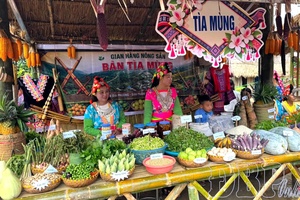
Engaged with the community tourism model in Nặm Cứm village, Nà Tấu commune, Vàng A Dế expressed hope that the resolution will soon enter daily life - helping residents develop production, elevate agricultural product quality, create signature products to serve tourism, and boost incomes.
The draft Resolution stipulating support levels for production development projects utilizing national target program funds for 2026-2030 aims toward constructing a unified support mechanism, encouraging commodity production, accelerating value chain linkages, forming concentrated raw material zones, and elevating agricultural product value. This orientation aligns with agricultural restructuring requirements, contributing to fulfilling sustainable poverty reduction goals in the new era.
Quang Long

.jpg)
.jpg)
.jpg)
.jpg)
.jpg)
.jpg)
.jpg)
.jpg)
.jpg)
.jpg)
.jpg)
You have 500/500 characters left
Please enter 5 or more characters!!!