



Following his teachings, the “four-good Party cell” model is being comprehensively deployed across party committees and party organizations in Điện Biên. Party cells have selected concrete actions tailored to the political tasks of each locality, agency, and unit, thereby progressively improving the quality of cell meetings, promoting the exemplary role of party members, and driving clear progress in task performance.
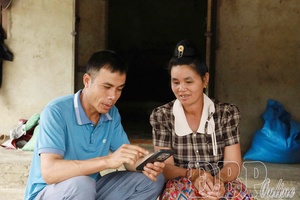
Among the model’s four criteria, effectively accomplishing political tasks is considered a key yardstick for every cell. In the Party Cell of Tân Phong village, Tủa Chùa commune, this criterion has been translated into concrete actions tied to economic development, new-style rural construction, and digital transformation. Following administrative unit reorganization, Tân Phong village comprises more than 170 households with nearly 740 residents. With increased workloads and higher requirements, the cell assigned party members to oversee specific household clusters, regularly stay close to the grassroots, monitor local developments, and disseminate Party guidelines, state policies, and laws. Issues arising in the community are brought to cell meetings for discussion to reach consensus on solutions.
Implementing the provincial policy on coffee tree development, the cell identified this as a central task for 2026. Party members took the lead in trial planting and encouraged local residents to convert land, prepare seedlings, and organize new plantations. To date, the village has newly planted over 17 hectares of coffee.
.jpg)
Concretizing resolutions has yielded tangible results, steadily improving local livelihoods. Tân Phong village now has only 14 poor households, with average annual income exceeding VND 35 million per person. More importantly, residents have placed growing trust in the cell’s leadership and actively participate in local movements.
Tòng Văn Vũ, Secretary of the Tân Phong village Party Cell, shared that the cell ensures every task has a detailed plan with regular performance inspections. During each meeting, completed tasks and remaining shortcomings are candidly discussed to draw lessons learned, enhancing each party member’s sense of responsibility and improving the efficiency of village affairs.
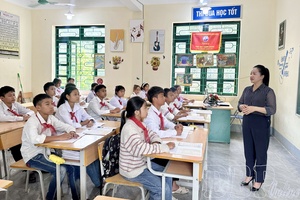
At the Party Cell of the Public Administrative Service Center of Mường Phăng commune, efforts center on building a contingent of good cadres and party members. Each cadre and party member is required to uphold a strong sense of responsibility, reform their working style, and elevate service quality for the people. This focus is maintained regularly during cell meetings. Center staff proactively learn and apply information technology in executing their duties, adopting public satisfaction as the primary measure of work quality.
Consequently, administrative procedure handling in Mường Phăng commune has seen major improvements. Center staff directly guide citizens in using online public services, minimizing the need for multiple dossier revisions. Since the beginning of the year, the commune Public Administrative Service Center has received and processed over 700 online dossiers, achieving a near 100% rate of on-time and ahead-of-time resolutions. According to Cà Văn Tuấn, a member of the cell, implementing the “four-good Party cell” model serves as a motivation for self-cultivation, enhancing public service ethics and responsibility. Every party member must stay close to the people, listen to them, and guide them in completing procedures swiftly and legally, building the image of dedicated, responsible cadres in the new era.
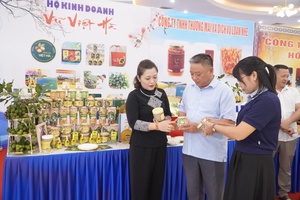
Nguyễn Minh Tuân, Secretary of the Party Committee of Sính Phình commune, noted that the “four-good Party cell” model helps cells throughout the commune Party Organization clearly identify core tasks rather than spreading resources too thin. Focus is placed on leading, disseminating information, and mobilizing residents to cultivate coffee and macadamia, accelerate digital transformation, and improve administrative procedure handling, while taking part in new-style rural construction, maintaining public security and order, and preserving environmental hygiene. When party members set pioneering examples, local movements receive enthusiastic public response.
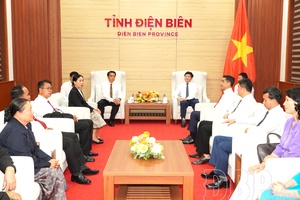
The Điện Biên provincial Party Organization comprises 49 party organizations under the provincial Party Committee and 793 grassroots party organizations with over 51,700 party members. Recently, the “four-good Party cell” model has been implemented synchronously across the entire Party Organization, closely adhering to four criteria: successfully accomplishing political tasks; improving meeting quality; maintaining solidarity and discipline; and cultivating exemplary cadres and party members. On this foundation, cells proactively select key missions, linking resolutions with the practical realities of each locality, agency, and unit; gradually innovate meeting contents and formats; promote the exemplary role of cadres and party members; and enhance task performance. As a result, the operational quality of Party cells has steadily risen, confirming the leading core role of party organizations. In the first quarter of 2026, over 99% of cells under grassroots party organizations in the province were rated as having completed tasks well or better.
The “four-good Party cell” model has provided strong momentum for every cell to innovate leadership methods, for every party member to heighten responsibility, and for every party organization to bring into full play its role as the political core at the grassroots level. This serves as a vital foundation for building increasingly clean and strong party organizations to meet development requirements in the new stage.
Phương Dung
.jpg)
.jpg)
.jpg)
.jpg)
.jpg)
.png)
.jpg)
.jpg)
.jpg)
.jpg)
.jpg)

You have 500/500 characters left
Please enter 5 or more characters!!!