



Recently, localities across Điện Biên province have focused on implementation through practical solutions, ranging from making information public and holding dialogues with the people to promoting community supervision roles. Thereby, citizens’ right to mastery is guaranteed, contributing to forging consensus, consolidating trust, and driving socio-economic development.
.jpg)
In recent years, democracy work has been decisively implemented by the province with innovative, practical, and citizen-centered approaches. From dialogues and voter contact conferences to village and public meetings, the voice of the people is increasingly listened to and respected. When residents are informed, allowed to discuss, and enabled to participate in supervising issues directly affecting their lives, democracy does not stop at guidelines but becomes a driving force promoting social consensus.
Right from the beginning of 2026, the Standing Board of the provincial Party Committee issued Directive No.12-CT/TU on continuing to promote and elevate the quality and efficiency of implementing grassroots-level democracy. This serves as an important basis for heightening the responsibility of heads of organizations, creating conditions for citizens to contribute opinions and reflect their thoughts and aspirations. Alongside party committee leadership, local authorities at all levels materialized guidelines through programs and plans. To date, 100% of agencies, units, and localities across the province have issued plans to implement grassroots-level democracy.
.jpg)
A prominent feature in implementing grassroots-level democracy is stepping up dialogues and direct contact with the public. Following the arrangement of administrative units and the organization of two-tier local governance, 100% of grassroots-level-level democracy implementation steering committees were consolidated, issuing operating regulations and assigning specific tasks to each member. Localities organized numerous voter contact conferences and direct dialogues between party committees, authorities, and the people to listen to and promptly resolve issues arising from the grassroots level.
In Pu Nhi commune, during the first six months of the year, the commune organized 27 voter contact conferences with over 1,350 attendee visits and 3 public meetings with over 1,250 participant visits. Through dialogues, numerous public petitions related to production, infrastructure, and social welfare were absorbed and promptly resolved by local authorities. A prime example is promoting grassroots-level democracy during the arrangement and merger of villages across the commune. Before implementing the policy to reduce from 25 villages down to 16, commune authorities conducted broad public opinion collection, publicly posted arrangement options, and listened to concerns and petitions from the grassroots level.
.png)
According to Đinh Quang Bạo, Chairman of the Pu Nhi commune People’s Committee, during village arrangement and merger, the commune determined that citizens must be placed at the center. All guidelines and options were made public so that people could know, discuss, and offer opinions before decisions were made. Selected contents were adjusted after collecting opinions to suit each village’s reality. When residents clearly understand the purpose and benefits of rearrangement and directly participate in deciding issues related to their community, consensus is built from the grassroots-level.
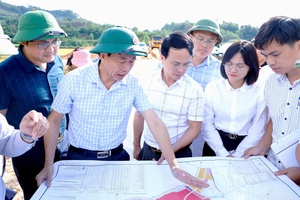
In Điện Biên Phủ ward, grassroots-level democracy execution is promoted through direct dialogues between local authorities and residents. During the first six months, the locality organized over 120 dialogues to listen to thoughts and aspirations, resolving obstacles regarding site clearance, thereby forging consensus in deploying socio-economic development projects. Typically, on July 5, the Điện Biên Phủ ward People’s Committee organized a conference for dialogue, dissemination, and mobilization targeting households and individuals with recovered land for the Huổi Phạ Commercial, Tourism, Service Urban Area and Golf Course Project.
.png)
Thanks to implementing well the motto “the people know, the people discuss, the people inspect,” the majority of households basically agreed with the project deployment policy. Beside high consensus on development goals, residents also frankly proposed solutions to guarantee rights during land recovery, such as timely compensation payments and conclusively resolving obstacles regarding land origins and land-attached assets. These petitions were absorbed and answered by authorities and specialized agencies, who committed to continuing reviews and considerations according to regulations, forging public consensus.
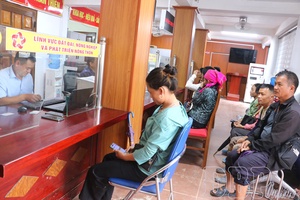
Grassroots-level democracy is also clearly reflected through the open and transparent publication of information related to citizens’ rights and interests. Currently, 100% of commune-level and provincial authorities strictly maintain periodic citizen reception schedules. Concurrently, administrative reform and digital transformation have contributed to elevating grassroots-level democracy execution efficiency. Many localities maintain on-time and ahead-of-deadline dossier resolution rates, such as Điện Biên Phủ ward, Mường Phăng commune, and Pu Nhi commune.
The role of the Fatherland Front and political-social organizations is promoted. During the first six months of the year, the entire province organized 9 social criticism sessions with 88 participating opinions, while conducting 128 supervision sessions across all levels. Notably, the first “Listening to the people” conference in 2026 created a direct dialogue forum between provincial leaders and nearly 400 delegates representing the public. Through the conference, numerous issues reflected by residents were answered and handled right at the grassroots level.
.png)
Community democratic institutions also demonstrate positive effectiveness. Currently, the province hosts 1,369 mediation teams with 7,743 mediators, including 1,260 mediators who are front cadres. From the beginning of the year to date, mediation teams received 265 conflict cases in residential communities and successfully mediated 200 cases, reaching a rate of over 75%. This result contributes to limiting complaints, preserving community unity, and ensuring security, order, and stability at the grassroots level.
To make grassroots-level democracy substantive, Điện Biên steps up dissemination, raising awareness among cadres, party members, and the people; strengthens dialogue, administrative reform, digital transformation applications, and elevates the quality of resolving public petitions. Concurrently, it promotes the supervision and criticism roles of the Fatherland Front, mass organizations, and residential communities. When citizens are informed, allowed to discuss, enabled to supervise, and participate in deciding issues directly related to their lives, grassroots-level democracy will prove effective.
Thu Phương

.jpg)
.jpg)
.jpg)
.jpg)
.jpg)
.jpg)
.jpg)
.jpg)
.jpg)
.jpg)
You have 500/500 characters left
Please enter 5 or more characters!!!