



On the morning of July 30, the Cultural House of Phiêng Pi village in Pú Nhung commune was packed with residents attending a direct contact and dialogue conference between party committee and government heads and the people, organized by the Standing Board of the Vietnam Fatherland Front Committee of Pú Nhung commune. At the conference, residents boldly raised numerous recommendations concerning production development, forest protection, healthcare, security and order, alongside issues that concerned them. In a receptive spirit, every opinion and recommendation from Phiêng Pi villagers was heard, discussed, and answered by commune leaders.
Sùng A Lầu, Head of Phiêng Pi village, noted that what delighted villagers most was having their opinions heard by the party committee and commune authorities, adding that while some issues received immediate resolution and others required time, clear explanations satisfied the villagers.
It is no coincidence that Phiêng Pi has currently become a village exhibiting positive transformations in Pú Nhung commune, with multidimensional poverty rates dropping from 44.8% in 2021 down to 24.1% in 2025. The village met 16 out of 19 new rural development criteria, while numerous inefficient corn and rice areas were converted into planting coffee, macadamia, mangoes, and high-economic-value crops. These results stemmed from multiple factors - including State investment care, public self-striving efforts, and the companionship of party committees and authorities through regular visits to grassroots levels to listen, engage in dialogue, and resolve difficulties promptly, forging consensus to bring guidelines and policies into daily life.
.jpg)
July 12, 2025, marked a memorable milestone for 66 households comprising 340 residents in Huổi Háo village, Búng Lao commune, when they accessed national grid electricity for the first time after years of waiting. Utilizing resources from the “Lighting up Điện Biên” program, the village was invested with over 3.5 km of 35kV medium-voltage lines, a 0.4kV low-voltage line system, and a transformer station, guaranteeing safe and stable power supply for daily life and production. Mùa A Ly from Huổi Háo village, Búng Lao commune, excitedly shared that villagers had longed for electricity for a long time, raising recommendations whenever commune cadres visited village meetings or voter contacts, noting that electricity makes life much more convenient, eases children’s studies, and reassures villagers in investing to develop production.
The arrival of electric light not only dispersed darkness in the highland village of Huổi Háo, but also opened conditions for local residents to elevate their quality of life. Tạ Mạnh Cường, Party Cell Secretary and Chairman of the Búng Lao commune People’s Council, shared that using national grid electricity represents a legitimate public aspiration, noting that stemming from voter opinions and recommendations across contact sessions, the People’s Council coordinated with related agencies to propose investment, step-by-step resolving difficulties and fulfilling long-standing public desires. Completing the project improved living and production conditions while consolidating voter trust toward local party committees and authorities.
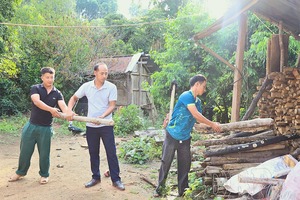
Beyond recommendations concerning socio-economic development or infrastructure investment, grassroots party committees and authorities consistently attend to resolving emerging daily issues for residents promptly. Nguyễn Trung Nghĩa’s family in Residential Group 2, Na Sang commune, suffered repeated impacts due to inadequate roofing and drainage systems from an adjacent household. Immediately upon receiving feedback, the commune dispatched cadres to inspect the site, engage in dialogue with related parties, and agree upon handling options to guarantee legitimate resident rights.
Trần Hồng Quân, Chairman of the Na Sang commune People’s Committee, stated that executing work well requires cadres to stay close to the people and listen regularly to public feedback, adding that the commune assigns cadres to inspect, consider, and resolve resident recommendations under regulations without keeping people waiting long.
From early 2026 to date, Na Sang commune received 17 citizen visits offering feedback and recommendations, while receiving, classifying, and processing 11 petitions concerning land disputes and family conflicts, achieving a 100% complete resolution rate for all cases within its authority.
From dialogues in Phiêng Pi and the joy of electricity in Huổi Háo to handling public livelihood recommendations in Na Sang, listening to the people has clearly become a leadership and administrative method across numerous localities. Every opinion absorbed and recommendation resolved builds an additional bridge connecting party committees and authorities with the people, while enabling leaders to grasp practical realities to issue appropriate decisions, forming the foundation to construct a two-tier local governance truly close to the people, for the people, and serving the people.
Quang Long
.jpg)
.jpg)
.jpg)
.jpg)
.png)
.jpg)
.jpg)
.jpg)
.jpg)
.jpg)
.jpg)
.jpg)
.jpg)

.jpg)
.jpg)
You have 500/500 characters left
Please enter 5 or more characters!!!