



In Điện Biên, the 2026 political campaign titled “Month of listening to the people,” launched by the Standing Committee of the provincial Vietnam Fatherland Front (VFF), demonstrates a firm commitment to innovating operational methods. This initiative aims to uphold the role of public representation and concretize the motto: “Listen so the people speak, speak so the people understand, and act so the people trust.”
.jpg)
The effort to innovate the activities of the political system at the grassroots level is not a new story in Điện Biên. Long before the official launch of the 2026 campaign, many localities across the province had already maintained regular contact, dialogue, and receptive listening sessions with their residents. From village meetings and neighborhood gatherings to voter contact conferences and direct dialogues between authorities and the public, the spirit of listening has been implemented through various specific and flexible approaches.
Building on the aspirations captured through these dialogues, the Standing Committee of the provincial VFF issued a plan on April 9, 2026, to organize the “Month of listening to the people” throughout the year, with a peak period running from September 15 to October 15. The novelty of this campaign lies in its synchronized and focused organization, which demands higher quality and efficiency. By listening directly to the people, pressing issues related to production, daily life, the environment, security, and Party building are recorded in an objective and comprehensive manner.
.jpg)
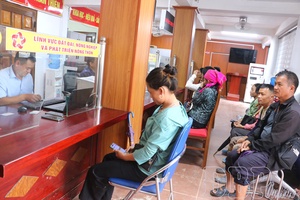
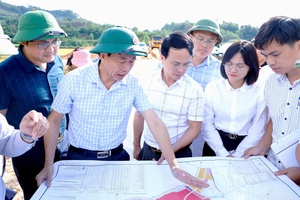
In many communes and wards, organizing meetings to hear from the public has become a routine. Phạm Thị Ngọc Hà, Secretary of the Mường Nhà commune Party Committee, shared that since the implementation of the two-tier government model, the commune has frequently visited villages to engage in more realistic dialogues. Moving beyond periodic conferences, officials and Party members now proactively “go to every alley and knock on every door” to record issues arising at the grassroots. This proactive stance has allowed obstacles related to agricultural production, rural transport, clean water, and support policies to be identified early and resolved appropriately.
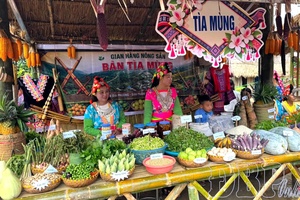
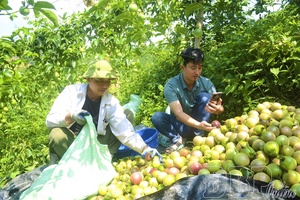
A prime example is the demand to expand pineapple cultivation in Mường Nhà, which was promptly noted by authorities during village meetings. Previously, due to a lack of market information and farming techniques, pineapple development was spontaneous and inefficient. However, once the people’s voices were fully heard, the commune coordinated with the agricultural sector to conduct surveys and orient suitable planting zones while connecting with businesses for stable output. Consequently, pineapples have become a promising crop, significantly improving local incomes.
.jpg)
This practical experience serves as the foundation for this year’s campaign, which aims not only to maintain but to elevate the quality of public engagement. The goal is to move beyond listening for the sake of completion to listening for the sake of understanding, and ultimately acting to win the people’s trust. The people’s right to mastery is placed at the center, with their opinions and recommendations compiled and reflected to the relevant authorities for timely handling. This also serves as a vital channel for the VFF and socio-political organizations to perform their functions of supervision and social criticism, thereby strengthening public confidence in the State and the political system.
To ensure effectiveness and avoid mere formality, localities are conducting these sessions with great practicality. On April 9, 2026, the VFF of Quài Tở commune held a meeting in Bông Ban village where residents frankly contributed 24 opinions focusing on land disputes, irrigation for production, forestry land certification, traffic safety, and the use of unsafe electrical poles.
Nhữ Duy Đông, Chairman of the Quài Tở commune People’s Committee, noted that through these sessions, leadership can directly explain and clarify concerns while recording complex petitions for further processing. More importantly, this creates a two-way communication channel that builds consensus in finding solutions from the ground up.
.jpg)
The effectiveness of these grassroots activities is being institutionalized through voter contact channels across the province. According to the Provincial VFF, regarding the election of the 16th National Assembly and People’s Councils for the 2026-2031 term alone, the province organized 1,298 voter contact conferences with over 133,000 participants, recording 2,145 opinions. These meetings, integrated with the spirit of the “Month of Listening to the People,” have become substantive forums for citizens to express their most pressing life concerns.
Experience shows that wherever the authorities listen well and resolve issues promptly, public trust and national unity are strengthened. When the people’s voices are heard substantively and transformed into concrete actions, consensus naturally spreads. Through these specific local efforts, “listening to the people” ceases to be just a slogan and becomes a regular responsibility of the entire political system, contributing to a government that is close to the people and truly serves them.
Thu Phương

.jpg)
.jpg)
.jpg)
.jpg)
.jpg)
.jpg)
.jpg)
.jpg)
.jpg)
.jpg)
You have 500/500 characters left
Please enter 5 or more characters!!!