



On October 20, 2025, a contingent of 52 capable civil servants and public employees from provincial departments and sectors “received orders” to depart and support 34 out of 45 communes and wards in operating the 2-tier local government model. The reinforced officials were selected with a focus on key stages requiring high expertise, such as: Construction and transport (21 people); information technology and digital transformation (21 people); finance and budget (4 people); and other fields (home affairs, labor, justice, culture, etc.).
Immediately after receiving the reinforced officials, the localities methodically arranged and assigned work for the seconded staff, ensuring the maximum promotion of their strengths, and providing favorable working and living conditions so they could feel secure in their dedication. The 52 civil servants and public employees deployed to the communes quickly integrated and directly participated in handling existing “bottlenecks” at the grassroots level, especially in fields requiring deep expertise such as construction, finance, digital transformation, and land management.
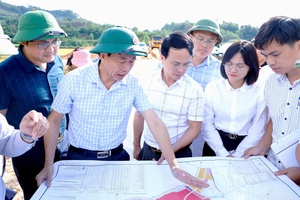
In Sam Mứn commune, the imprint of the seconded staff is clearly demonstrated in the management and implementation of projects. Nguyễn Quang Dũng, a civil servant seconded from the Infrastructure Management Office (Department of Construction), directly advised and urged the implementation of 5 construction investment projects, while simultaneously supporting the commune in completing its general planning up to 2045. Besides assisting in removing professional obstacles, Nguyễn Quang Dũng helped the commune improve its capacity to connect with departments and sectors. Nguyễn Quang Dũng shared that although the time spent reinforcing the grassroots level was not long, it was an opportunity for him to gain many valuable practical experiences. This helps him train himself and accumulate experience to support his future work and task execution.
.jpg)
Phạm Thiết Chùy, Chairman of the Sam Mứn commune People’s Committee, assessed that the reinforcement of officials was very timely, helping the locality effectively handle complex legal issues in preparing feasibility study reports, while accelerating project progress. Not stopping at professional duties, the seconded staff proactively mobilized socialized resources to support residents, such as donating solar light bulbs and giving gifts to students.
For Phình Giàng commune, the mark of the seconded officials is clearly shown in the financial sector. The seconded official from the Department of Finance directly participated in supporting the commune to implement 14 essential infrastructure projects (repairing irrigation works, concretizing roads to Tin Tốc A and Cảnh Lay villages, and renovating school facilities). The seconded staff’s understanding of regulations and investment processes helped the locality reasonably allocate recurrent expenditures, while definitively resolving many backlogged dossiers. The rapidly implemented, quality-ensured projects have directly alleviated difficulties in the people’s daily lives.
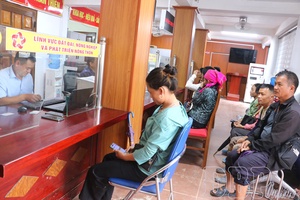
Another outstanding mark is the role of seconded officials in the field of information technology and digital transformation. According to the assessment from the Department of Home Affairs, in the context where the province is strongly promoting digital transformation, the seconded staff has helped many communes stably operate their IT infrastructure; manage and upgrade web portals; and maintain the smooth operation of network systems, document management software, digital signatures, information portals, and the electronic one-stop system. In addition, the seconded officials also supported the digitization of records, standardization of official, population, and civil status data; advised on the issuance of plans for digital transformation and administrative reform; guided citizens on using online public services and cashless payments; and assisted business households in applying QR codes, tracing product origins, and putting products on e-commerce platforms.
In conditions of a vast area, scattered population, and limited technological application levels, having additional specialized human resources has helped the communes gradually standardize their working processes and improve the quality of resolving administrative procedures. From relying heavily on manual processing, many processes have been digitized, and records are managed methodically. The seconded officials directly provided “hands-on guidance,” helping the commune staff access specialized software, digital signatures, and the electronic one-stop system, thereby shortening the time to resolve tasks and increasing citizen satisfaction.
In a context where the contingent of officials and civil servants at the commune and ward levels is lacking in many fields, especially in positions requiring deep expertise, continuing the policy of seconding officials to the grassroots level demonstrates clear necessity and effectiveness. In reality, at the end of the 6-month reinforcement period, 30 out of 34 communes with seconded staff recommended continuing the program. However, for this solution to exert long-term effectiveness, along with extending the secondment period, researching and issuing appropriate support mechanisms for the mobilized civil servants and public employees is a crucial factor, contributing to consolidating the operational capacity of the grassroots-level government sustainably.
Hà Linh

.jpg)
.jpg)
.jpg)

.jpg)
.jpg)
.jpg)
.jpg)
.jpg)
.jpg)
.jpg)
You have 500/500 characters left
Please enter 5 or more characters!!!