



Innovation at the grassroots level, better public services
Recognizing administrative reform as a key task and breakthrough measure to improve the effectiveness and efficiency of local government operations, Chiềng Sinh commune has focused on reviewing and simplifying administrative procedures, accelerating document digitization, and increasing the use of fully online public services to provide maximum convenience for citizens and businesses.
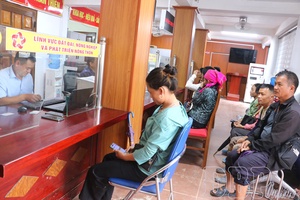
According to Đỗ Văn Sơn, Chairman of the People’s Committee of Chiềng Sinh commune, the commune has actively reviewed and simplified administrative procedures under its authority while ensuring transparency in procedures, processing times, and required documentation at the Public Administration Service Center. At the same time, it has promoted the application of information technology and increased the use of online public services, helping citizens and businesses save both time and costs when completing administrative procedures.
In addition, local officials and civil servants have strengthened their sense of responsibility and improved their working style under the principle of being “close to the people, responsive to the people, and serving the people.” Administrative applications are processed in accordance with established procedures and within prescribed deadlines, while citizens’ feedback and recommendations are addressed promptly.
Thanks to the comprehensive implementation of these measures, more than 99% of administrative applications in Chiềng Sinh commune are processed on time or ahead of schedule. The digitization rate of administrative records has reached 100%, and all administrative procedures under the commune’s authority are fully published on electronic platforms. In 2025, the commune ranked fifth among 45 communes and wards in the provincial index measuring service quality for citizens and businesses in administrative procedures and public service delivery. By the first quarter of 2026, it had risen to first place province-wide.
Cà Văn Sương, a resident of Huổi Sáy village, Chiềng Sinh commune, shared: “Nowadays, when I visit the commune’s Public Administration Service Center to complete paperwork, officials provide clear and enthusiastic guidance, and applications are processed quickly. Many procedures can now be completed online, which saves residents time and travel expenses and makes everything much more convenient than before.”
Digital transformation in Điện Biên Phủ ward has also produced notable results. During the first six months of the year, the ward authorities proactively introduced digital technologies and artificial intelligence into local governance. One notable initiative was the deployment of two AI-powered robots at the Public Administration Service Center to guide citizens and help them search for administrative procedures. This has reduced the workload of staff responsible for receiving and returning administrative documents. As a result, the ward has been able to reassign two staff positions to specialized departments to better meet work requirements following the implementation of the two-tier local government model.
In addition, the ward has introduced a land clearance management software system, applying digital technologies and AI tools to digitize records, standardize land data, and monitor project implementation progress by project and household. The system supports the preparation and verification of compensation and resettlement plans, reduces errors in compensation calculations and data aggregation, enhances transparency, and accelerates site clearance for key development projects.
.jpg)
Administrative reform delivering tangible results
According to assessments by the provincial People’s Committee, although Điện Biên province has been simultaneously implementing numerous major tasks, including streamlining the organizational structure of the political system and launching the two-tier local government model, administrative reform has continued to achieve significant progress. Administrative discipline has been strengthened, the quality of administrative procedure processing has steadily improved, and the application of information technology and digital transformation in state agencies has been increasingly promoted.
Results from the 2025 Satisfaction Index of Public Administrative Services (SIPAS) provide encouraging evidence. While Điện Biên province ranked 40th out of 63 provinces and cities in 2024, by 2025 it had advanced into the middle tier nationwide, achieving a “Good” rating of 83% and ranking 19th out of 34 provinces and centrally governed cities, an increase of 0.35 percentage points compared to the previous year.
Notably, all eight administrative reform areas assessed received ratings of “Good” or higher, including leadership and administration; institutional reform; administrative procedure reform; administrative organization reform; civil service reform; public finance reform; development of e-government and digital government; and the impact of administrative reform on citizens and socio-economic development. Scores across these areas ranged from 81.2% to 97.88%.
However, survey results also indicate that public expectations for government performance remain high. Areas identified for further improvement include enhancing the capacity of officials, civil servants, and public employees; upgrading facilities and equipment serving citizens; improving the reception and handling of public feedback and recommendations; and increasing transparency in information disclosure.
Alongside SIPAS results, the province’s 2025 Public Administration Reform Index (PAR INDEX) was also rated “Good”, ranking 29th among 34 provinces and cities. This marked the first year in which all eight assessed areas achieved “Good” ratings or higher. Administrative procedure reform remained a standout area with a score of 97.88%, while public finance reform, e-government and digital government development, and the impact of administrative reform on socio-economic development all exceeded 81%.
Evaluation results for specialized agencies under the provincial People’s Committee showed that 100% were rated “Good.” Among the 45 communes and wards assessed, 23 received “Good” ratings, 13 were rated average, and nine were rated below average; none achieved an excellent rating. Leading localities included Mường Ảng commune, Chiềng Sinh commune, Tủa Chùa commune, Tuần Giáo commune, Thanh Yên commune, Mường Lay ward, Sính Phình commune, and Tủa Thàng commune.
These achievements demonstrate that administrative reform and digital transformation in Điện Biên province are increasingly producing substantive results and delivering tangible benefits to citizens and businesses. They also provide an important foundation for the province to continue building a professional, modern, and transparent public administration system capable of supporting socio-economic development in the years ahead.
Mai Phương


.jpg)

.jpg)
.jpg)

.jpg)
.jpg)
.jpg)
.jpg)


.jpg)
.jpg)
.jpg)
You have 500/500 characters left
Please enter 5 or more characters!!!