



There, opinions concerning compensation and site clearance support were directly addressed by the local authority and the investor, while concerns and difficulties were recorded for handling. The dialogue stood as a clear demonstration of exercising grassroots-level democracy, where residents participate in contributing ideas, conducting oversight, and working alongside authorities to resolve arising issues.
Following the administrative unit rearrangement, Pu Nhi commune identified establishing and implementing grassroots-level democracy regulations as a central task to stabilize its organization and build consensus among the people. The commune consolidated its Steering Committee for Grassroots-level Democracy, issued working regulations, clearly assigned responsibilities to each member overseeing residential areas, and developed inspection and supervision plans for implementation in every village.
The spirit of placing the people at the core was clearly demonstrated through voter contact sessions, village meetings, and direct dialogues. In the first six months of the year, the commune organized 27 voter contact conferences with over 1,350 attendees along with 3 village meetings drawing over 1,250 participants. At these conferences, residents contributed feedback on various everyday life matters. Every opinion was absorbed and publicly explained by the authority, creating trust and consensus among the populace.
.jpg)
The arrangement and merger of villages represent a major policy directly impacting residents’ lives. Rather than deploying it through purely administrative measures, Pu Nhi commune made information public, exercised democracy, and gathered broad feedback prior to execution. According to the scheme, the commune arranged 25 villages into 16 villages. Alongside announcing the merger plan, the authority provided full information on regimes and policies for non-tenured cadres under Government Decree No.154 so that residents could thoroughly understand the policy.
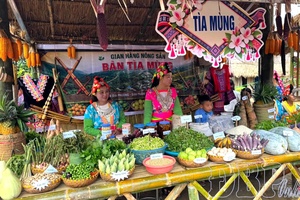
Vừ A Sềnh from Tìa Ló village shared that when the policy arrived to merge Tìa Ló A and Tìa Ló B into Tìa Ló village, many people were anxious because they were accustomed to the old village names and worried that changes would affect administrative procedures and community life. However, after commune cadres and dissemination teams visited to explain directly, residents understood that the arrangement aimed to streamline the apparatus, elevate management efficiency, and create conditions for the locality to receive more synchronized investments, leading to active agreement.
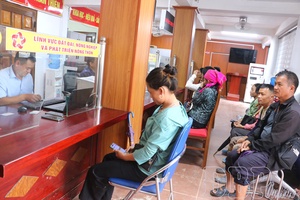
Beyond exercising democracy in formulating policies, Pu Nhi commune also prioritized openness and transparency in state management activities. At the Public Administrative Service Center, 100% of administrative procedures were publicly posted for easy tracking and monitoring by citizens. Along with pushing forward digital transformation, the rate of correct and ahead-of-time dossier processing reached 99.6%, online payments hit 98.5%, and dossier digitization achieved 98.8%. These figures not only reflect administrative reform efficiency but also show a clear transformation in the spirit of serving the people.
The regular citizen reception schedule of the commune People’s Committee Chairman was strictly maintained. Information regarding the budget, land use planning, lists of poor households, and compensation plans for site clearance was made public at headquarters, through loudspeaker systems, and on local communication groups. In the first six months of the year, the commune received 17 citizen petitions, all of which were reviewed and resolved according to regulations, contributing to limiting hot spots and consolidating public trust in grassroots-level government.
Furthermore, the oversight role of the people was increasingly promoted through the activities of the People’s Inspectorate and the Community Investment Supervision Board. These boards regularly monitored the execution of local works and projects, promptly detecting inadequacies to propose solutions. This also served as a vital channel helping party committees and authorities grasp situations and handle arising issues right from the grassroots-level.
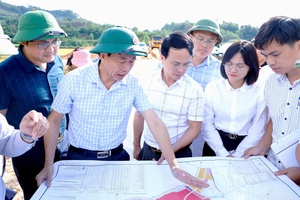
The clearest proof of exercising democracy was the dialogue on July 13, 2026, between the authority, the investor of the Điện Biên 1 Solar Power Plant Project, and affected households. Beyond publicizing project progress, compensation plans, and support policies, the conference publicly disclosed land inventory and measurement results, reviewing specific cases related to intercropping land and current land use status. Every opinion was heard, answered, or absorbed to report to competent authorities for consideration.
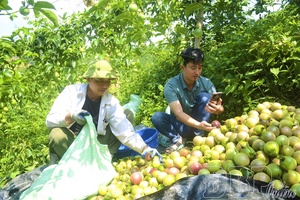
In practice, wherever democracy is promoted, economic development movements yield positive results. In Pu Nhi, residents actively responded to crop structure conversion policies. In the first six months of the year, the area of newly dug holes for coffee planting reached 138.9 hectares, achieving 231.5% of the assigned target, while the area for macadamia planting reached 60 hectares, fulfilling 100% of the plan. This serves as an important premise to form commercial production areas, raise incomes, and step-by-step transform traditional production habits.
Properly implementing democracy regulations brought positive changes to Pu Nhi. Citizens participate in building and supervising policies, while authorities stay closer to the people, listen more, and handle work more transparently and efficiently. When trust is fortified and consensus is established, major policies, from administrative unit arrangements and investment project deployments to production development, are executed smoothly. That forms the very foundation for Pu Nhi to continue leveraging internal strengths, building a service-oriented government, and generating momentum for socio-economic development.
Thu Phương

.jpg)
.jpg)
.jpg)
.jpg)
.jpg)
.jpg)
.jpg)
.jpg)
.jpg)
.jpg)
.jpg)
You have 500/500 characters left
Please enter 5 or more characters!!!