



Part 4: Shaping agriculture of the future
The goal pursued by the provincial Party Committee is to build a centralized, green, smart, and sustainable agriculture where raw material zones are linked with processing, digital transformation, branding, and global markets. This also marks a mindset shift from agricultural production to agricultural economic development.
Completing the value chain
After many years of development, Điện Biên coffee has secured its market footing, while macadamia has steadily affirmed its economic viability. If efforts were limited solely to expanding acreage, farmers would struggle to break free from the cycle of bumper crops leading to falling prices. Therefore, right from the issuance of Resolution 11, the Executive Board of the provincial Party Committee defined the goal not just as increasing crop area, but forming a complete value chain involving the six core stakeholders: the State, farmers, scientists, enterprises, banks, and distributors.
By 2030, the province strives to establish approximately 70,000 hectares of centralized commodity production zones, including around 40,000 hectares of macadamia and over 20,000 hectares of coffee, becoming the province with the largest macadamia area in Việt Nam. Under this orientation, the province actively attracts enterprises to invest in raw material zones and processing industries. For coffee, enterprises and cooperatives are encouraged to expand production linkages and invest in deep processing to enhance value and build the Điện Biên Arabica brand. For macadamia, the province prioritizes integrated investment projects spanning seed production, processing, and consumption to secure stable outlets for farmers.
.jpg)
The appeal of Resolution 11 was swiftly demonstrated as major enterprises arrived in Điện Biên to explore investments. In June 2026, Detech Coffee Joint Stock Company, one of the major coffee exporters in Việt Nam, surveyed and proposed investing in a deep coffee processing plant in Mường Ảng commune with an annual capacity of approximately 25,000 tons of fresh cherries. According to Dr. Đào Ngọc Anh, Chairman and General Director of Detech Coffee Joint Stock Company, the enterprise selected Điện Biên due to raw material quality proven over many years, clear planning, and stable development orientations that foster long-term investment confidence.
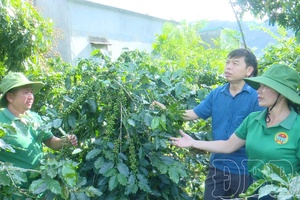
Trần Minh Giáp, Vice Chairman of the People’s Committee of Mường Ảng commune, stated that the commune currently has over 1,800 hectares of coffee, including more than 1,660 hectares of commercial harvest area. Average annual yield reaches about 12,000 to 14,000 tons of fresh cherries, equivalent to approximately 3,500 to 3,900 tons of green coffee beans. In addition, neighboring communes such as Búng Lao, Nà Tấu, and Mường Lạn possess over 1,400 hectares of expanding coffee plantations, enriching the raw material supply. The commune has instructed specialized agencies to create favorable conditions for businesses to carry out investment steps.
In Chiềng Sinh commune, the locality partnered with Mường Thanh Green Joint Stock Company to implement an integrated value chain encompassing seed supply, technical transfer, cultivation guidance, and product buyback for coffee and macadamia, helping farmers transition from fragmented production to market-driven standards. In early 2026, TH Group proposed investing in a macadamia processing facility in Tuần Giáo commune linked to a raw material zone of over 18,000 hectares currently being developed by the enterprise.
From zoning raw material regions and attracting enterprises to fostering production partnerships and developing deep processing, Resolution 11 is progressively establishing a sustainable value chain for coffee and macadamia. More importantly, the resolution has driven a shift in development mindset from agricultural production to a modern agricultural economy with the market as the guide, enterprises as the nucleus, and farmers as the main actors. When all links are synchronized, coffee and macadamia will not only increase agricultural output value, but also generate momentum to raise farmer incomes, attract capital, and expand growth space for Điện Biên agriculture.
Shaping agriculture of the future
While establishing raw material zones and attracting businesses represents the initial move, the ultimate destination of Resolution 11 is creating a modern agriculture where production, science, technology, digital transformation, and markets operate within a unified ecosystem. This distinguishes the strategy from previous thinking, shifting from an exclusive focus on raw volume to high added value, from isolated production to organized value chains, and from exploiting natural endowments to harnessing science, technology, and innovation.
A highlight of the strategy is the ambition to make Điện Biên the first province in Việt Nam to achieve comprehensive digitization across the coffee sector. From raw material area management, electronic logs, and traceability to production oversight and distribution links, digital technologies are being progressively integrated. This serves as a competitive advantage to build the Điện Biên specialty coffee brand and satisfy increasingly stringent domestic and international market standards, enabling Điện Biên coffee beans to penetrate deeper into global supply chains.
That spirit of innovation is being realized directly across coffee hills. During a campaign launching coffee and macadamia planting in Mường Ảng commune, the provincial People’s Committee partnered with FPT Corporation and Truong Thinh Drone to test unmanned aerial vehicles (UAVs) for foliar fertilizer spraying over mountainous terrain for the first time. According to Vũ Anh Tú, Chief Executive Officer of FPT UAV, a single device can complete foliar spraying over one hectare in roughly 10 minutes, whereas manual spraying requires three full days. The technology saves labor, lowers production costs, reduces human physical strain, and boosts farming efficiency.
Điện Biên is also the first locality nationwide to propose implementing a regulatory sandbox for low-altitude economic development. Under Decision No.1291/QD-UBND of the provincial People’s Committee, the pilot program will run through May 2027 with approximately 6,000 flights across agriculture, logistics, healthcare, and digital cartography. The Mường Ảng coffee region and Tuần Giáo macadamia region were selected as the initial deployment sites, opening new avenues for high-tech applications in farming.
These initiatives represent tangible steps toward realizing modern, smart agriculture. According to Lê Xuân Cảnh, Director of the provincial Department of Agriculture and Environment, Resolution 11 aims to establish highly competitive commodity lines organized along value chains that participate deeply in domestic and global markets. To realize that vision, alongside expanding raw material bases, the province continues accelerating the application of science and technology and digital transformation in production governance, product traceability, brand building, and processing industry development.
Looking back across the trajectory from Resolution 09 to Resolution 11, the evolution in leadership mindset within the provincial Party Committee becomes clear. While Resolution 09 laid the groundwork for agriculture and forestry development aligned with new rural construction, Resolution 11 elevated the vision into a comprehensive agricultural restructuring strategy directed toward centralized, green, smart, and sustainable commodity production. The Party does not replace market mechanisms but guides them; does not replace businesses but creates a conducive investment climate; does not replace the people but clears the path for them to prosper in their homeland.
Most importantly, Resolution 11 has inspired trust. Farmers trust that coffee and macadamia will provide sustainable livelihoods; businesses trust the stable investment environment; localities trust their chosen development paths. That trust serves as the greatest resource to realize a modern, competitive, and sustainable agricultural sector. In the coming years, as current raw material zones reach maturity, processing plants begin operations, and Điện Biên Arabica and macadamia brands expand globally, the enduring impact of Resolution 11 will extend far beyond statistical growth figures. It will stand as an agricultural sector crafted by the Party’s strategic vision - green, smart, and sustainable.
Quang Long - Ngọc Huyền
.jpg)
.jpg)
.jpg)
.jpg)
.jpg)
.jpg)
.jpg)

.jpg)
.jpg)
.jpg)
You have 500/500 characters left
Please enter 5 or more characters!!!