



This change is measured by officials going to the grassroots level, staying close to the people and the work; by their ability to resolve issues arising from reality and the satisfaction level of the citizens. When the interests and voices of the people are placed at the center of the administration, it is also the time when the government builds trust and consensus to realize sustainable development goals.
New development direction from the grassroots level
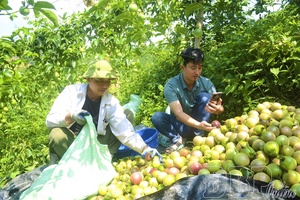
Early in the morning in Bông Ban village, Quài Tở commune, people call out and urge each other to bring hoes and shovels, rushing to the hills to care for the newly planted macadamia and coffee trees. Today, commune officials also visit the village to inspect the crop areas the people just planted.
After the night rain, the soil is porous, soft, and moist underfoot. Head of Bông Ban village Cà Văn Kim excitedly shared that the seedlings are healthy, so they take root quickly. Looking at each row of young trees taking root on the hills that were previously planted with inefficient corn and cassava, everyone’s eyes light up with hope for a sustainable economic development direction. Behind those young trees is the close involvement of many commune officials who have accompanied the people since the campaign to plant coffee and macadamia in the commune began over a month ago. These include late-night phone calls reminding people of possible harsh sunlight the next day, and footsteps taking advantage of the weekend to visit the village with the locals.
In areas with specific highland conditions like Điện Biên, the biggest problem is still the issue of livelihood. Steep mountainous terrain, fragmented small-scale production, and traditional farming methods cause many difficulties for the people’s lives. To change this, the grassroots government has chosen a new approach by directly accompanying the people to build production areas suitable for the natural conditions and specific characteristics of each place; developing low-level economic spaces associated with coffee, macadamia, and high-value, high-yield crops. Expanding the area of coffee and macadamia is a difficult problem. It requires a new development mindset from the government, acting as a supportive foundation and accompanying to create long-term and stable livelihoods for the people.
.jpg)
Sharing the vibrant atmosphere in Bông Ban village, in recent days, many communes and villages throughout the province have simultaneously launched campaigns to plant coffee and macadamia. Determined to achieve the goal of restructuring crops, improving production value, and gradually turning macadamia and coffee into key crops for sustainable economic development and helping people increase their income to escape poverty, the campaign has received strong involvement from the entire political system from the province to the grassroots level.
Working groups were established, regularly visiting the areas to grasp the situation, check progress, and promptly resolve arising difficulties. Cadres and Party members directly went to the grassroots level alongside the people to dig holes, transport seedlings, and provide technical guidance. With drastic involvement, after just over a month, the whole province has dug nearly 17 million holes for planting macadamia and coffee. Many localities completed their plans early and exceeded assigned targets. The remaining communes accelerated with an urgent spirit, taking advantage of favorable weather to complete the planting plan.
Dialogue and listening
The spirit of the government accompanying the people in Điện Biên today is not only about supporting economic development and creating long-term livelihoods, but also shown in the closeness, listening to the thoughts and aspirations of the people, and promptly grasping difficulties and inadequacies right from the grassroots level. These contacts are not merely about orienting policies or one-way communication, but rather, dialogues have truly become forums for the people to voice their thoughts and aspirations.
With the desire to firmly grasp the situation, rectify shortcomings, and improve the effectiveness and efficiency of state management to serve the people better, the dialogue between the Quài Tở commune government and the people of Bông Ban village took place in an open and frank atmosphere. Attending the dialogue were Secretary of the Party Committee and Chairman of the commune People’s Council Giàng A Dế; representatives of the Standing Boards of the commune Party Committee, commune People’s Committee, Party building boards, cell secretaries, village heads, front officials, and a large number of people in the village.
With no more distance between cadres and the people, and no more hesitation when “higher-up” cadres come down, the locals boldly raised existing issues in their lives. Many opinions were reflected with the desire for the government’s attention to resolve them, making production and life more convenient. These included investing in canals to serve production, the unsafe use of bamboo poles for pulling electricity, narrow curves posing potential traffic safety risks, and ensuring the structure of some internal village roads.
Listening to every opinion of the people, Secretary of the commune Party Committee Giàng A Dế and local leaders directly discussed and clarified issues within their authority, simultaneously recording recommendations that need further review and handling in the coming time. According to Giàng A Dế, dialoguing with the people to grasp their legitimate thoughts and aspirations is also an opportunity for Party committees and authorities to more clearly recognize limitations in management and administration at the grassroots level. From there, they can promptly rectify, remove difficulties, improve state management effectiveness, and serve the people better.
After the dialogue, what made the people of Bông Ban village agree was not just the answers but the receptive spirit and responsibility of the cadres. Each issue was analyzed, clearly indicating the direction of handling and implementation time. Some contents were answered directly by commune leaders at the dialogue. Any issues beyond their authority were recorded and submitted to superiors for resolution.
Consensus from the people
The shift in administrative thinking is clearly demonstrated in Điện Biên Phủ ward, an area implementing many key programs and projects of the province. The local government has chosen a flexible approach, persistently dialoguing with the people to remove difficulties in site clearance.
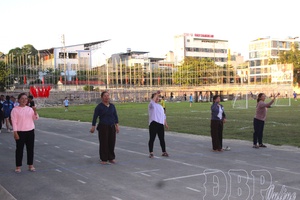
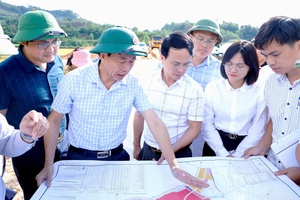
The overall investment project for building the Điện Biên Province Sports Center is a large project implemented in Điện Biên Phủ ward, with a total land area to be recovered of 13.58 hectares, involving over 260 households. Due to many obstacles in site clearance, the project has been delayed for many years. In late 2025, right when the project was transferred to Điện Biên Phủ ward as the investor, the ward’s Party committee and government focused on reviewing each task. From the Secretary and Chairman to the officials of departments and boards, they directly went to the grassroots to dialogue with the people and untie each “knot.”
During a meeting on May 9 to mobilize households whose land is subject to recovery, Chairman of the ward People’s Committee Hà Thanh Tùng directly informed the people about the purpose, significance, and importance of the project for the ward’s socio-economic development. Guidelines and policies related to compensation and resettlement support were clearly explained so that the people could understand and feel secure in implementation. The persistent dialogue, listening, and accompanying the people gradually created positive changes. To date, more than 120 households have agreed to hand over the site.
The success of the government is measured by the very satisfaction level of the people. Specific stories at the grassroots level show that the biggest change in administration in Điện Biên is demonstrated from the management mindset of government officials at all levels to the successful untying of each “knot,” thoroughly resolving existing issues and obstacles at the grassroots.
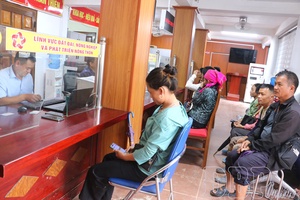
According to the SIPAS 2025 results announced by the Ministry of Home Affairs, the satisfaction level with the service of state administrative agencies in Điện Biên province reached 83.31%, ranking 19th out of 34 provinces and cities nationwide. This result reflects positive changes in administrative reform, clearly demonstrating the efforts of authorities at all levels in innovating administrative thinking and improving the quality of serving the people.
Điện Biên is facing many opportunities with a series of large projects on urban infrastructure, tourism, and agriculture being implemented. For that development goal to become substantial, the most important thing is the consensus of the people. The Điện Biên government today is gradually building a citizen-centric administration, considering the people’s satisfaction as the measure of administrative effectiveness. That is the important, solid foundation for the province to develop rapidly and sustainably in the new period.
An Biên

.jpg)
.jpg)
.jpg)
.jpg)
.jpg)
.jpg)
.jpg)
.jpg)
.jpg)
.jpg)
You have 500/500 characters left
Please enter 5 or more characters!!!