



Every drop of blood collected not only opens up opportunities to identify those who fell for the Fatherland, but also contributes to closing searches that have spanned multiple decades.
Executing the “500-Day-and-Night Campaign to accelerate the searching, gathering, and identifying of martyrs’ remains,” the province actively reviewed and updated information regarding martyrs and their relatives, while formulating plans to collect DNA samples to serve the identification of martyrs’ remains lacking information. To build a gene bank, the provincial Police organized the collection of DNA samples from martyrs’ relatives. Each stored blood sample represents an additional opportunity to cross-reference, verify, and rediscover identities for unnamed martyrs.
Currently, localities are urgently reviewing, compiling statistics, completing dossiers, and fulfilling necessary conditions to organize DNA sampling for martyrs’ relatives before July 27. Ready for this sacred duty, many families prepared papers and mementos related to their fallen relatives with the hope of finding additional chances to identify the martyrs. For many martyrs’ families, death notices faded by time and old photographs preserving the likeness of loved ones have been carefully preserved across generations.
Lầu Pà Dơ from Háng Tầu village, Quài Tở commune is among the martyrs’ relatives eagerly awaiting the day to participate in DNA sampling. For over 40 years, his family has anxiously searched for information about martyr Lầu A Dua, who heroically sacrificed in the fight to protect the northern border in 1979. The search journey extended through many years with countlessly asking around, submitting petitions, and finding former comrades, yet yielded no results. There were moments when all hope seemed to fade as clues grew scarcer over time.
.jpg)
However, when local authorities informed him about the program to collect DNA samples from martyrs’ relatives to identify martyrs’ remains, Dơ felt a new sense of faith rekindled and registered to participate. For his family, DNA sampling is a precious opportunity to continue the search journey that has lasted for decades. It brings hope that one day, martyr Lầu A Dua will have his identity verified, his resting place found, and return to his homeland and family.
Carrying longing and waiting that spanned generations, Trần Ngọc Yến, born in 1955, from Mường Thanh ward, spent nearly her entire life searching for her older brother, martyr Trần Đình Phóng, who sacrificed in 1964 in Laos. Over six decades have passed, during which she and her relatives quietly visited many places across numerous martyrs’ cemeteries, diligently checking every list, searching for every clue, and knocking on the doors of functional agencies in hopes of finding traces of her brother. Yet, the younger sister’s longing has never once received an answer.
Mentioning the DNA collection program for martyrs’ relatives, Yến’s eyes glistened with hope mixed with emotion. She choked back tears sharing that her greatest wish is to know the exact place where her brother rests so her family can visit to burn an incense stick, allowing him to return with his true name, as that alone would suffice to ease the lingering heartache her family carried for over 60 years.
In Điện Biên today, many people still quietly preserve old mementos and hope for a day of reunion. Phạm Đức Cư’s family is among them. In a small house in Residential Group 8, Mường Thanh ward, Cư still carefully preserves the few mementos of his older brother, martyr Phạm Văn Tố. He recounted that his brother enlisted in 1945 and sacrificed in 1951 in the Hà Nam Ninh Campaign. Over seven decades have passed, and his brother’s resting place remains unknown. Despite countless trips back and forth searching and asking around without results, the family never ceased hoping.
Therefore, when informed and guided through DNA sampling procedures by the Mường Thanh ward Police, Cư could not hide his emotion. Cư shared that his family searched for his brother for decades without results, and now that the State is collecting DNA samples from relatives, he feels as though a new ray of hope has appeared. Despite his advanced age, he stated he would still go for sampling, as this might be the last chance for the family to find his brother, noting that knowing his exact resting place would bring complete contentment.
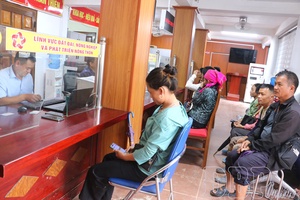
Behind the hope of martyrs’ families is the responsible and urgent involvement of all levels, sectors, and functional forces. In Mường Thanh ward, 13 out of 13 households eligible for DNA sampling completed necessary procedures. Through local reviews, there are 49 martyrs, including 30 cases where graves have not been identified. Among the 30 martyrs without identified graves, 22 have relatives eligible for sampling. The list of relatives was thoroughly reviewed, prioritizing close blood relations to ensure accuracy during DNA testing.
In Quài Tở commune, preparations for DNA sampling from martyrs’ relatives have been completed. The locality has 15 martyrs, including 10 cases without identified burial sites. Twenty relatives were listed for DNA sampling to be added to the national database. According to Nhữ Duy Đông, Chairman of the Quài Tở commune People’s Committee, collecting DNA samples not only contributes to building a genetic database of martyrs’ relatives, but also provides further opportunities to identify remains lacking information, with local authorities coordinating closely with police forces and specialized units to ensure sampling proceeds smoothly and according to regulations.
To date, the provincial Police completed reviewing and updating information for 457 out of 457 martyrs’ relatives eligible for DNA sampling on the National Population Database. Sampling work is being deployed according to plan, creating an important foundation for cross-referencing and identifying martyrs’ remains. Every DNA sample added to the gene bank is not merely a scientific data entry, but rekindles hope so that search journeys spanning generations may soon conclude, returning heroic martyrs to their names, homelands, and the arms of their loved ones.
With the synchronous involvement of all levels and sectors alongside the unity of martyrs’ relatives, the journey of “returning names to the heroes” is being continued with responsibility and affection. That represents not only gratitude toward those who sacrificed for the Fatherland, but also contributes to soothing the pain of war, so that every heroic martyr may return to their true name and homeland, in the arms of their family and the eternal gratitude of the entire nation.
Văn Tâm

.jpg)
.jpg)
.jpg)
.jpg)
.jpg)
.jpg)
.jpg)
.jpg)
.jpg)
.jpg)
.jpg)
You have 500/500 characters left
Please enter 5 or more characters!!!