



Recently, Market Surveillance Team No.2 under the provincial Market Surveillance Sub-Department coordinated the destruction of a batch of food products that failed to meet food safety standards. In the early morning of May 27, while inspecting vehicles traveling along National Highway 279 through Quài Tở commune, authorities discovered a passenger bus transporting 475 kilograms of animal fat without invoices or documents proving its legal origin. The entire shipment had changed color, emitted a foul odor, and failed to meet food safety requirements, posing a serious threat to consumers’ health if distributed on the market.
.jpg)
Earlier, on February 8, along National Highway 6 in Quài Tở commune and National Highway 12 in Na Sang commune, Task Forces No.1 and No.2, implementing Plan No.1266 of the provincial Police on traffic patrols, crime prevention, and law enforcement on transportation routes, detected six consecutive cases involving the transportation of food products of unknown origin. The confiscated goods included more than one ton of pork, chicken, duck, and muscovy duck meat without labels or inspection certificates as required by regulations.
According to authorities, these food products were purchased at low prices from various localities and transported to Điện Biên province for consumption or processing. Had they not been detected and intercepted in time, these substandard products could have directly affected public health, increasing the risk of food poisoning and foodborne diseases.
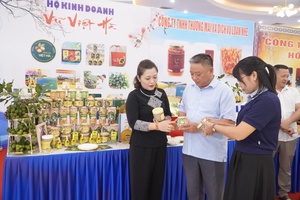
To proactively control the market, provincial agencies have strengthened coordination in inspecting and monitoring food production and trading establishments. Priority has been given to fresh food vendors, packaged food retailers, food service businesses, collective kitchens, and vehicles regularly transporting food products from other provinces into the locality.
Alongside inspection activities, communication and dissemination of legal regulations on food safety have been maintained regularly. Through various forms of outreach, food producers and traders have gradually improved their awareness and compliance with regulations, helping reduce violations and promote a safe and healthy food business environment.
.jpg)
Implementing Plan No.3566 dated May 6, 2026, issued by the People’s Committee of Điện Biên province on food safety inspections, the provincial inter-sectoral inspection team conducted inspections in five localities: Điện Biên Phủ ward, Mường Thanh ward, Nà Tấu commune, Si Pa Phìn commune, and Mường Pồn commune. The remaining 40 communes and wards proactively organized self-inspections according to decentralized authority.
From May 11 to May 30, inspection teams examined 302 schools, 43 enterprises, cooperatives, and food business households. Results showed that the People’s Committees and Inter-sectoral Steering Committees for Food Safety in all 45 communes and wards had implemented relatively comprehensive and coordinated measures to ensure food safety. Schools generally met food safety requirements, while inspected enterprises, cooperatives, and business households paid considerable attention to maintaining clean and safe food supply chains.
In Điện Biên Phủ ward and the communes of Sam Mứn, Pa Ham, Mường Pồn, and Mường Phăng, the inter-sectoral inspection team for the 2026 Food Safety Action Month inspected 14 food service establishments. All establishments met food hygiene and safety requirements, and no violations requiring penalties were detected.
At the business outlet of Jollibee Vietnam Co., Ltd. located inside Vincom Điện Biên Commercial Center, inspectors examined ingredient storage conditions, food processing procedures, and employees’ knowledge of food labeling regulations. Results showed that all food products used at the establishment had clear origins and traceability. The kitchen area was scientifically arranged to prevent cross-contamination between raw and cooked foods, and environmental sanitation was maintained regularly. Rapid tests conducted on starch and grease residues on dining utensils all met required standards.
According to Văn Thiện, Head of Market Surveillance Team No.1, the unit is responsible for Điện Biên Phủ ward and the communes of Mường Phăng, Nà Tấu, Mường Ảng, and Búng Lao, where a large number of food businesses operate. Therefore, the unit considers market inspection and control a key task for promptly detecting and handling violations.
.jpg)
During the 2026 Food Safety Action Month, Market Surveillance Team No.1 coordinated inspections of 12 cases and handled seven violations, imposing total fines of nearly VND 50 million. The violations mainly involved failure to display prices, inadequate food storage conditions, and food storage areas that did not meet regulatory requirements regarding shelving and hygiene.
Although food safety management in Điện Biên province has achieved many positive results, numerous challenges remain. Most food production, processing, and business establishments are small scale family operations using manual processing methods. Many operators have not proactively updated their knowledge of food safety regulations, limiting their ability to fully comply with legal requirements.
In addition, the number of food safety officers at the grassroots level remains insufficient, while professional expertise and practical experience are still limited. Specialized inspections and post-market surveillance of establishments that self-declare products or are not required to obtain food safety certification continue to face difficulties.
To further control food safety risks effectively, Điện Biên province will continue strengthening coordination among relevant agencies and intensifying surprise inspections of food production and business establishments as well as major transportation routes. Efforts will focus on improving the effectiveness of post-inspection supervision, strictly handling violations, and preventing food products of unknown origin or poor quality from circulating on the market.
Enhancing the sense of responsibility among producers and traders, together with consumers’ proactive selection of safe food products, will be crucial factors in building a safe food environment and protecting public health.
Bình Nguyên

.jpg)


.jpg)
.jpg)
.jpg)
.jpg)
.png)
.jpg)
.jpg)
.jpg)
.jpg)
.jpg)

You have 500/500 characters left
Please enter 5 or more characters!!!