Vocational training to create livelihoods

ĐBP - In Huổi Phúc village, Thanh Yên commune, poultry farming vocational classes do not take place in conventional classrooms or lecture halls as usually seen. Instead, lecturers and trainees stand right by the breeding pens, observing each chicken, guiding how to identify disease signs, administer vaccinations, sanitize barns, and handle common situations in livestock farming.

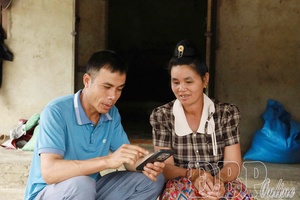
For many residents of Huổi Phúc village, this seemingly simple knowledge is exactly what they need most to upgrade production efficiency and improve family income. Lường Thị Nụ, a trainee in the poultry farming technique and disease prevention class in Huổi Phúc village, shared that her family previously raised chickens and ducks based purely on experience. When the livestock fell ill, they often did not know the cause or how to handle it, leading to substantial losses.

“After participating in the class, I understand more about care techniques, how to recognize abnormal manifestations in poultry, and disease prevention measures,” Nụ shared. “This knowledge is highly practical and can be applied immediately to my family’s farming activities.”

Nụ’s story reflects why an increasing number of rural workers, particularly people in highland, deep, and remote communes across the province, are showing interest in vocational training. They attend classes with the desire to acquire extra knowledge and techniques to perform better in the production tasks deeply intertwined with their daily lives.

In 2026, the Vocational Education - Continuing Education Center No.1 was assigned a target to recruit and provide vocational training for 1,330 workers. To ensure that the training aligns with practical demands, the center coordinated with localities to survey residents’ vocational learning needs before opening classes.

A lecturer from the Vocational Education - Continuing Education Center No.4 guides the practical mixing and usage of plant protection chemicals during a fruit tree production technical training session for trainees in Mường Nhé village, Mường Nhé commune.

Since the beginning of March, the Center has organized 13 vocational training classes across 11 communes and wards. The selected occupations are closely linked to local production conditions, ranging from livestock and poultry farming, safe vegetable cultivation, and fish farming to mushroom cultivation, coffee planting, and certain trades in the construction sector. Most of the classes are organized directly within the villages, meaning residents do not have to travel far or leave their fieldwork for extended periods, as learning schedules are flexibly arranged to match the daily routines and production cycles of the people.

Recently, in Yên village, Thanh An commune, a training class on pig farming techniques and disease prevention attracted 35 trainees, including many households currently maintaining small-scale pig farming who wish to expand production in the near future. Beside livestock classes, many localities also open vocational classes for planting and caring for fruit trees, guiding residents on applying safe cultivation practices to upgrade product yield and quality.

In the vocational class organized in Mường Nhé commune, trainees are guided on identifying plant pests and diseases, pruning techniques, orchard care, and the correct procedural use of plant protection chemicals. Instead of merely learning through documents, residents practice directly in the orchards, blending formulas, operating sprayers, and learning occupational safety principles during crop care. Giàng Thị Dua, from Mường Nhé village, Mường Nhé commune, noted that through the class, she was guided on selecting appropriate chemicals, using the correct concentrations, adhering to pre-harvest intervals, and utilizing protective measures when spraying.

According to the lecturers directly involved in teaching, if the curriculum only focuses on theory, it is very difficult for residents to remember and apply it. Therefore, the training program is built toward increasing practical hours and reducing theory. Lù Thị Nga, a teacher at the Vocational Education - Continuing Education Center No.4, stated: “Each class is divided into small groups so that trainees can practice directly under the guidance of lecturers. The learning time ratio is arranged at 30% theory and 70% practice. Because residents learn directly on their own farming and production models, it is easier for them to absorb the knowledge; being guided through each specific operation, trainees can execute it immediately after completing the course.”

This approach has generated a distinct shift in public perception regarding vocational training. While many were previously hesitant or believed that vocational training was strictly for the youth, now quite a few middle-aged workers, women, and ethnic minorities actively register to participate, and the acquired knowledge is rapidly applied to real-world production.

Trần Thị Măng, Director of the Vocational Education - Continuing Education Center No.4, emphasized that the greatest efficiency of these vocational training classes lies in the ability to apply knowledge to reality. When residents see that learning brings practical benefits, they will proactively participate and continue to spread the word to others in the community.

Currently, in many highland villages, vocational training is gradually becoming an intrinsic need for residents. These vocational classes help people alter their mindsets and working methods, creating sustainable livelihoods right on their homeland. This also serves as a vital foundation to raise incomes, reduce poverty sustainably, and step-by-step improve the lives of highland compatriots in the coming years.

Tú Trinh
Comment

You have 500/500 characters left

Please enter 5 or more characters!!!

Recent news

  • 'Helping people in disaster-prone areas settle down early - Part 2: More drastic involvement needed

    Helping people in disaster-prone areas settle down early - Part 2: More drastic involvement needed

    SOCIAL AFFAIRS -
    ĐBP - Resettlement areas only truly realize their significance when residents are relocated to stable, safe places with conditions to develop long-term livelihoods. Therefore, alongside completing basic infrastructure, untangling difficulties regarding capital and procedures, and elevating the responsibility of related units stand as urgent requirements for the public to achieve early settlement.
  • 'Heritage - the engine of Điện Biên’s new growth

    Heritage - the engine of Điện Biên’s new growth

    CULTURE - SPORTS -
    ĐBP - Intangible cultural heritage is not only the crystallization of history and identity but also a vital endogenous resource that can help Điện Biên realize its ambitions for growth in a new era. As the province targets double-digit economic growth, tourism development is no longer simply about preserving heritage or promoting destinations; it is about awakening the unique cultural values embedded in local traditions and transforming them into a sustainable engine of economic development.
  • 'Symbol of sovereignty amidst borderlands

    Symbol of sovereignty amidst borderlands

    TRAVEL -
    ĐBP - In the westernmost region of the country, the A Pa Chải flagpole on the Khoan La San mountain range in Sín Thầu commune stands as a sacred symbol of national sovereignty and ethnic pride.
  • 'Điện Biên cooperatives: Adapting for breakthrough

    Điện Biên cooperatives: Adapting for breakthrough

    ECONOMY -
    ĐBP - Cooperatives in Điện Biên are step-by-step affirming their role as vital bridges connecting production with the market. Many units have proactively modernized their production methods, boldly invested in technology, and expanded their business sectors and operational scales.
  • 'Lotus fragrance at Leng Su Sìn Border Post

    Lotus fragrance at Leng Su Sìn Border Post

    TRAVEL -
    ĐBP - Amidst the borderlands of Sín Thầu, a small lotus pond quietly shows off its colors, preserving the historical story of Heroic Martyr Trần Văn Thọ - the border guard soldier who dedicated his entire heart to the local people and the westernmost land of the Fatherland.
  • 'A meaningful playground for senior citizens

    A meaningful playground for senior citizens

    CULTURE - SPORTS -
    ĐBP - Vibrant, exciting, and filled with laughter, the 7th Điện Biên provincial Sports Competition for Senior Citizens in 2026 was successfully co-organized by the provincial Association of Senior Citizens and the Department of Culture, Sports and Tourism. Far from being just an occasion for exchanges and talent showcases, the competition has truly become a useful playground, contributing to upgrading the health and spiritual lives of the elderly while spreading the physical training movement among senior citizens.
  • 'The man who reclaims broken lives

    The man who reclaims broken lives

    SOCIAL AFFAIRS -
    ĐBP - Early morning in Búng Lao, mist still lingers on the hillsides. Inside a farm nestled at the foot of the mountain, a man diligently writes in a worn-cornered notebook. Occasionally, he looks up toward the rows of houses behind the barns, where several people have just woken up after a long night. They are individuals undergoing drug rehabilitation.
  • 'Each family is a cell of the society

    Each family is a cell of the society

    SOCIAL AFFAIRS -
    ĐBP - June 28 every year - Vietnam Family Day - is not only an occasion to honor fine traditional cultural values but also a time for each individual to look back at their role and responsibility in building and preserving the hearth. In the flow of industrialization, modernization, and international integration, the family further asserts its foundational position as a healthy “cell” that determines the sustainable development of society.
  • 'Keeping flame of love alive in every family in modern life

    Keeping flame of love alive in every family in modern life

    SOCIAL AFFAIRS -
    ĐBP - Modern life brings numerous opportunities for development, but it also presents significant challenges to maintaining family happiness. Work pressures, academic demands, and the rapid expansion of digital technology have left people with less and less time for their loved ones. Nevertheless, through different approaches, many families across the province are making efforts to nurture love and preserve the cherished values of family life in today’s world.
  • 'Gradually pushing back child marriage issue

    Gradually pushing back child marriage issue

    SOCIAL AFFAIRS -
    ĐBP - In recent years, although dissemination and mobilization work have been deployed through various forms, the child marriage situation in Điện Biên province remains complex, especially in deep and remote areas. Diversifying communication methods and upgrading public awareness are identified as vital solutions to gradually eliminate outdated customs, elevate population quality, and improve local human resources.
  • 'Accelerating to meet back-to-school season

    Accelerating to meet back-to-school season

    SOCIAL AFFAIRS -
    ĐBP - With just over two months left until the new 2026 - 2027 school year begins, the construction atmosphere at multi-level Primary and Secondary boarding schools across border communes in the province is growing more urgent than ever. Thousands of engineers and workers are racing against time to complete each component, aiming to bring the projects to the finish line before August 30, ensuring students can step into the new school year within spacious, modern schools.
  • 'Unlocking rural potential through new-style cooperatives

    Unlocking rural potential through new-style cooperatives

    ECONOMY -
    ĐBP - Amid the restructuring of the rural economy and the implementation of new rural development programs, the new-style cooperative model under the 2023 Cooperative Law is increasingly affirming its important role in promoting the collective economy across the province. No longer operating in a fragmented manner as in the past, cooperatives are gradually renewing their management mindset, proactively strengthening production linkages, and applying science and technology to enhance product value, create jobs, and increase incomes for local people.