



A safe day at school
With the motto “Prevention is better than cure,” Nam Thanh Kindergarten (Mường Thanh ward) proactively developed a disease prevention and control plan even before the seasonal change, following the professional guidance of the Health sector and the Department of Education and Training. At the same time, specific responsibilities were assigned to each class group, official, teacher, and staff member. Disease prevention is always identified as a central task, linked to every activity of caring for, nurturing, and educating the children.
.jpg)
Right from the start of the school day, teachers monitor the children’s health status to promptly detect and handle any unusual symptoms. In parallel, environmental sanitation is regularly maintained: classrooms, kitchen areas, and restrooms are deep cleaned and disinfected periodically. Children’s eating utensils and personal items are washed, disinfected, and dried according to proper procedures. The school trains children in the habits of washing hands with soap, eating cooked food and drinking boiled water, and not sharing towels, cups, or water bottles.
A noteworthy point is the close coordination between the school and the Mường Thanh ward Health Station. Professional inspections, monitoring, and processing are carried out both periodically and on an ad-hoc basis, ensuring disease prevention work is timely and accurate. The school pays special attention to food safety in the semi-boarding kitchen; from the selection, storage, and preparation of food to the inspection of water sources, all steps strictly comply with regulations. Thanks to the synchronous implementation of these solutions, Nam Thanh Kindergarten has not yet recorded any cases of infectious disease in the school.
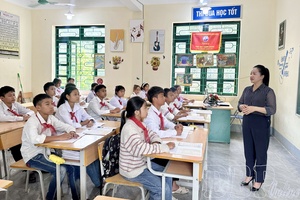
Not only at the kindergarten level, primary and secondary schools in the province are also implementing decisive disease prevention measures, especially facing the risk of seasonal infectious diseases. At Thanh Yên Primary School (Thanh Yên commune), school health work is always a regular focus, tied to every school day and every classroom.
.jpg)
Nguyễn Thị Ân, the school’s health worker, said: “We focus on communicating and guiding so that officials, teachers, students, and parents all clearly understand the harm of infectious diseases, especially as the bacillary dysentery epidemic has been developing complexly in many localities in the province recently. This helps to form an early awareness of prevention and proactive self-protection of health for every teacher and student in the school.”
In addition, flag-raising ceremonies and extracurricular classes are utilized by the school to communicate prevention methods, such as: proper handwashing, using clean restrooms, eating cooked food and drinking boiled water, and limiting eating at unhygienic food stalls. At the same time, the school also sends documents and communication materials via the classes’ Zalo groups, helping parents proactively coordinate with teachers in caring for and monitoring their children’s health at home.
The application of information technology in communication not only helps the school expand its reach but also improves the effectiveness of communication within the parent community, thereby contributing to forming a hygienic and healthy lifestyle starting from within each family.
Faced with the complex developments and recent risk of a bacillary dysentery outbreak, the Health Committee of Huổi Lèng Ethnic Minority Semi-Boarding Primary School (Mường Tùng commune) organized a thematic communication session on bacillary dysentery and other infectious diseases. At the session, teachers and students were given specific guidance on measures such as: regular handwashing with soap, clean personal hygiene, ensuring a safe domestic water source, eating cooked food and drinking boiled water, and washing personal items thoroughly. Concurrently, the school also coordinated inspections of the water system and the hygiene of the semi-boarding area, classrooms, and restrooms to ensure a fresh, safe learning environment.
A praiseworthy point is the active participation of parents and the community in disease prevention. Immediately after the communication session, many parents in Huổi Lèng village proactively committed to renovating their latrines, handling domestic waste, and joining hands to maintain environmental hygiene around the school, thereby helping to minimize the risk of disease spread in the community.
.jpg)
Proactive and synchronous manner
Practice shows that disease prevention and control work in Điện Biên’s schools has seen many positive changes recently. Schools from the centers to remote areas have all seriously implemented the guidance of the Health and Education sectors. School Management Boards, health staff, homeroom teachers, and parents have all been mobilized, creating a multi-layered “shield” to protect students’ health.
Especially in the context of complex developments in infectious diseases like bacillary dysentery and influenza A, which risk rapid spread through the digestive tract, the combination of communication, supervision, and concrete action is the decisive factor. Schools are not only stopping at prevention but are also enhancing their capacity for early detection and timely response when unusual situations occur.
Teacher Trần Thị Phương, Principal of Tủa Thàng No.2 Kindergarten (Tủa Thàng commune), said: “Since most students are young children with limited ability to protect themselves, the responsibility of close care and monitoring by teachers and parents is extremely important. Daily communication between homeroom teachers and parents is maintained during pick-up and drop-off times. The purpose is to promptly grasp the child’s health situation; if there are signs of an infectious disease, they can be proactively treated or isolated if necessary, to prevent it from spreading into an epidemic.”
.jpg)
Especially during the recent peak period, when infectious diseases, particularly bacillary dysentery, appeared in many places, the Department of Education and Training issued Official Letter No.3313/SGDĐT-GDTrH to direct and unify action throughout the sector. Educational units and institutions are strictly implementing sanitation, disinfection, and food safety measures, while also coordinating with the Health sector to inspect and monitor student health, especially at semi-boarding and boarding schools where students eat and live collectively. Disease information and reporting are maintained regularly, enabling functional agencies to grasp developments in a timely manner and preventing any subjectivity or neglect.
Proactive disease prevention in schools is not just an immediate task but also a long-term requirement, contributing to building a safe, sustainable educational environment. When every teacher is an active communicator, every student practices personal hygiene correctly, and every parent is a partner in caring for their child’s health, the “school shield” will be further strengthened.
Hà Linh
.jpg)

.jpg)
.jpg)
.jpg)
.png)
.jpg)
.jpg)
.jpg)
.jpg)
.jpg)
.jpg)
You have 500/500 characters left
Please enter 5 or more characters!!!