Public satisfaction - the benchmark of quality of grassroots-level governments

ĐBP - In the process of building a people-centered, service-oriented administration, public satisfaction has increasingly become a vital benchmark reflecting the operational quality of grassroots-level governments.

The 2025 survey results on public satisfaction with the services of state administrative agencies across the province yielded many positive outcomes, while pointing out “gaps” that require continuous improvement to upgrade service quality at the commune level.

The survey was conducted across 45 communes and wards province-wide. Notably, over 74.6% of the participants belonged to ethnic minority groups, comprehensively reflecting the voices of citizens in mountainous, deep, and remote areas. The survey results indicated that the general satisfaction level of citizens toward the services of commune-level state administrative agencies reached 81.34%. This demonstrates the distinct efforts of all administrative echelons in administrative reform and a shift in mindset from management to serving the public.

The survey evaluated public satisfaction based on five content categories, which encompass service access, administrative procedures, civil servants directly handling tasks, the results of administrative procedure resolution, and the reception and processing of feedback and recommendations. Among these, the criteria group regarding civil servants directly handling tasks achieved the highest satisfaction rate at 81.61%, serving as proof that the human factor continues to play a decisive role in the quality of public administrative services.

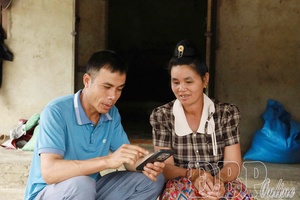
An official at the Na Son commune Public Administration Service Center processes procedures for citizens.

The 2025 public satisfaction level toward the services of state administrative agencies in Na Son commune reached 77.99%. In detail, public satisfaction regarding service access reached 79.33%, while public administrative procedures sat at 79.13%. Cù Mạnh Quyền, Deputy Director of the Na Son commune Public Administration Service Center, stated that the commune always defines public satisfaction as both the goal and the driving force to upgrade service quality. Accordingly, the center arranges civil servants to guide and support citizens through administrative steps, publicly discloses processes and processing times, and boosts the application of information technology.

The image of cadres being “close to, respectful of, understanding, and serving the people” is gradually becoming a standard within single-window sections at the commune level. The criteria group on receiving and processing feedback and recommendations achieved a satisfaction rate of 81.54%. Citizens evaluated the convenient setup of various feedback reception channels relatively highly with an 81.62% satisfaction rate, while processing in accordance with regulations reached 81.46%. This positive sign indicates that the dialogue mechanism between the government and the public is receiving greater focus, solidifying public trust in grassroots-level authorities when opinions are processed and answered in a timely manner.

For the service access category, the satisfaction rate reached 81.24%. Citizens generally gave positive reviews of the service conditions at commune-level Public Administration Service Centers, showing that many localities have invested well in material infrastructure to serve the public. However, the disparity among localities remains substantial, with satisfaction rates for service access fluctuating from 72.83% to 91.67%. The Mường Mùn commune People’s Committee achieved the highest satisfaction level at 91.67%, whereas the Sam Mứn commune People’s Committee ranked the lowest at 72.83%.

Regarding administrative procedures, the average satisfaction rate stood at 81.15%. Citizens positively evaluated the public listing of administrative procedures with an 81.63% satisfaction rate, compliance with dossier requirements at 81.36%, and on-time procedure processing at 80.93%. Although these indexes all remained above 80%, this field still exposed wide gaps between localities. Some communes only achieved a 63% satisfaction rate for proper fee and charge collection, while the highest-performing locality reached 91.5%, showing that the standardization of processing workflows across localities must be further strengthened.

The criteria group on the results of administrative procedure resolution achieved a satisfaction rate of 81.19%. This content directly impacts citizen perception because no matter how convenient a process is, inaccurate or delayed results will damage public trust. Thào A Di, a resident of Mường Nhà commune, shared that when coming to complete administrative procedures, he received dedicated guidance from the staff, and his dossiers were resolved right on schedule. With all information on the papers being complete and clear, he felt highly reassured, expressing hope that procedures would become increasingly simplified and convenient to save travel time for citizens.

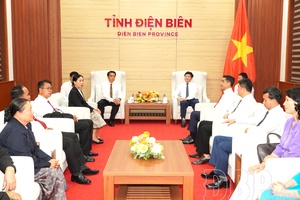
Dialogue helps reinforce public trust in grassroots-level governments, pictured here as leaders of Mường Nhà commune hold a dialogue with local residents.

Out of the 45 surveyed communes and wards, seven localities achieved an impressive satisfaction rate above 90%, including Mường Phăng, Pu Nhi, Chà Tở, Mường Mùn, Pú Nhung, Sín Chải, and Mường Ảng. Among them, Mường Phăng led the entire province with a 90.78% satisfaction rate. Mường Mùn commune stood out with its indexes for service access, direct civil servant interactions, and procedure results all reaching 91% or higher. Meanwhile, Mường Ảng commune recorded the highest satisfaction level in receiving and processing feedback and recommendations at 92.83%.

Conversely, the group of localities with the lowest satisfaction levels included Sam Mứn, Chiềng Sinh, Tìa Dình, Núa Ngam, and Sín Thầu, with Sam Mứn commune ranking at the bottom of the list at 73.77%. These figures reveal that administrative reform at the grassroots level remains uneven, as some units still face limitations in infrastructure, service conditions, administrative communication skills, or the quality of procedure resolution.

The survey results indicate that localities performing well in institutional reform generally deliver higher service quality. In Thanh Yên commune, following the operation of the two-tier local government model, the locality proactively perfected its operational regulations, boosted digital transformation, digitized profiles, and publicized administrative procedures using QR codes. Consequently, in 2025, Thanh Yên commune’s service quality evaluation index reached 93.41 out of 100 points, with the profile digitization rate hitting 99.63% and 100% of dossiers being resolved ahead of or right on schedule.

Overall, the 2025 survey results reflect a positive trend as the majority of criteria scored above 81%. Public satisfaction does not only reflect the government’s service quality but also serves as the driving force to push administrative reform into substance. As public trust is reinforced, authorities will gain an enhanced foundation to innovate, perfect, and serve the people more effectively, moving toward building a modern, professional, and people-centered administration.

Thu Phương
Comment

You have 500/500 characters left

Please enter 5 or more characters!!!

Recent news

  • 'Crop diversification opens new economic opportunities in ethnic minority areas

    Crop diversification opens new economic opportunities in ethnic minority areas

    ECONOMY -
    ĐBP - Converting low-yield farmland into high-value perennial industrial crops and fruit trees has become a key strategy in Điện Biên province’s agricultural restructuring. Across mountainous and border areas, selecting crops suited to local soil and climate conditions while promoting value chain production has delivered encouraging results. The approach is gradually transforming traditional farming practices, increasing household incomes and creating sustainable livelihood opportunities for ethnic minority communities.
  • 'Helping people in disaster-prone areas settle down early - Part 2: More drastic involvement needed

    Helping people in disaster-prone areas settle down early - Part 2: More drastic involvement needed

    SOCIAL AFFAIRS -
    ĐBP - Resettlement areas only truly realize their significance when residents are relocated to stable, safe places with conditions to develop long-term livelihoods. Therefore, alongside completing basic infrastructure, untangling difficulties regarding capital and procedures, and elevating the responsibility of related units stand as urgent requirements for the public to achieve early settlement.
  • 'Heritage - the engine of Điện Biên’s new growth

    Heritage - the engine of Điện Biên’s new growth

    CULTURE - SPORTS -
    ĐBP - Intangible cultural heritage is not only the crystallization of history and identity but also a vital endogenous resource that can help Điện Biên realize its ambitions for growth in a new era. As the province targets double-digit economic growth, tourism development is no longer simply about preserving heritage or promoting destinations; it is about awakening the unique cultural values embedded in local traditions and transforming them into a sustainable engine of economic development.
  • 'Symbol of sovereignty amidst borderlands

    Symbol of sovereignty amidst borderlands

    TRAVEL -
    ĐBP - In the westernmost region of the country, the A Pa Chải flagpole on the Khoan La San mountain range in Sín Thầu commune stands as a sacred symbol of national sovereignty and ethnic pride.
  • 'Điện Biên cooperatives: Adapting for breakthrough

    Điện Biên cooperatives: Adapting for breakthrough

    ECONOMY -
    ĐBP - Cooperatives in Điện Biên are step-by-step affirming their role as vital bridges connecting production with the market. Many units have proactively modernized their production methods, boldly invested in technology, and expanded their business sectors and operational scales.
  • 'Lotus fragrance at Leng Su Sìn Border Post

    Lotus fragrance at Leng Su Sìn Border Post

    TRAVEL -
    ĐBP - Amidst the borderlands of Sín Thầu, a small lotus pond quietly shows off its colors, preserving the historical story of Heroic Martyr Trần Văn Thọ - the border guard soldier who dedicated his entire heart to the local people and the westernmost land of the Fatherland.
  • 'A meaningful playground for senior citizens

    A meaningful playground for senior citizens

    CULTURE - SPORTS -
    ĐBP - Vibrant, exciting, and filled with laughter, the 7th Điện Biên provincial Sports Competition for Senior Citizens in 2026 was successfully co-organized by the provincial Association of Senior Citizens and the Department of Culture, Sports and Tourism. Far from being just an occasion for exchanges and talent showcases, the competition has truly become a useful playground, contributing to upgrading the health and spiritual lives of the elderly while spreading the physical training movement among senior citizens.
  • 'The man who reclaims broken lives

    The man who reclaims broken lives

    SOCIAL AFFAIRS -
    ĐBP - Early morning in Búng Lao, mist still lingers on the hillsides. Inside a farm nestled at the foot of the mountain, a man diligently writes in a worn-cornered notebook. Occasionally, he looks up toward the rows of houses behind the barns, where several people have just woken up after a long night. They are individuals undergoing drug rehabilitation.
  • 'Each family is a cell of the society

    Each family is a cell of the society

    SOCIAL AFFAIRS -
    ĐBP - June 28 every year - Vietnam Family Day - is not only an occasion to honor fine traditional cultural values but also a time for each individual to look back at their role and responsibility in building and preserving the hearth. In the flow of industrialization, modernization, and international integration, the family further asserts its foundational position as a healthy “cell” that determines the sustainable development of society.
  • 'Keeping flame of love alive in every family in modern life

    Keeping flame of love alive in every family in modern life

    SOCIAL AFFAIRS -
    ĐBP - Modern life brings numerous opportunities for development, but it also presents significant challenges to maintaining family happiness. Work pressures, academic demands, and the rapid expansion of digital technology have left people with less and less time for their loved ones. Nevertheless, through different approaches, many families across the province are making efforts to nurture love and preserve the cherished values of family life in today’s world.
  • 'Gradually pushing back child marriage issue

    Gradually pushing back child marriage issue

    SOCIAL AFFAIRS -
    ĐBP - In recent years, although dissemination and mobilization work have been deployed through various forms, the child marriage situation in Điện Biên province remains complex, especially in deep and remote areas. Diversifying communication methods and upgrading public awareness are identified as vital solutions to gradually eliminate outdated customs, elevate population quality, and improve local human resources.
  • 'Accelerating to meet back-to-school season

    Accelerating to meet back-to-school season

    SOCIAL AFFAIRS -
    ĐBP - With just over two months left until the new 2026 - 2027 school year begins, the construction atmosphere at multi-level Primary and Secondary boarding schools across border communes in the province is growing more urgent than ever. Thousands of engineers and workers are racing against time to complete each component, aiming to bring the projects to the finish line before August 30, ensuring students can step into the new school year within spacious, modern schools.
  • 'Unlocking rural potential through new-style cooperatives

    Unlocking rural potential through new-style cooperatives

    ECONOMY -
    ĐBP - Amid the restructuring of the rural economy and the implementation of new rural development programs, the new-style cooperative model under the 2023 Cooperative Law is increasingly affirming its important role in promoting the collective economy across the province. No longer operating in a fragmented manner as in the past, cooperatives are gradually renewing their management mindset, proactively strengthening production linkages, and applying science and technology to enhance product value, create jobs, and increase incomes for local people.