



Along with reviewing dossiers and standardizing data, disseminating and mobilizing witnesses and residents to provide information contributes to adding vital grounds to the journey of identifying martyrs with missing details.
There remain numerous martyrs’ graves in the province that have not been fully identified with complete information. This is a reality left over from the war, an era when the conditions for combat, sacrifice, burial, and record-keeping faced deep hardships. In many cases, details regarding names, hometowns, military units, or locations of sacrifice remain incomplete, while several source materials have been lost or become inconsistent over time. Therefore, identifying the remains of martyrs cannot rely solely on a single data source but requires a comprehensive combination of archived dossiers, field survey results, information from witnesses and residents, and DNA testing methods.
.jpg)
The provincial Military Command - the Standing body of the provincial Steering Committee - coordinated with the Department of Home Affairs, party committees, authorities of communes and wards, and related forces to conduct surveys on the number of graves at martyrs’ cemeteries across the province. Along with reviewing and identifying graves with insufficient information, units are focusing on perfecting management dossiers, standardizing gravestone data, and preparing necessary conditions to serve the sampling of martyrs’ remains in the coming time.
Under the plan for the 500-day-and-night campaign to search for, gather, and identify martyrs’ remains, the province strives to complete sampling for 4,593 unidentified martyrs’ graves across seven local martyrs’ cemeteries by the end of April 2027. This represents a massive workload, requiring close coordination among military organs, the home affairs sector, the health sector, local authorities, and forces participating in executing grassroots-level duties. Within this framework, disseminating and mobilizing the public to share information is defined as a vital step, contributing to upgrading the quality of input data before deploying specialized procedures.
Lê Mộng Quyên, Head of the Labor, Employment and Meritorious Persons Office under the Department of Home Affairs, stated that identifying martyrs’ remains via DNA methods is of vital importance, but for this process to achieve efficiency, dossier information and cross-referencing data must be reviewed meticulously, fully, and accurately. Therefore, the Home Affairs sector is coordinating with agencies, units, and localities to standardize martyr profiles and gravestone records, while concurrently mobilizing witnesses, martyrs’ relatives, and the public to provide extra related details. Every source of information, no matter how small, if verified through the proper process, can contribute to adding crucial grounds for martyr identification work.
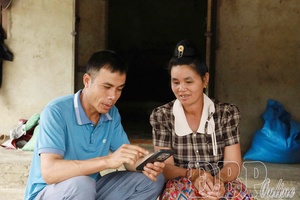
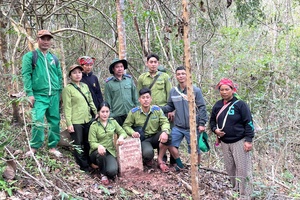
Practical deployment indicates that in many localities, information regarding martyrs and their graves is still preserved within the memories of witnesses and elderly individuals. Therefore, disseminating to help the public understand, reach consensus, and proactively cooperate holds practical meaning in the process of executing tasks. In Mường Pồn commune, coordinating to provide and verify information about martyrs and their graves has received dedicated implementation from the local authority. Upon receiving information provided by residents and witnesses regarding the location of a martyr’s grave in Mường Pồn 1 village, a working delegation organized a field survey.
The survey process was conducted by cross-referencing witness accounts, martyr dossiers, and local verification minutes. Following the surveying, comparison, and verification, the working delegation reached a consensus that the location of the martyr’s grave pointed out by the witness has remained basically unchanged over time. This outcome continues to add valuable grounds to serve verification, perfect dossiers, and deploy subsequent steps along the roadmap to identify martyrs’ remains.
Nguyễn Văn Lương, Chairman of the Mường Pồn commune People’s Committee, stated that upon receiving coordination requests from functional organs, the commune re-evaluated grassroots-level information, met with witnesses, and supported the working delegation during the field survey. Many residents proactively provided details they still remembered regarding grave locations, combat zones, and specific cases of martyrs who sacrificed their lives in the locality. Despite many years having passed, the local people still show high responsibility, desiring to contribute to clarifying information about the martyrs.
Not only in Mường Pồn, but communes and wards hosting martyrs’ cemeteries or possessing details related to martyrs who sacrificed their lives in their localities are also coordinating with functional organs to collect, connect, and process information. Dissemination work is executed through various forms, such as grassroots-level communication, direct exchanges with witnesses, and mobilizing martyrs’ relatives to provide dossiers, documents, keepsakes, and details on military units, times, and locations of sacrifice. Through these efforts, consensus is built step-by-step, maximizing the role of the community in searching for, gathering, and identifying martyrs’ remains.
From information shared by the public and the responsible involvement of grassroots-level authorities to the coordination of specialized agencies, martyr identification work in Điện Biên is gaining extra vital grounds. Every verified piece of information, every supplemented profile, and every closely executed task contributes to better performing gratitude activities, meeting the legitimate aspirations of martyrs’ families, and demonstrating the responsibility of paying tribute to those who sacrificed for the Fatherland.
Tú Trinh

.jpg)
.jpg)
.jpg)
.jpg)
.jpg)
.png)
.jpg)
.jpg)
.jpg)
.jpg)
.jpg)

You have 500/500 characters left
Please enter 5 or more characters!!!