



While many express strong support due to the clear demands for an optimized administrative apparatus and upgraded grassroots-level management efficiency, quite a few residents still hold deep concerns regarding upcoming adjustments affecting community life, long-standing customs, and generation-old cohesion.
.jpg)
Materializing central guidelines, the provincial People’s Committee issued Plan No.4294/KH-UBND regarding the deployment of village and residential group arrangements, alongside the restructuring, utilization, and welfare policies for non-professional staff at commune and village echelons. Currently, the entire province comprises 1,446 units, which include 1,310 villages and hamlets alongside 136 residential groups. According to the Department of Home Affairs, a comprehensive review indicates that only 150 units fully satisfy the household scale criteria, while the rest fall short.
Under the proposed blueprint, 1,052 units are subject to arrangement and merger, whereas 394 units will remain unchanged. Following this integration, the total number of local units will be downscaled to 881, representing a net reduction of 565 units. This massive restructuring will see 2,486 non-professional workers retained in their positions, while 1,753 individuals will be phased out from the grassroots-level apparatus.
To secure robust public consensus, tracking social opinion and the thoughts of the masses has become a top priority for local authorities. The Dissemination, Education, and Mass Mobilization Commission of the provincial Party Committee proactively launched a dedicated tracking plan, demanding all local agencies, units, and municipal authorities to closely monitor the ideological state and mood of both cadres and citizens. This ensures that sensitive issues, anxieties, or conflicting public opinions are detected early and reported to competent authorities for timely, appropriate resolution.
.jpg)
For highland ethnic minorities, a village is far more than just a residential settlement; it represents a deep cultural space intimately tied to community history. Consequently, many residents hope that arrangement plans are evaluated meticulously to guarantee compatibility in culture, ethnicity, and daily living conditions. Travel distance stands out as another crucial concern. Given the rugged terrain and difficult infrastructure in highland areas, excessively far community meeting locations after the merger could heavily hinder public attendance, information access, and general community participation.
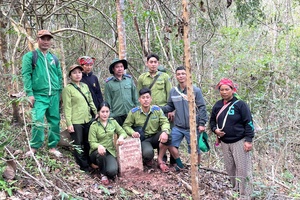
In Na Son commune, discussions regarding the merger of Suối Lư I, II, and III villages have become a common topic among residents. Together, these three units host 245 households and 1,083 residents, all slated to integrate into a single, unified Suối Lư village. While local people fundamentally back the general guidelines of the Party and State, they continue to express concerns, focusing not on name changes or boundary redraws but on the tangible long-term impacts on community dynamics.
To navigate these waters smoothly, grassroots-level authorities recognize that addressing public ideology must happen a step ahead. Rather than simply executing top-down announcements, local governments are actively organizing community feedback forums and direct dialogues to absorb public aspirations. Thanh An commune, which operates 48 villages with nearly 5,200 households, plans to downscale to 22 units. Lò Hải Dung, Secretary of the commune Party Committee, noted that the proposal balances strict legal frameworks with local realities like population size, natural land area, and traffic infrastructure. To foster unity, the commune held extensive feedback sessions where citizens widely approved the plan while contributing valuable suggestions regarding historical names and cultural customs.
.jpg)
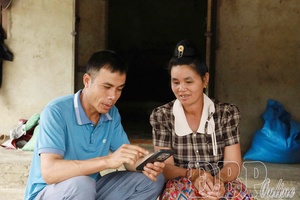
Similarly, the opinion collection process was systematically rolled out in Quảng Lâm commune, yielding high consensus to reduce local units from 19 down to 14. Cứ A Ký, a resident of Nậm Chẩn village, expressed full support for the state policy as his village prepares to merge with Huổi Po village under the unified name of Nậm Chẩn. He explained that the two communities already share strong cultural similarities and maintain close, supportive neighborly ties. Comprehensive explanations by commune cadres helped the villagers realize that this streamlining is necessary for better management and socio-economic development, paving the way for unanimous local agreement.
To maximize public support, the provincial People’s Committee issued an official guiding document on May 28, 2026. The directive explicitly underlines that during the blueprint formulation, special allowances must be made for units with distinct characteristics. These include border zones, areas facing extreme socio-economic difficulties, or locations marked by isolated terrain, scattered populations, and poor transportation infrastructure. When facing distinct differences in habits, ethnic composition, religion, or economic development levels, commune and ward authorities are empowered to propose flexible, custom-tailored arrangements that best safeguard local stability.
According to evaluations by functional organs, public sentiment across the province remains highly stable, with the vast majority of cadres, party members, and citizens firmly backing the restructuring strategy. Early public consultations and transparent town hall meetings have successfully answered local anxieties, generating an excellent foundation of unity. This shared consensus serves as a prerequisite for a smooth transition, honoring central policy directives while preserving the structural stability, solidarity, and distinct cultural heritage of each community.
Thu Phương
.jpg)
.jpg)
.jpg)
.jpg)
.jpg)
.png)
.jpg)
.jpg)
.jpg)
.jpg)
.jpg)
You have 500/500 characters left
Please enter 5 or more characters!!!