



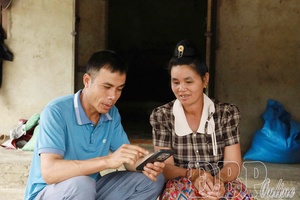
During a mid-May business trip, we had the chance to work in Na Son commune, a locality where some girls become mothers at the age of 14, 15, or 16. Guided by commune leaders, we met V.T.D in Huổi Múa A village. Holding her infant in a small house nestled at the foot of a mountain, D shared that in 2021, while attending the 9th grade, she dropped out of school to get married when both partners were still minors. Giving birth to her first child at 16, she now already has three children. Because of child marriage, her husband and she still have not been able to register their marriage even after three years of living together. Living with her in-laws, the couple is still fully responsible for raising three young children, and with their economy depending entirely on upland farming, life is incredibly difficult and arduous.
.jpg)
In Huổi Vang village, Tìa Dình commune, M.T.D and her husband also decided to quit school and move in together before reaching the legal marriage age. At an age when they cannot even look after themselves, they must worry daily about how to provide enough food and clothes for their child, let alone an education. M.T.D confided that she got married at 16, when her husband was 18. Back then, they did not understand anything and just married out of impulse. Now they have one child, and marrying early has left them with no stable means at all, forcing them to rely strictly on upland farming to scrape by.
At an age when they should still be sitting in school classrooms and carelessly heading to class with friends, many ethnic minority girls in highland areas have to face the overwhelming responsibility of giving birth and caring for a family. Not a few cases fall into tragic circumstances due to a lack of sexual education, a lack of parental care, or becoming victims of early marriages and child marriage in deep and remote regions.
.jpg)
Pregnancy at the age of 16 carries numerous risks for both mother and child because at this age, their bodies have not yet fully developed physically, especially the reproductive system and the pelvic structure. Early pregnancy makes the risk of miscarriage, premature birth, postpartum hemorrhage, or obstetric complications much higher than in adult women.
Nhữ Thị Thùy, an officer at the Mường Ảng Health Center’s Communication and Health Education Office, shared that when girls who are only in the 9th grade enter the hospital to give birth, they are almost entirely exhausted both physically and mentally. Out of fear, some hide their pregnancy from their families until the final months, leading to a critical lack of necessary medical care. Beyond facing pain during childbirth, many teen mothers fall into a state of prolonged psychological crisis. Public pressure, self-pity, and anxieties about the future make them highly susceptible to postpartum depression. Meanwhile, their knowledge of parenting is virtually non-existent, leaving many bewildered by the responsibility of motherhood.
Adding to this concern, Nguyễn Thị Thắm, a population worker at the Na Son commune Health Station, noted that some girls are only 16 years old but already have to stay up all night caring for an infant, while their own mindset remains that of a child.
.jpg)
Early pregnancy forces many girls to drop out of school midway, fracturing their future, limiting employment opportunities, and causing the vicious cycle of poverty to persist. In many rural and mountainous areas of Điện Biên province, child marriage still exists. Some families hold the misconception that when girls grow up, they should marry early to stabilize their lives, even though the girls lack psychological preparation, life skills, or economic security. After giving birth, many depend entirely on their parents or their very young husbands. Material deprivation causes the pressure of food and money to quickly weigh heavily on adolescent couples. Giàng A Xá, from Huổi Va B village, Tìa Dình commune, shared that Huổi Va B sees at least three to four child marriage cases every year. They marry simply because they like each other, then give birth; with a difficult economy, they lack the means for proper care, and poverty naturally envelops these young families.
According to sociologists, adolescent pregnancy is not merely an individual family story but a systemic issue that demands proper attention from the community and functional authorities. Many cases of pregnancy at the age of 16 are linked to a lack of legal understanding, a lack of self-protection skills, or sexual abuse. Therefore, functional organs need to promptly step in to verify and protect the legitimate rights and interests of children in strict accordance with legal regulations.
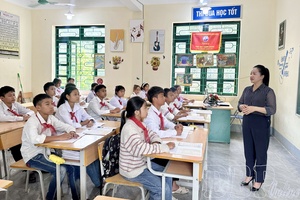
Concurrently, dissemination on adolescent reproductive health needs to be driven more robustly at schools and in deep, remote areas. Equipping youth with sexual education is not a “sensitive” topic to be avoided, but a necessary solution to help them know how to protect themselves. Many teachers in highland schools believe that a segment of students still lacks life skills and remains hesitant to share adolescent physiological and psychological issues with parents and teachers. Meanwhile, social media expands rapidly but lacks proper orientation, making many youths easily susceptible to negative impacts.
.jpg)
What is deeply concerning is that many teen mothers do not just face life pressures but also confront stigma from the community. Some feel so full of self-pity that they do not dare to go out and communicate, or even leave their hometowns to live elsewhere. Psychological experts state that what these girls need most right now is not blame, but sharing and companionship from families, schools, and society. When supported correctly, many can still continue vocational training, find jobs, and stabilize their lives to raise their children better. In Điện Biên, many mass organizations have enhanced communication activities on child marriage prevention, adolescent reproductive health care, and support for young women in difficult circumstances. However, to solve the root of the problem, a synchronous involvement of families, schools, and the entire society is highly required.
If detecting children at risk of abuse, forced marriage, or in need of urgent support, citizens can contact the National Child Protection Hotline at 111 for timely consultation and assistance.
Every child born deserves to grow up in love and under the best conditions. And every child also needs to live true to their childhood, instead of having to grow up too early under burdens that exceed their endurance.
Duy Sinh
.jpg)


.jpg)
.jpg)
.jpg)
.jpg)
.png)
.jpg)
.jpg)
.jpg)
.jpg)
.jpg)
You have 500/500 characters left
Please enter 5 or more characters!!!