



According to health sector statistics, the province recorded 4,529 people getting married in 2025, including 1,162 child marriage individuals, which accounted for 25.7%. Notably, the vast majority of child marriage cases were concentrated within the Mông ethnic community, involving 1,064 individuals and marking the highest volume among all ethnic groups in the area.
During the first three months of 2026, the child marriage situation showed no signs of a sharp decline. The entire province recorded 673 marriage couples, among which 103 couples involved child marriage, making up 32.5% of the total. In terms of individuals, 322 people entered child marriage, making up 24.8% of total married individuals. The subjects of child marriage were predominantly Mông teenagers, with the group aged 14 to 16 accounting for 123 cases or 38.2%, while the remainder fell between 17 and 19 years old..jpg)
Certain localities continue to be classified as hotspots for child marriage. In 2025, Sáng Nhè commune recorded 84 child-married individuals, followed by Sín Chải with 81, Nà Hỳ with 76, while Tủa Chùa and Mường Nhé communes each recorded 64 individuals. During the first three months of 2026, Nà Hỳ commune continued to lead with 30 individuals, while Sín Chải recorded 28, Xa Dung recorded 23, and Sáng Nhè recorded 21 individuals.
In Xa Dung commune, although the child marriage rate has dropped compared to previous periods, it continues to evolve complexly. The villages where child marriage still occurs include Háng Pu Xi, Chua Ta C, Chua Ta B, Cồ Dề, Thẩm Mỹ B, Chua Thò, Tìa Ghếnh, Phà Só A, Háng Chợ, and Háng Sông Dưới.
In Chua Ta B village, Vàng Thị Pà, born in 2011, dropped out of school prematurely to get married when both partners were underage according to legal regulations. This July, Pà will give birth to her first child at the age of only 15. Marrying and giving birth too early caused both of them to disrupt their education, leaving them without a stable occupation and rendering them entirely dependent on their families. Háng Chợ village is another locality recording multiple child marriage cases, with three cases documented since the beginning of the year.
Hờ A Vừ, a population collaborator in Háng Chợ village, stated that the local team has coordinated with village officials, the commune health station, and mass organizations to step up direct dissemination to each household and integrate the content into village meetings. However, the number of new child marriage cases has only decreased to a certain extent rather than being thoroughly eliminated, and the situation still persists in the locality.
Since the beginning of the year, Xa Dung commune has documented 16 child marriage cases, representing an increase of two cases compared to the same period in 2025. Facing this reality, the Xa Dung commune authority has mobilized the involvement of the entire political system.
To mitigate this situation, the commune organized integrated dissemination across 42 villages, attracting 2,470 participant turns. The communication content focused on the Law on Marriage and Family, the harmful consequences of child marriage and consanguineous marriage, adolescent reproductive health care, and children’s rights. Alongside dissemination, the commune also applied strict handling measures against violators, with the Commune People’s Committee issuing administrative fines for 10 cases, totaling VND 23 million.
.jpg)
According to a leader of the Culture and Social Affairs Office, although the awareness of the majority of residents regarding marriage conditions has been upgraded, a portion of the population still desires their children to establish families early to gain extra production labor. Furthermore, many cases are only detected by authorities after the youths have already cohabited as husband and wife or organized traditional weddings, creating significant obstacles for early prevention.
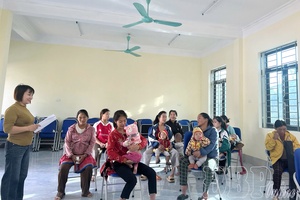
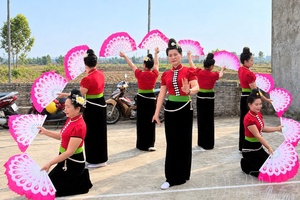
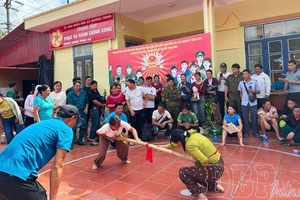
Recently, dissemination work against child marriage has been deployed extensively across the province. The communication contents have been innovated and diversified through the public loudspeaker system, theatricalized performances, integrations in village meetings and party cell activities, school extracurricular events, and mobile dissemination, while maximizing the role of village elders, village heads, and prestigious individuals in the community.
During the first six months of 2026, the health sector coordinated with localities to organize 2,951 dissemination and legal education sessions regarding adolescent reproductive health, attracting over 87,700 participant turns. Concurrently, they conducted 90 community communication and consultation campaigns at health stations and sub-stations, providing information to more than 2,700 people, and broadcasted dissemination contents via the loudspeaker system over 2,300 times.
Nevertheless, reality indicates that child marriage prevention still faces numerous hardships. The extensive territory, dispersed population, and difficult economic lives of the residents create substantial barriers, while hurdles in language, customs, habits, and general awareness mean that changing public perception and behavior requires a long time. Additionally, the administrative fine levels for organizing child marriage are not deterrent enough.
To gradually reduce and move toward ending child marriage, the province will continue to step up legal dissemination and education in the coming time. The forms of communication will be innovated to suit each ethnic group and locality, while adolescent reproductive health consultations will be enhanced. Attention will also be paid to upgrading education quality, maintaining student attendance, and limiting premature dropouts, while maximizing the role of families, schools, mass organizations, village elders, village heads, and prestigious individuals in early detection and prevention of at-risk cases.
Anh Nguyễn
.jpg)
.jpg)
.jpg)
.jpg)


.jpg)
.jpg)
.jpg)
You have 500/500 characters left
Please enter 5 or more characters!!!