



Strict controls in semi-boarding school kitchens
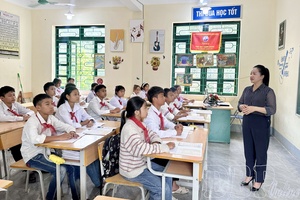
Trần Văn Thọ Primary Ethnic Minority Semi-Boarding School in Mường Nhé commune currently has 348 out of 955 students boarding at the school. Given the nature of centralized student living, the school organizes hundreds of meals every day, placing food safety as the top priority. Right from the supplier selection stage, the school prioritizes food suppliers with clear origins who sign quality assurance commitments. Upon delivery, all food items are inspected and fully recorded in logbooks, and the kitchen area is arranged according to the one-way principle to ensure strict separation between raw and cooked food.
.jpg)
Principal Phạm Văn Khiêm stated: “Ensuring food safety is always identified by the school as a core task because it directly affects students’ health. We exercise tight control from selecting suppliers and receiving food to processing and organizing meals. Food of unknown origin or substandard quality is resolutely rejected.”
Alongside tight controls on input food sources, the school places special emphasis on raising the awareness and responsibility of the staff directly involved in food preparation. Catering staff regularly undergo training on food safety and hygiene knowledge and strictly comply with processing and preservation regulations. The meal menus are designed reasonably, balancing nutrition and matching practical conditions. Thanks to maintaining synchronized solutions, the school has avoided any incidents related to food safety for many years.
At Bản Bua Primary Ethnic Minority Semi-Boarding School in Búng Lao commune, food safety assurance in the semi-boarding kitchen is deployed in tandem with strengthening controls across all stages of meal organization for students. Beyond focusing on input food sources, the school also steps up dissemination and education on food safety and hygiene knowledge, helping students form hygienic and safe eating habits.
.png)
Principal Vũ Thị Thoan noted: “Every year, the school regularly coordinates with the health sector and relevant units to organize food safety dissemination activities for officials, teachers, and students. This contributes to raising awareness in choosing and using safe food, while helping students understand and correctly practice hygiene principles in their daily eating and living activities.”
To ensure food safety combined with improving the quality of school meals, in early 2026, Bản Bua Primary Ethnic Minority Semi-Boarding School collaborated with the Department of Health, the Department of Education and Training, and World Vision International in Vietnam to organize a school nutrition event with the message “Healthy Schools - Bright Future”. Through the program, managers, teachers, and students were updated with knowledge on selecting and preparing safe food, building reasonable and hygienic meals, and balancing essential nutrient groups, associated with forming safe and scientific eating habits.
Strengthening market surveillance and grassroots-level management
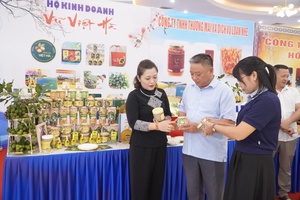
Điện Biên Phủ ward, with its high population density and vibrant food business activities, sets high demands for food safety management. To control this effectively, the ward has coordinated with functional sectors to strengthen inspection and supervision at food production and business establishments, focusing on checking raw material origins and hygienic conditions during processing and preservation. Concurrently, dissemination work has been accelerated to help business households improve their awareness of compliance with regulations, allowing residents to proactively choose safe food.
.png)
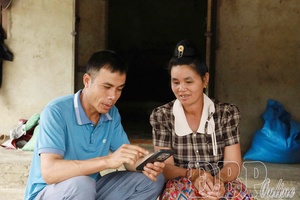
Nguyễn Thị Hồng, a resident of Điện Biên Phủ ward, shared: “Having watched and read many warnings from the media and functional agencies, I now have to be much more careful with eating and drinking. I usually choose familiar vendors, ensuring the food looks fresh, clean, and has a clear origin before buying, no longer daring to be subjective like before.”
Reality shows that to ensure food safety, it is impossible to solely rely on the awareness of an individual or a single unit; instead, the involvement of the entire system is required. Recently, functional agencies across the province have strengthened inspections and supervision of food production, business, and processing establishments, targeting high-risk commodities and small-scale business facilities.
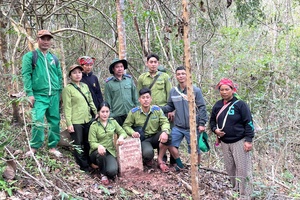
Typically, on February 10, 2026, at Km379+250 in the territory of Quài Tở commune, through patrolling and control, functional forces detected four cases of transporting food and fruits of unknown origin that had not undergone food safety inspection, with a total weight of nearly 1 ton, including pork, duck, duck feet, and various types of fruits.
Prior to that, on January 4, 2026, functional forces discovered a vehicle transporting more than 384kg of fresh and raw food (pig intestines, chicken, duck, goat organs, sausages, unlaid chicken eggs, quail...) of unknown origin hidden inside styrofoam boxes. At the time of inspection, the driver failed to produce documents proving the origin of the goods. The entire volume of violating food was documented for handling by Market Surveillance Team No.2 under the Provincial Market Surveillance Department in accordance with legal regulations.
.png)
According to a report by the Provincial Food Safety and Hygiene Department, in the first quarter of 2026, the entire province established 45 food safety inspection teams, inspecting 910 food production and business establishments, detecting 4 violating facilities, and imposing fines of over VND 7.1 million. The violations mainly related to using expired goods, goods of unknown origin, and failing to ensure proper processing conditions.
Hoàng Xuân Chiến, Head of the Provincial Food Safety and Hygiene Department, emphasized: “Although management work has been strengthened, the risk of food safety violations remains latent, especially at small-scale production and business establishments. Following the implementation of the two-level local government model, officials working on food safety at the commune level mostly hold concurrent positions, so executing tasks at the grassroots level still faces many difficulties and pressures. Therefore, tightening management from input raw materials and the processing stage to final consumption is of great significance, contributing to preventing food poisoning, protecting public health, and building public trust in a safe food market, aiming toward a civilized and sustainable consumer environment.”
Quang Long
.jpg)

.jpg)
.jpg)
.jpg)
.jpg)
.png)
.jpg)
.jpg)
.jpg)
.jpg)
.jpg)

You have 500/500 characters left
Please enter 5 or more characters!!!