



From this reality, enhancing the capacity of grassroots officials and core community forces has been identified by the province as a key solution. The province is focusing on strengthening the capacity of grassroots officials, women’s unions, village elders, village heads, and reputable individuals in order to change awareness at its roots and gradually eliminate long-standing outdated customs within communities.
.png)
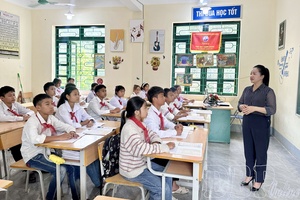
Before reaching the age of 14, V.T.Đ. from Huổi Xuân village, Na Sang commune, dropped out of school to get married. At an age when many of her friends were still attending school, V.T.Đ. had already become occupied with housework and family life. “When I see my friends going to school, I really want to study again, but now I’m already married…,” Đ. shared regretfully.
Đ’s story is not an isolated case. L.T.Y.H. from Pom Ké village, Mường Ảng commune, also got married at just 15 years old. Her school years were cut short as H soon became a wife and mother while still an adolescent herself. “Back then I didn’t think things through carefully. Now seeing my friends continue studying, I really regret it,” H. confided.
.png)
According to statistics from 2015 to the present, the entire province has recorded 41,826 married couples, including 6,176 cases of child marriage, accounting for 14.77%, and 51 cases of consanguineous marriage, accounting for 0.12%. This situation is concentrated mainly among the Mông ethnic group, with common marriage ages ranging from 15-17 for females and 16-19 for males. The consequences of child marriage and consanguineous marriage extend beyond children dropping out of school prematurely. Teenage pregnancy and childbirth increase the risk of child malnutrition, affect maternal health, and lead to numerous issues related to population quality and recurring poverty. Many families who marry early lack knowledge and stable livelihoods, continuing to fall into a vicious cycle of poverty.
In the context of rapid digital technology development, the negative impacts of social media in highland areas have made efforts to prevent child marriage even more complicated. Many teenagers become acquainted and fall in love online, then drop out of school and choose to live together before reaching the legal marriage age. If families and communities loosen supervision, social media can easily become a “catalyst” that makes child marriage more difficult to control.
.png)
Implementing Project 938 on “Communication, education, advocacy, and support for women in addressing certain social issues related to women for the 2017-2027 period,” the Women’s Union of Điện Biên province has organized numerous training courses for officials, members, and participants in the “Trusted address” model in the highland communes of Mường Nhé and Si Pa Phìn.
The training focuses on communication skills to eliminate outdated customs; disseminating legal knowledge on marriage and family; early identification of risks related to domestic violence and gender-based violence; and guiding parents on skills to accompany and protect children both in real life and online. Instead of rigid and dogmatic propaganda methods, the training sessions emphasize practical skills, situation handling, and approaches suited to adolescent psychology.
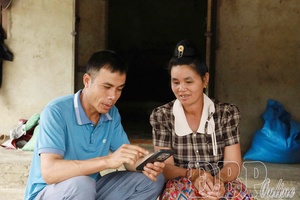
Chớ Thị Mò, Chairwoman of the Women’s Union of Si Pa Phìn commune, stated that through these training courses, grassroots union officials have gained access to many new communication methods closely aligned with the realities of highland life. Strengthening the operation of “Trusted addresses” has helped grassroots support networks operate more effectively, providing timely assistance to women and children at risk of violence or forced early marriage. Through these refresher courses, each core official and union member becomes a communicator within the community, directly mobilizing residents to change awareness, improve responsibility in educating their children, and build safe and progressive family environments.
.jpg)
Alongside the role of women’s unions, the province also focuses on promoting the role of village elders, village heads, and reputable individuals among ethnic minority communities. These are people who are close to local residents, understand customs and traditions, and hold important influence within clans and communities.
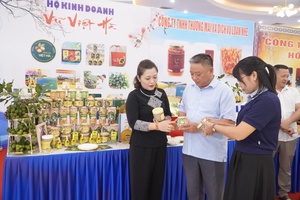
The Department of Culture, Sports and Tourism of Điện Biên province, in coordination with the Department of Ethnic Cultures of Vietnam, organized awareness-raising training on the harmful effects of child marriage and consanguineous marriage for 100 village heads and reputable individuals in areas with high rates of early marriage. During the training, village heads and reputable individuals were provided with knowledge about the consequences of consanguineous marriage as well as communication skills to encourage people to comply with the Law on Marriage and Family. The delivery methods were adjusted to suit different target groups so residents could easily understand, access, and implement the information.
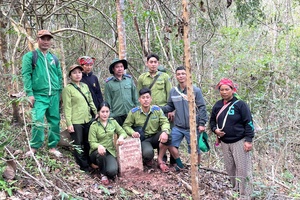
Giàng Seo Tỏa, a village elder of Mường Nhé 2 village, Mường Nhé commune, shared that after hearing analyses and seeing real images of children born with deformities due to consanguineous marriage or childbirth at too young an age, he became much more aware of the harmful consequences of these outdated customs. According to Tỏa, reputable individuals must set examples first by encouraging children to attend school and only marry when reaching legal age, while also incorporating child marriage prevention into village regulations for collective implementation.
.jpg)
However, to thoroughly resolve child marriage and consanguineous marriage, the most important issues are education, livelihoods, and grassroots social management. If students in highland areas continue dropping out of school midway, lacking employment and development opportunities, the risk of recurring child marriage remains very high. Therefore, the education sector must continue maintaining student enrollment, especially for girls in remote and isolated areas, and create conditions for them to pursue long term education. Grassroots authorities need to pay greater attention to livelihood development, job creation, and income improvement for local residents. Judicial, civil status, and grassroots health sectors must closely coordinate in population management, premarital counseling, and timely intervention when signs of early marriage are detected.
At the same time, stricter handling of deliberate violations is needed to increase deterrence. If efforts stop merely at persuasion and reminders while many outdated customs continue to be tolerated, achieving substantial change will be very difficult.
With the coordinated involvement of Party committees, authorities, departments, mass organizations, and especially the core role of village elders, village heads, and reputable individuals, efforts to prevent child marriage and consanguineous marriage in Điện Biên province are gradually achieving positive changes. More importantly, the process of enhancing capacity for grassroots workers is laying the foundation for sustainable changes in community awareness, contributing to improved population quality and the building of a new cultural life in highland areas.
Lan Phương
.jpg)

.jpg)
.jpg)
.jpg)
.jpg)
.png)
.jpg)
.jpg)
.jpg)
.jpg)
.jpg)
You have 500/500 characters left
Please enter 5 or more characters!!!