



In 2025, the child marriage rate province-wide accounted for 31%, dragging along numerous consequences regarding health, education, employment, and quality of life, while directly impacting the future of the younger generation and societal development.
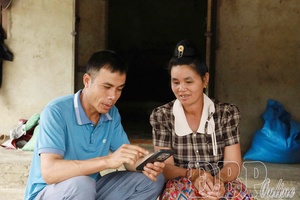
Despite being only 18 years old, T.T.M. in Háng Pu Xi village, Xa Dung commune, is already a mother of two. Establishing a family at the age of 16 when her knowledge of reproductive health care and family building was highly limited, M.’s life took a sharp turn early on. Her husband is even younger, being two years her junior, and also dropped out of school prematurely, leaving both of them lacking a foundation of knowledge and life skills. T.T.M. shared that due to incomplete awareness at that time, she asked her parents for permission to get married. Looking back now, M. cannot help but feel heartbroken as her married life is fraught with hardships, struggling to afford every single meal.
M.’s story is far from isolated. Across numerous high-altitude villages, early marriages still silently take place, leaving behind intense regrets for the insiders themselves. L.T.Y.H. in Pom Ké village, Mường Ảng commune, entered marriage at the age of 15 and became a mother while still a minor.
.jpg)
“Back then, my thinking was immature, and seeing friends around me marrying early, I also asked my parents for permission to take a husband,” L.T.Y.H. confided. “When stepping into married life, everything was completely unfamiliar to me. Looking back now, I feel deeply regretful for not striving to continue my education. Seeing peers of my age being able to attend school makes me truly sad, wishing I had thought things through more maturely.”
According to functional organ statistics, the child marriage status in the area has dropped but remains at a high level. In 2021, among a total of nearly 3,900 marriage couples, there were 1,369 child-married individuals, accounting for 35.7%. By 2025, the entire province recorded 1,162 child-married individuals out of 3,800 marriage couples, standing at 31%.
The causes leading to this situation stem from multiple sides. The vast majority is driven by the persistent influence of traditional customs and habits, uneven public intellectual standards, and the economic hardships confronting a segment of the population. In tandem with these factors, lax intervention and handling by local authorities in certain areas, coupled with a lack of resoluteness in applying sanctions against child marriage cases, have limited the general deterrent efficiency.
Facing this reality, the health sector and commune-level party committees and authorities have enhanced coordination to boost communication and mobilization, aiming to raise awareness and change behavior in marriage. The dissemination content focuses on disseminating the Law on Marriage and Family, regulations on legal marriage registration ages and birth certificates, reproductive health care knowledge, and family planning, while clearly exposing the severe consequences of child marriage. Communication materials and leaflets are distributed directly to each household, contributing to upgrading legal understanding and compliance awareness, while tying the responsibility of each family to the execution of population policies to step-by-step restrain child marriage.
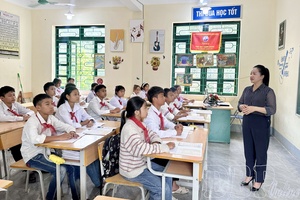
Maximizing the role of the educational system, the Department of Education and Training has directed schools to step up dissemination among students, especially at the junior high and high school levels. Multiple units have flexibly organized extracurricular activities, contests on gender and reproductive health, and theatricalized plays with relatable scripts to help students elevate their awareness and equip themselves with vital skills during adolescence.
Phạm Văn Khiêm, Principal of the Trần Văn Thọ Primary Ethnic Boarding School in Mường Nhé commune, stated: “Annually, the school focuses on deploying dissemination and education regarding adolescent reproductive health and child marriage prevention through flag salutation sessions and extracurricular activities. Through these efforts, we help upgrade awareness, equip students with self-protection skills, and orient them to build appropriate study and personal development plans for their future.”
Child marriage inflicts numerous severe outcomes. First and foremost, it constitutes a legal violation and heavily impairs reproductive health. In the long run, it leads to the degeneration of the genetic lineage, downscaling intelligence indexes, height, and weight, while increasing vulnerability to diseases and post-birth mortality risks, which directly damages general population quality.
Although law dissemination and dissemination to mitigate child marriage have been actively driven by all echelons and sectors, awareness among a segment of the population remains limited. For this reason, the persistent, synchronous, and drastic involvement of all echelons, sectors, and local authorities will generate a widespread impact, altering public mindsets to step-by-step push back child marriage and move toward upgrading population quality.
Quang Long
.jpg)
.jpg)
.jpg)
.jpg)
.jpg)
.png)
.jpg)
.jpg)
.jpg)
.jpg)
.jpg)
You have 500/500 characters left
Please enter 5 or more characters!!!