Concerns over habit of using weedkillers in Pú Nhung

ĐBP - Recently, the use of weedkillers in agricultural production has become a habit for many residents in Pú Nhung commune due to its quickness, saving effort, and labor costs. However, behind this immediate convenience are significant consequences for the environment, human health, and the quality of cultivated soil.

Currently, corn and rice are the key crops attached to the lives and livelihoods of residents in Bon Be village, Pú Nhung commune. Previously, when entering the production season, people often cleared weeds manually on the milpas. As this task required a lot of time and effort, in recent years, villagers have gradually replaced manual weeding with various types of weedkillers. With this method, it takes only a few hours to treat weeds on the milpas instead of spending many days clearing them like before. It is this convenience that makes weedkillers the choice for the majority of households.

Giàng A Súa, Chief of Bon Be village, stated: “Currently, about 90% of households in the village use weedkillers. Previously, weeding took many days, but now it only requires a single morning of spraying for the weeds to wither completely. The chemical helps save labor costs, especially under conditions of production workforce shortages.”

Spraying weedkillers brings quick results in withering and killing weeds, but it comes with long-term consequences.

In Kể Cải village, Pú Nhung commune, along with the crop structure transition process in recent years, the villagers still maintain over 20 ha of corn alongside a number of other crops. To save time and effort, the situation of residents using weedkillers is becoming increasingly common.

According to Kể Cải Village Chief Sùng A Tùng, most residents currently choose weedkillers over manual weeding methods due to the lack of workers and high labor hiring costs.

“Most people now use herbicides. They spray from the land preparation phase until about a month after planting corn. The application period usually starts from March or April and lasts until this very moment,” shared Sùng A Tùng.

What is worrisome is that during application, many residents are subjective and have not fully implemented labor protection measures. Sùng A Tùng added that many people go to spray wearing only regular clothes, without wearing masks or gloves. When facing the wind, the chemical blows onto their bodies and faces, but they keep working, thinking it has no effect. Some feel dizzy or uncomfortable after spraying but just ignore it.

Although the local government and mass organizations have repeatedly propagated the risks of abusing weedkillers, the habit of chemical use continues due to the lack of effective alternative solutions suitable for production conditions.

The abuse of weedkillers not only poses risks to humans but also negatively impacts the ecological environment. Chemical active ingredients remaining in the soil can reduce fertility, destroy many types of beneficial microorganisms, and affect the soil’s natural regenerative capacity. A portion of the chemicals washes down with rainwater into groundwater veins or flows into ponds, lakes, and streams, polluting water sources for daily life and production.

In the long run, degraded cultivated land will lower crop yields, increase production costs, and directly affect residents’ incomes. Meanwhile, the risk of contracting diseases related to the skin, respiratory tract, chemical poisoning, or chronic illnesses also increases with regular exposure to weedkillers without appropriate protective measures.

Facing this situation, the Pú Nhung commune government has intensified dissemination, mobilizing residents to change their awareness and production habits to step-by-step limit the use of weedkillers.

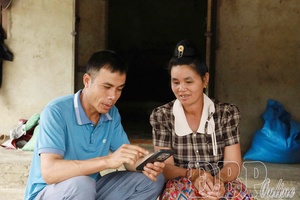
Pú Nhung commune steps up propaganda, encouraging residents to use manual weeding measures and limit the use of weedkillers.

Nguyễn Văn Bách, Chairman of the Pú Nhung commune People’s Committee, affirmed: “We regularly propagate at village meetings and agricultural production training classes so that residents clearly understand the harmful effects of abusing weedkillers or using them incorrectly. Concurrently, we mobilize people to switch to handheld lawnmowers or manual weeding measures combined with biological methods to protect human health and the production environment.”

Alongside raising awareness for residents, the locality coordinates with functional sectors to step up inspections of agricultural supply businesses in the area, promptly detecting and handling cases of trading plant protection chemicals of unknown origin or substandard quality.

The use of weedkillers can bring quick results and help reduce labor in the short term. However, if abused or used incorrectly, immediate benefits must be traded for long-term consequences regarding human health, the environment, and the sustainable development of agriculture. To limit this situation, synchronized involvement from the local government, specialized agencies, and the residents themselves is required. Immediate convenience cannot be the reason to trade off the living environment and public health. Changing cultivation habits today is exactly how we protect the future of each family and generations to come.

Phạm Quang
Comment

You have 500/500 characters left

Please enter 5 or more characters!!!

Recent news

  • 'Điện Biên: Where heritage, hospitality, and opportunity converge

    Điện Biên: Where heritage, hospitality, and opportunity converge

    TRAVEL -
    ĐBP - In the context of deeper integration and development, building and promoting the image of Điện Biên as a friendly province rich in cultural identity and development potential has become an important mission to attract tourists and investors while creating momentum for sustainable growth.
  • 'Bright spot of education in border area

    Bright spot of education in border area

    SOCIAL AFFAIRS -
    ĐBP - Boosting the studying and following of Hồ Chí Minh’s ideology, ethics, and style, over the past years, Thanh Yên No.1 Kindergarten has always effectively implemented campaigns and emulation movements, doing well in the care, nourishment, and education of children.
  • 'Empowering community-based tourism

    Empowering community-based tourism

    TRAVEL -
    ĐBP - Điện Biên possesses great potential to develop community-based tourism, with the expectation of creating new livelihoods for local people. However, for a long time, most models have operated independently, lacking connectivity and failing to fully exploit existing advantages. To overcome this reality, the province has deployed multiple synchronized solutions to “empower” this type of tourism to develop sustainably and professionally.
  • 'Inheriting and promoting signature culture-tourism “brand”

    Inheriting and promoting signature culture-tourism “brand”

    CULTURE - SPORTS -
    ĐBP - Following the official operation of the two-level local government model, alongside stabilizing their organizational apparatus, many communes and wards across the province have rapidly focused on maintaining and promoting traditional cultural values and signature tourism products. The proactivity of these localities has made an important contribution to preserving cultural identity as well as continuing to assert the culture-tourism “brand”, creating a driving force to promote sustainable development in the new phase.
  • 'New rhythm of life by Mã River

    New rhythm of life by Mã River

    SOCIAL AFFAIRS -
    ĐBP - On a June morning, gentle golden sunlight blankets the mountain slopes along the Mã River. The river still flows quietly amidst the mountains and forests, reflecting villages that are innovating day by day. Nearly a year after the historic flood, the scars of natural disaster in Mường Luân are gradually fading, making way for the green of fields, orchards, and spacious houses.
  • 'Roads awaken potential

    Roads awaken potential

    ECONOMY -
    ĐBP - Identifying transportation as a lever to promote socio-economic development, over the past years, Mường Ảng commune has concentrated resources on investing in transport infrastructure to effectively leverage existing potentials and advantages.
  • 'Concerns over habit of using weedkillers in Pú Nhung

    Concerns over habit of using weedkillers in Pú Nhung

    SOCIAL AFFAIRS -
    ĐBP - Recently, the use of weedkillers in agricultural production has become a habit for many residents in Pú Nhung commune due to its quickness, saving effort, and labor costs. However, behind this immediate convenience are significant consequences for the environment, human health, and the quality of cultivated soil.
  • 'Forming habit of saving electricity

    Forming habit of saving electricity

    ECONOMY -
    ĐBP - Unplugging electrical appliances after use, regularly inspecting and replacing substandard devices to limit power loss... have become a habit for many households. Small changes in daily activities are contributing to shaping a thrifty lifestyle and more efficient electricity consumption.
  • 'A season of dedication and sharing

    A season of dedication and sharing

    SOCIAL AFFAIRS -
    ĐBP - From remote highland villages still facing many hardships, to rice fields entering harvest season, and rural roads blooming with colorful flowers, wherever people are in need, the blue shirts of volunteers are present. In the summer of 2026, the youth of Điện Biên continue to write beautiful stories through practical and meaningful actions. Every structure built, every family assisted, and every road cleaned carries the enthusiasm, responsibility, and spirit of sharing that young people devote to their community.
  • 'Peace by banks of Đà River

    Peace by banks of Đà River

    TRAVEL -
    ĐBP - Amidst the majestic mountainous scenery, the Dao ethnic villages in Tủa Thàng commune nestle by the peaceful Đà River.
  • 'Điện Biên youths active in “Exam Season Support” campaign

    Điện Biên youths active in “Exam Season Support” campaign

    SOCIAL AFFAIRS -
    ĐBP - The 2026 High School Graduation Exam has entered its final testing day, closing the 12-year academic journey of the candidates. Throughout the exam period, at various exam locations across Điện Biên province, the blue color of volunteer youths’s shirts has constantly accompanied the candidates with many practical support activities, fueling them with motivation to confidently complete this important exam.