



Grassroots-level healthcare is the tier closest to the people, undertaking tasks of primary healthcare, universal health management, disease prevention and control, and the deployment of numerous national health programs. The workload is growing continuously, while the working conditions and income of grassroots-level health cadres still face many difficulties. Therefore, the Government’s issuance of Decree No.192/2026/NĐ-CP is viewed as timely encouragement for the workforce that clings to the grassroots day and night.
The Decree regulates several special allowance regimes in the medical field for on-duty shifts, surgeries, medical procedures, and epidemic prevention, alongside monthly support levels for village, hamlet, and residential group health workers and village midwives. The applicable subjects include public officials and workers employed at public medical facilities, commune and ward medical stations, special zones, and military-civilian medical stations. According to the new regulation, health cadres on 24-hour duty on a working day at a commune- or ward-level medical station are entitled to an allowance level of VND 185,000 per person per shift.
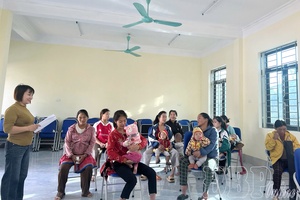
At the Thanh Nưa commune Medical Station, the team of doctors and medical staff executes numerous daily tasks ranging from medical examination and treatment, immunization, and public health management to disease prevention and health education communication. Operating uniquely at the medical tier closest to the people, the grassroots health echelons and staff expect that the new policies will generate additional momentum to continue upgrading the quality of public healthcare.
.jpg)
Phạm Bá Đạt, Head of the Thanh Nưa commune Medical Station, shared: “Adjusting on-duty allowances helps medical cadres alleviate difficulties during prolonged duty shifts, creating the motivation to feel secure in their work. I also hope there will be additional mechanisms to attract and retain high-quality human resources for long-term work at the grassroots tier. Once the workforce is stable, medical stations will execute universal health management and local patient care more effectively, contributing to reducing the load on higher tiers.”
In Thanh Yên commune, the Medical Station manages a vast area with nearly 3,900 households and over 15,000 people. The unit has 19 doctors and medical staff working across one main station and two station points. The locality still faces many difficulties, with an unevenly distributed population and an increasing demand for medical examination, treatment, and healthcare.
Lò Thị Thắm, Head of the Thanh Yên commune Medical Station, shared: “The new policy serves as highly timely encouragement for the grassroots medical workforce. We expect that adjusting on-duty allowances will contribute to creating more motivation for medical cadres to feel secure in their work, upgrading the quality of examination, treatment, and primary healthcare for the public. This also establishes a foundation to attract and retain the medical workforce to attach themselves long-term to the grassroots tier.”
For cadres directly engaged in professional work, the new policy brings trust and encouragement after many years of commitment to the profession. Having worked for over 10 years at the Thanh Yên commune Medical Station, assistant doctor Trần Đức Nguyên regularly travels over 15km every day to his workplace. He noted that adjusting on-duty allowances helps them feel more secure in executing their tasks and creates conditions to concentrate on elevating professional quality to serve patients better.
Alongside the medical staff at commune and ward medical stations, Decree 192 also pays attention to the workforce of village health workers, residential group health workers, and village midwives. These are individuals who are frequently present within the community, capturing the health status of local residents, disseminating disease prevention, and coordinating with medical stations to handle outbreaks when diseases occur.
According to the Decree, village health workers, residential group health workers, and village midwives employed in villages hosting 350 households or more, villages under communes in difficult zones as regulated by the Government, or residential groups and neighborhoods hosting 500 households or more are entitled to a support level equal to 0.7 times the base salary. The remaining areas are entitled to a support level equal to 0.5 times the base salary.
Thanh Yên commune currently logs 7 out of 20 villages with health workers, encompassing Púng Bon, Chiềng Đông, Phượn, Huổi Moi, Nà Ngum, Pa Bói, and Xa Cuông. Vì Văn Thanh, a health worker in Nà Ngum village, regularly visits each household to disseminate disease prevention and control, provide guidance on environmental sanitation, distribute medicines, and monitor residents’ health.
Vì Văn Thanh stated: “Working as a village health worker is primarily driven by a sense of responsibility toward the community. There are days when I have to visit many households across long distances, but I still strive to complete the tasks. The new support level stands as immense encouragement for us to continue remaining close to our designated areas and coordinating with medical stations to care for our people’s health.”
The adjustments to the regimes in Decree No.192/2026/NĐ-CP accurately answer the long-held aspirations of the grassroots medical workforce after years of service. The new policy demonstrates the care of the Party and State for the frontline healthcare workforce. As the grassroots medical team is infused with additional motivation, the public will benefit from increasingly quality medical services right in their localities, contributing to constructing a robust grassroots healthcare system that meets public health demands in the new situation.
Thùy Trang
.jpg)


.jpg)
.jpg)
.jpg)

.jpg)
.jpg)
.jpg)
You have 500/500 characters left
Please enter 5 or more characters!!!