Highland Dishes for Chilly Days

ĐBP - The unique living environment and climate of the highlands have shaped the distinct customs of the Mông people, one of which is the way they prepare dishes suited to their surroundings and weather.

The Mông people live in villages scattered across the slopes of hills and mountains. Due to the high altitude, the climate remains cool, with mornings and evenings often turning chilly, particularly during the rainy days of autumn’s arrival and throughout September.

Within the Mông community, women wear vibrant clothing in warm tones like red and yellow, adding a sense of warmth and helping to withstand the harshness of the mountainous climate. With villages often isolated and necessities requiring a long journey to purchase, the Mông people have developed unique ways to store and prepare food that warms the soul and preserves heat. Among these is “chopped chicken stewed with ginger,” a signature dish that is ever-present on the dining table during chilly days.

The preparation of this ginger chicken stew is simple yet distinctive. The chicken is cleaned and chopped into small pieces, but what sets this dish apart is the use of fresh ginger as the main spice. The ginger is finely chopped, its juice squeezed out, and used at a ratio of about a quarter to the amount of chicken. The stew is then simmered, seasoned, and cooked to taste.

The stew is usually made with plenty of water, creating a broth that carries the fresh sweetness of the chicken and the warm, subtle heat of the ginger (with the juice already extracted to temper its spiciness). This dish not only warms the body but also boosts resilience against the cold as the seasons change, making it a treasured recipe of the Mông people.

Visiting the highlands at the start of autumn, you’ll feel the warmth of the steaming ginger chicken stew in your hands, breathe in the rich and fresh aroma, and take in the sight of low-roofed houses nestled against mountainsides, cradling a sea of clouds. All of this creates a distinctive sense of the primal yet harmonious way of life of the Mông people, deeply rooted in simplicity and unity with nature.

The Mông villages in the early days of autumn are shrouded in mist, with a chill in the air.

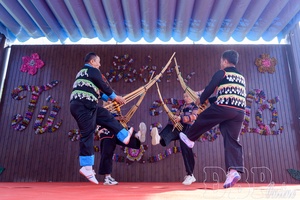
To adapt to the highland climate, Mông women often wear clothing in warm, vibrant colours.

Accompanying this are signature dishes that reflect adaptation and harmony with the highland climate. In the photo: Ingredients for the Mông people's ginger chicken stew in Tủa Chùa district.

The preparation is very simple: just clean the chicken and chop it into small pieces.

Fresh ginger, one of the warming spices for chilly weather, is finely chopped and squeezed to reduce its spiciness.

After preparation, the ingredients are stewed, and seasonings are adjusted to taste.

This is one way in which the Mông people retain warmth, strengthen their immunity, and endure the seasonal chill. 


Trần Nhâm
Comment

You have 500/500 characters left

Please enter 5 or more characters!!!

Recent news

  • 'Điện Biên approves investments totaling VND 7,500 billion

    Điện Biên approves investments totaling VND 7,500 billion

    ECONOMY -
    ĐBP - Marking a fresh stride in regional economic connectivity and cooperation, the 2026 International Investment Promotion Conference between Điện Biên province (Vietnam), Luang Prabang province (Laos), and Yunnan province (China) - held on the morning of October 19 at the Event Center of Mường Thanh Grand Điện Biên Phủ Hotel (Điện Biên Phủ ward), Điện Biên province - opened up opportunities for cooperation and accelerated the harnessing of each locality’s potentials and strengths. At the conference, Điện Biên province presented 20 Investor Approval Decisions with a total investment capital of approximately VND 7,500 billion.
  • 'Expanding markets through international trade fair

    Expanding markets through international trade fair

    ECONOMY -
    ĐBP - Featuring a scale of 230 booths from more than 120 domestic and foreign entities, enterprises, and cooperatives, the 2026 Điện Biên International Trade Fair creates opportunities to promote products, connect supply and demand, and seek partners.
  • 'Digital skills reach Westernmost frontier

    Digital skills reach Westernmost frontier

    SOCIAL AFFAIRS -
    ĐBP - Across villages in the westernmost reaches of the fatherland, digital transformation is progressively taking root in the lives of ethnic minorities. Digital platforms are opening up opportunities to access knowledge, promote the homeland’s image, and develop the economy.
  • '2026 Điện Biên International Trade Fair kicked off

    2026 Điện Biên International Trade Fair kicked off

    ECONOMY -
    ĐBP - On the evening of October 17, at 7/5 Square, the Điện Biên Provincial People’s Committee coordinated with the Việt Nam Trade Promotion Agency under the Ministry of Industry and Trade to organize the opening ceremony of the 2026 Điện Biên International Trade Fair under the theme “Điện Biên - A Trade Bridge, Reaching Out to the World.”
  • 'From tradition to prosperity: Harnessing Điện Biên’s cultural wealth

    From tradition to prosperity: Harnessing Điện Biên’s cultural wealth

    CULTURE - SPORTS -
    ĐBP - The cultural heritage of ethnic groups and traditional crafts can help people improve their livelihoods and build prosperity when their values are harnessed and promoted through appropriate approaches. Each locality has its own way of doing this, but the key is to preserve traditional culture while changing mindsets and developing the local economy.
  • 'Changing habits regarding street food consumption

    Changing habits regarding street food consumption

    SOCIAL AFFAIRS -
    ĐBP - Fast, convenient, and affordable prices are the reasons street food is increasingly chosen by many people. From snacks sold outside school gates and roadside stalls to ready-to-eat food counters at markets, buyers can easily find items suited to their taste. However, behind that convenience lie potential risks to food hygiene and safety.
  • 'Guarding Điện Biên’s forests and biodiversity

    Guarding Điện Biên’s forests and biodiversity

    ECONOMY -
    ĐBP - Điện Biên province currently has more than 434,647 hectares of forest, with a forest coverage rate of 45.85%. Facing pressure from illegal deforestation, the risk of forest fires and threats to biodiversity, the province is implementing coordinated measures, expanding the use of technology and promoting community involvement in forest management and protection.
  • 'Applying biotechnology in agricultural production

    Applying biotechnology in agricultural production

    ECONOMY -
    ĐBP - Applying biotechnology is opening up new avenues in agricultural production, helping enhance crop productivity and product quality while mitigating environmental impacts. From models demonstrating initial effectiveness, replicating solutions tailored to practical conditions will create momentum to propel production toward a safe, modern, and sustainable trajectory, elevating agricultural product value and local incomes.
  • 'Effectively implementing inspection and supervision, preventing violations early and from afar

    Effectively implementing inspection and supervision, preventing violations early and from afar

    NEWS - POLITICS -
    ĐBP - Inspection and supervision constitute an essential leadership function of the Party, in which regular supervision serves as a crucial modality directly aiding Party committees, Party organizations, and inspection commissions at all levels in overseeing compliance with the Party Charter, Party resolutions and directives, and State policies and laws; promptly identifying and warning against limitations, shortcomings, and violations right from their inception; while concurrently discovering innovative, exemplary, breakthrough, and highly effective factors for replication.
  • 'Breaking the cycle of child marriage in Si Pa Phìn

    Breaking the cycle of child marriage in Si Pa Phìn

    SOCIAL AFFAIRS -
    ĐBP - Si Pa Phìn commune is stepping up efforts to prevent child marriage through direct outreach in villages, individual counseling for at-risk cases, and closer coordination among local authorities, families, schools and healthcare services. From raising awareness to encouraging families to pledge not to allow their children to marry before reaching the legal age, the commune is gradually improving early detection and timely intervention to reduce underage marriages.