



Grasping the green tourism trend, where experiential tourism is increasingly popular, many households in the province have boldly invested in fruit tree models such as strawberries and grapes. At the same time, opening gardens to welcome visitors to visit and experience fruit picking on the spot instead of just focusing on production and consumption of agricultural products according to traditional methods. Reality shows that the agricultural model combined with experiential tourism brings many practical benefits: both promoting local agricultural products, reducing transportation and intermediary consumption costs, helping people be more proactive about prices, and increasing income.
At Phăng 2 village, Mường Phăng commune, Lường Văn Thành’s family is one of the pioneering households investing in planting strawberries and grapes associated with welcoming tourists to visit and experience. From a pure agricultural production model, Thành’s family garden has now become a familiar destination for many tourists, especially during the ripe fruit season. He said that associating production with experiential activities helps agricultural output be more stable, selling prices are raised, thereby contributing to improving income for the family.
Parallel with experiential agricultural models, building and developing community tourism based on exploiting natural landscapes and indigenous culture is also becoming a new direction in economic development at Huổi Nhả village, Mường Pồn commune.
.jpg)
Huổi Nhả village currently has 34 households with 217 people, 100% being Hmong ethnic people. Before deploying experiential tourism activities, the economic life of people in the village was still difficult. Average income per capita reached about VND 12 - 18 million/person/year, mainly relying on agricultural production such as upland rice, corn, and cassava; small-scale livestock farming; some households had additional income from seasonal labor. Infrastructure was still limited, phone signal was intermittent, and accessing information and learning experience in the context of digital transformation encountered many obstacles.
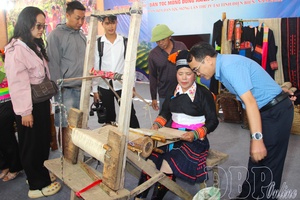
Since Huổi Nhả village deployed community tourism, welcoming guests to visit and experience, the livelihood picture of the people has gradually flourished. Tourism opens up a new economic development direction, helping people no longer depend completely on traditional agricultural production. Currently, 100% of households in the village participate directly in tourism activities at different levels, from running homestays, welcoming staying guests, organizing meals, to selling agricultural products and handicraft products right at the village, organizing fishing experiences in streams. Tourism is no longer an activity of just a few households but has become the common livelihood of the whole community.
Lầu A Khai, Head of Huổi Nhả village, Mường Pồn commune, shared that the village started developing community tourism in 2021. After meeting and discussing, households agreed to contribute labor and wealth to build a common tourism model. In the beginning, the village used money paid for forest environmental services as a common fund to renovate the landscape, build rest huts, arrange stones to create photo spots along the stream, and organize a fair market meeting every Saturday with nearly 10 stalls. The consensus of the people has step-by-step formed a point serving the dining, sightseeing, experiencing, and entertainment needs of tourists. Currently, on average each month, Huổi Nhả village welcomes about 10 tourist groups, each group from 5 to 60 people. Previously, people mainly did farming, income was precarious. Since having community tourism, people have more jobs and more income. More importantly, the awareness of preserving houses, village hygiene, and cultural identity to welcome guests has been markedly raised.
Nguyễn Ngọc Tuấn, Deputy Head of the Culture - Social Affairs Division of Mường Pồn commune, said that community tourism and experiential tourism are identified as directions suitable for local practical conditions. Developing tourism aims not only to increase income but also contribute to preserving and promoting national cultural identity, raising awareness and the spirit of responsibility of people in building the village. Accompanying people of Huổi Nhả village, the commune organized many training courses on guest reception skills, communication, and civilized behavior; guiding housing renovation into homestays associated with preserving traditional architecture; and equipping skills to introduce the village’s culture, customs, and practices to tourists.
Reality from the agricultural model combined with experiential tourism in Mường Phăng commune and community tourism in Huổi Nhả village, Mường Pồn commune shows that this is a suitable direction for highland people. Tourism creates more livelihoods, increases income for people, contributing to preserving cultural identity and protecting the environment.
Thùy Trang
.jpg)
.jpg)
.jpg)
.jpg)
.jpg)
.jpg)

.jpg)
.jpg)
You have 500/500 characters left
Please enter 5 or more characters!!!