



Accordingly, besides performing the function of expanded vaccination for children and target groups according to regulations, and first aid for common accidents and injuries, commune and ward health stations are also assigned 22 task groups covering many important fields of grassroots health. Specifically, these tasks include disease prevention, vaccination, and epidemic control; examination and treatment of common diseases; management of chronic diseases; maternal and child health care, reproductive health; population and family planning; social protection, and support for vulnerable groups and mental disorders.
Circular No.43/2025/TT-BYT also stipulates that commune and ward health stations have a director and deputy directors appointed by the chairman of the commune-level People’s Committee. The station has at least 5 rooms/departments including Administration - General Affairs; Population, Children, and Social Protection; Disease Prevention - Food Safety; Medical Examination and Treatment; Pharmacy - Equipment along with satellite station points to be closer to the people.
With the new organizational model, apparatus, and management mechanism, commune and ward health stations have their legal position and role in the grassroots health system improved; being more proactive in deciding and organizing the implementation of assigned tasks. At the same time, increasing the ability to attract and retain doctors to work in difficult areas through specific regulations on responsibilities, powers, job positions, as well as the roadmap for rotation, training, and fostering of human resources.
.jpg)
In Điện Biên province, after implementing the 2-tier local government model, 129 health stations have been merged into 45 stations and 84 station points. New regulations on the functions of commune health stations are expected to create favorable conditions for people to access health services right at the grassroots level.
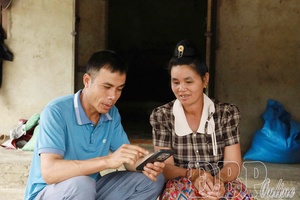
Mạ Phu Chừ, Lỳ Mà Tá village, Sín Thầu commune shared: “My house is far from the medical center, traveling in the rainy season is very difficult. If Sín Thầu Commune Health Station also provides medical examination and treatment, we will be less likely to have to go far, which is very hard.”
Not only in border highland communes, but people in communes of the basin area also have high expectations for changes when the commune health station has its functions expanded according to new regulations.
Lò Thị Yên, Tông Khao village, Thanh Nưa commune, said: “Previously, every time I went to the station, I was mainly only measured for blood pressure and monitored for some initial health indices, but when suffering from common diseases, I still had to go to the upper level for examination and treatment. I really hope that in the near future, the Commune Health Station can examine and treat common diseases and monitor treatment right at the locality so that people do not have to go far, especially the elderly or when the weather is unfavorable.”
Implementing Circular No.43, Điện Biên province proactively builds plans, roadmaps, and synchronous implementation schemes, focusing on reviewing and rearranging the health station network, investing in and upgrading facilities and equipment, while arranging, training, and supplementing human resources suitable for new functions and tasks.
Phạm Giang Nam, Director of the Department of Health, said: “The Department of Health expects to hand over the status quo of facilities including land, medical equipment of the health station, and medical equipment serving preventive work (test kits, disinfection sprayers...) of the health center to the commune and ward People’s Committee for management and use.” Preventive health personnel at health centers will transfer to health stations of communes and wards.
The Department of Health has issued and implemented Plan No.366/KH-SYT dated December 2, 2025, on “Rotation of officers for a limited time to provide professional support at health stations of communes and wards in Điện Biên province.” Phase 1 from December 15, 2025, sent 108 health workers at hospitals, provincial specialized centers, and health centers down to health stations of communes and wards to improve the quality of preventive health work, medical examination and treatment, and executive management at commune health stations in the province, better meeting the people’s primary healthcare needs. This involves transferring professional techniques (diagnosis, treatment of common diseases, procedures) and on-site training to improve skills for commune health station staff, as well as the ability to independently resolve disease cases.
With the proactive and synchronous preparation of the provincial Health sector, from January 1, 2026, the implementation of Circular No.43 is expected to create clear changes in the operations of commune and ward health stations, helping people access fuller medical services right at the grassroots, especially in remote, isolated, and border areas. Thereby, contributing to narrowing the gap in access to health services between regions, ensuring timely and continuous health care for the people. This is also an important foundation to build a strong grassroots health system, meeting the requirements of protecting and improving community health in the new period.
Nhật Oanh


.jpg)


.jpg)
.jpg)
.jpg)
.png)
.jpg)
.jpg)
.jpg)
.jpg)
.jpg)
.jpg)
You have 500/500 characters left
Please enter 5 or more characters!!!