



After the mergers, many new communes were formed by consolidating two to five former communes, resulting in large administrative areas with scattered populations. This has significantly increased the distance from remote villages to the new commune centers. Some villages that were previously just 2-3 kilometers from the old commune headquarters now face journeys of more than 10 additional kilometers. In the dry season, long distances are already a challenge; during the rainy season, deteriorating dirt and gravel roads become muddy and slippery, making travel even more arduous.
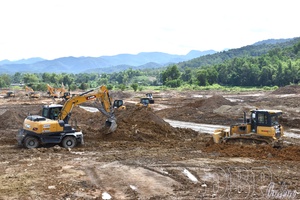
During the 2020-2025 term, Điện Biên province identified transport infrastructure investment as a strategic breakthrough. Over the period, the province allocated 20.8% of its local budget and 43.5% of central government funding to transport infrastructure. By the end of 2025, the province had a total of 903.03 kilometers of roads, including six national highways stretching 593.79 kilometers and 12 provincial roads totaling 309.24 kilometers. Compared with 2020, the length of asphalt, cement concrete, and bitumen-surfaced roads increased by 891 kilometers, and all communes now have road access to their centers.
In 2021, the provincial People’s Committee approved a project to upgrade the route connecting the town - Sính Phình – Tả Phìn, in the former Tủa Chùa district (now the communes of Tủa Chùa and Sính Phình). The 27.6-kilometer road was built to class V mountain road standards, with a total investment of VND 183 billion. Completed and put into operation by the end of 2024, the project has helped complete the province’s grassroots transport network as planned, meeting residents’ travel and trade needs while creating new momentum for local socio-economic development.
.jpg)
According to Vũ Ngọc Nam, Head of the Economic Office of Sính Phình commune, the route is a vital artery and the “backbone” of the locality. “After the administrative reorganization, the new Sính Phình commune was established through the merger of three communes, with a large area and significant development potential. Upgrading this road has strengthened connectivity between the commune center and highland villages of the former Tả Phìn commune, while opening up new development space and laying the foundation for sustainable growth”, he said.
Previously, the family of Giàng A Kỷ, from Tà Dê village, lived about two kilometers from the center of the former Tả Phìn commune. After the establishment of the new Sính Phình commune, the distance to the commune center increased by 10 kilometers, making every trip to handle administrative matters exhausting.
“Before the upgrade, travel on this road was extremely difficult, dusty in the dry season and muddy and slippery during the rains”, Kỷ recalled. “Now the road is smoothly asphalted, many curves have been widened, and traffic signs are fully installed. Travel is safer and more convenient, and it’s much easier to transport and sell agricultural products.”
Despite these improvements, grassroots transport infrastructure across the province remains inconsistent and has yet to meet development needs in the wake of administrative restructuring. Newly merged communes cover larger areas, while limited transport infrastructure continues to pose challenges for residents and affects the effectiveness of local governance. Officials face difficulties traveling to villages to grasp local conditions, disseminate policies, and provide guidance on production. Geographic distance combined with poor road conditions also risks delaying access to information and new policies for some remote highland residents, widening development gaps even within the same commune and undermining local socio-economic development goals.
Highland communities in Điện Biên are calling for early, synchronized investment in inter-village and inter-commune roads. For residents, each concrete road not only ensures safer and more convenient travel but also opens up opportunities for trade, production, and improved living standards. At voter meetings and government - citizen dialogues, most public opinions have urged greater investment in infrastructure in disadvantaged areas, especially road networks. Many households are willing to donate land and contribute labor to work alongside the State in building roads.
In practice, this underscores the urgent need to review and adjust grassroots transport planning to align with post-merger commune boundaries. Alongside investment in key transport corridors, prioritizing resources for roads connecting remote villages to new commune centers must be a central task, ensuring equitable access to public services and expanding economic opportunities. Beyond budgetary funding, the effective integration of resources from national programs is crucial to completing transport infrastructure. At the same time, the role of communities should be strengthened, encouraging residents to participate in investment, management, and protection of transport works.
According to Bùi Văn Luyện, Director of the Department of Construction, during the 2026-2030 period, Điện Biên province will identify transport as a breakthrough sector, focusing on developing a synchronized and modern socio-economic infrastructure system. On that basis, the department will advise the provincial People’s Committee on the coordinated implementation of transport infrastructure investment solutions to drive sustainable local socio-economic development.
As roads are opened and improved, geographic distances shrink, and so do gaps in access to policies and services. Smooth transport links will provide a solid foundation for newly established communes to develop in a stable and sustainable manner, in line with the spirit and objectives of administrative reorganization.
Phạm Trung

.jpg)
.jpg)

.jpg)
.jpg)
.jpg)
.jpg)


.jpg)
.jpg)
.jpg)
You have 500/500 characters left
Please enter 5 or more characters!!!