



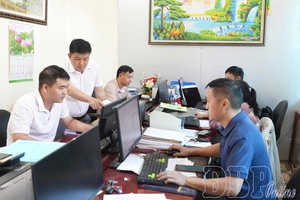
Under the province’s specialized support initiative, the Office of the National Assembly Delegation and the provincial People’s Council was tasked with aiding this specific area. Rather than generic charity, the unit developed a plan tailored to the actual needs of the people, ranging from building houses for the poor to providing livestock breeds and essential civil works.
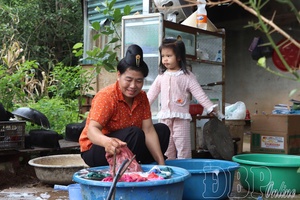
These interventions proved vital for families like that of Tòng Thị Xúng in bản Lĩnh, whose home and livelihood were devastated by the floods of July 2024. With nearly VND 7 billion mobilized since 2021, the office has managed to eliminate temporary housing and provide food security, but the true value lies in the strengthened bond between provincial officials and the highland residents.
.jpg)
The impact of this policy is equally visible in Sáng Nhè and Tủa Chùa. The Điện Biên Power Company (PC Điện Biên) took on the responsibility of accompanying these two communes, focusing on practical infrastructure that directly affects daily life. Since 2021, the company has distributed nearly 1,000 gift sets and hundreds of warm blankets and books to students. However, their most visible contribution is “The Brighten Rural Roads” project, which installed solar-powered streetlights and replaced wiring for poor households. According to Phạm Quốc Đạt, Chairman of the Tủa Chùa commune People’s Committee, this partnership has done more than just provide material aid; it has instilled a renewed sense of confidence in the community to pursue economic development.
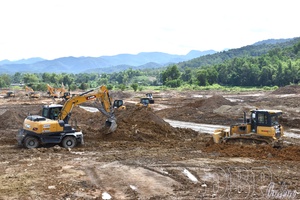
This province-wide effort was formalized under Decision No.2072/QĐ-UBND, which assigned specific tasks to various departments and businesses for the 2021-2025 period. This directed approach ensured that agencies like the Department of Construction could focus on Na Sang and Huổi Lèng, where they introduced innovative unburnt brick press technology. By teaching locals how to produce their own building materials, the department empowered the commune to proactively address the issue of dilapidated housing and local infrastructure.
Across the province, the scale of this mobilization is significant. As of mid-2025, assigned units had conducted 244 working visits to 95 different communes, mobilizing a total resource pool of over VND 69.8 billion. This funding has built boarding kitchens for kindergartens like Pú Hồng, community houses in Quài Nưa, and clean water systems in Si Pa Phìn. The armed forces have played a pivotal role as well, with the Border Guard providing “Border Shelters,” the Military Command building community centers, and the provincial Police donating computers and bicycles to schools.
By focusing on livelihood support, such as technical training and providing high-quality crop varieties, provincial units are helping residents move away from outdated habits and toward modern, sustainable production. While the road ahead remains long, the success of this collaborative model proves that when the entire political system joins hands, highland villages can truly begin to thrive.
Ngọc Huyền
.jpg)
.jpg)
.jpg)
.jpg)
.jpg)
.jpg)
.jpg)
.jpg)
You have 500/500 characters left
Please enter 5 or more characters!!!