



Organized by the Điện Biên provincial Council for Legal Education Coordination, the event attracted over 16,300 participants and registered a staggering 62,847 entries. This marks the highest participation rate for an online legal contest among adults in the province’s history, effectively turning legal awareness into a widespread community activity.
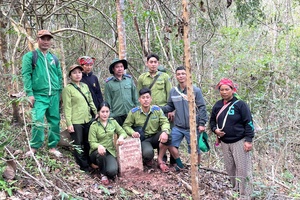
Participants like Nguyễn Đình Cương, a forest ranger in remote Mường Nhé commune, were among the first to sign up. Working in a border region where socio-economic conditions can be difficult, Cương understood that legal outreach is vital for the people he serves.
By navigating the contest’s questions, he was able to systematically review key provisions of the 2013 Constitution and the 2015 Election Law, both recently updated in 2025. These digital challenges provided him with a clearer framework of his civic responsibilities, which he now uses to better guide the residents in his mountainous jurisdiction.
.jpg)
The contest was hosted throughout February 2026 on the official website of the Department of Justice. Each entry consisted of ten multiple-choice questions focusing on the latest constitutional amendments and the 2025 Law on Local Government Organization. By using an online format, the province bypassed the logistical hurdles of traditional training, allowing civil servants and citizens to participate via smartphones or computers at their own convenience. This transition to “digital-first” education has been highly praised by officials like Đỗ Xuân Toán, Deputy Director of the Department of Justice, as a way to modernize provincial dissemination method.
The success of the initiative was largely due to the “all-hands-on-deck” approach from local authorities. Information was disseminated through web portals, village loudspeakers, and even integrated into neighborhood meetings. In some areas, staff were even stationed at public administration centers to help elderly residents navigate the online platform. This localized effort paid off, with Điện Biên Phủ ward securing the collective First Prize.
The data shows a serious commitment from the public: More than 1,100 entries achieved a perfect score of 10/10, with high performance clusters found in Chiềng Sinh, Sín Thầu, and Thanh Nưa communes. Ultimately, the contest did more than just teach the law; it fostered a proactive spirit of citizenship that carried directly into the polling areas.
Minh Thảo

.jpg)



.jpg)
.jpg)
.jpg)
.jpg)
.png)
.jpg)
.jpg)
.jpg)
.jpg)
.jpg)

You have 500/500 characters left
Please enter 5 or more characters!!!