



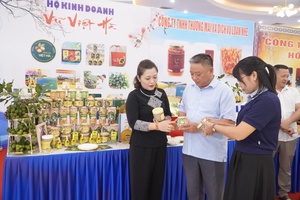
The 2026 Action Month for Food Safety, themed “Ensuring food safety and preventing food poisoning in catering services and street food,” was carried out province-wide from April 15 to May 15. Immediately after its launch, provincial departments, sectors, and local authorities implemented a wide range of communication activities. Across the province, 207 awareness sessions and workshops were organized with more than 2,500 participants. Local authorities also broadcast 553 news reports and public announcements through radio systems and displayed 165 banners and slogans promoting food safety awareness.
.jpg)
In addition, digital platforms such as Facebook fanpages, YouTube, and TikTok channels operated by local media agencies were effectively utilized with content in Vietnamese, Thai, and Hmong languages.
Hoàng Xuân Chiến, Head of the provincial Food Safety and Hygiene Sub-Department, said: “This year, communication efforts have been significantly renewed to make them more accessible, practical, and suitable for mountainous areas. Besides traditional methods such as official documents and loudspeaker systems, authorities and localities also took advantage of social media and short videos in ethnic minority languages to raise awareness among residents. As a result, compliance with food safety regulations among producers and business households has improved noticeably.”
During the campaign month, the province established 46 inter-agency inspection teams, which inspected 821 food production, business, and catering establishments. Of these, 817 facilities met food safety requirements, accounting for more than 99 percent. Only four establishments were found in violation and subjected to administrative penalties totaling VND 4.6 million.
Most violations involved trading goods of unclear origin and food handlers failing to wear proper protective clothing as required. Although the number of violations was relatively small, strict enforcement helped strengthen deterrence and improve legal compliance among business operators.
.jpg)
Lò Văn Quân, a grocery shop owner in Đỉnh Đèo village, Mường Pồn commune, shared: “Previously, many households were still careless about food preservation and did not pay much attention to product origins. After receiving guidance and awareness training from health officials and market management officers, we now better understand our responsibility toward consumers’ health. Personally, I have become more proactive in sourcing products with proper invoices and maintaining cleaner food storage conditions.”
Alongside inter-agency inspections, market surveillance forces also intensified specialized inspections of food products circulating in the market. From April 15 to May 15, authorities investigated 19 cases and handled 7 violations, imposing administrative fines totaling VND 47 million while ordering the destruction of numerous food products of unknown origin.
According to Nguyễn Gia Tuấn, Vice Chairman of the People’s Committee of Mường Pồn commune, one encouraging outcome of the campaign was that many businesses had become more proactive in complying with regulations on product origin, storage conditions, and hygiene standards in food preparation areas.
“In the past, the public sale of food products with unclear origins was still quite common. Now, many business households are more conscious about keeping invoices and documentation. Consumers have also begun paying closer attention to product origins when purchasing food,” Tuấn said.
During the peak campaign period, the province conducted 179 rapid food safety tests for indicators including methanol, borax, artificial coloring, pesticide residues, and salbutamol. All tested samples met safety standards, with no positive results detected.
.jpg)
Notably, throughout the entire implementation period of the 2026 Action Month for Food Safety, no food poisoning cases or food-related deaths were recorded across the province. These results reflect the effectiveness of coordinated prevention, inspection, and awareness efforts carried out from the provincial to grassroots levels.
However, despite these achievements, ensuring food safety in Điện Biên still faces numerous challenges. The province’s large geographical area and difficult transportation conditions, combined with the predominance of small scale and seasonal food businesses, continue to complicate management efforts. In addition, most commune-level officials work in multiple roles, while the rapid growth of e-commerce has made controlling food origins even more difficult.
To address these challenges and sustain the campaign’s effectiveness beyond the action month, authorities and local governments will need to further strengthen the role of grassroots administrations, enhance the accountability of local leaders, improve inter-agency coordination, and continue promoting public awareness in order to foster long term habits of safe food consumption among residents.
Although the 2026 Action Month for Food Safety has officially concluded, the campaign achieved more than just short term communication and inspection goals. It created meaningful changes in public awareness and collective action toward food safety issues.
The strong involvement of authorities, the proactive efforts of functional forces, and improved compliance among businesses and residents have all contributed to building a safer food environment, protecting public health, and laying a stronger foundation for sustainable socio-economic development.
Phạm Quang

.jpg)


.jpg)
.jpg)
.jpg)
.jpg)
.png)
.jpg)
.jpg)
.jpg)
.jpg)
.jpg)

You have 500/500 characters left
Please enter 5 or more characters!!!