



However, given the conditions of rugged mountainous terrain with many rivers, streams, ponds, and lakes harboring potential safety risks, especially drowning accidents, managing students during the summer is not only a regular task but has become an urgent requirement, demanding the synchronous involvement of families, schools, and the whole society.
Reality shows that the risk of injury accidents for children in the province remains high. According to statistics from the provincial Center for Disease Control, since 2025, 26 cases of drowning have been recorded, the majority of which involve children. These telling numbers are not only a warning but also pose a requirement to further tighten the management, education, and protection of students during the summer break - a time when they have a lot of free time but lack regular supervision.
.jpg)
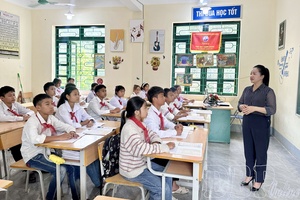
Facing that reality, the education sector has proactively deployed many practical solutions. Right at the end of the school year, educational institutions organize the handover of students to their families and local authorities for management. This is a clear transfer of responsibility, aiming to avoid shifting the entire burden to the school once students are on summer vacation. Along with that, establishing hotlines and providing rescue and emergency phone numbers for students and parents is a timely solution, helping to quickly handle possible emergency situations.
Not stopping there, the education sector coordinates with socio-political organizations to step up propaganda and education on life skills, disease prevention, abuse, and school violence. In particular, drowning prevention work is identified as a key focus, with the organization of safe swimming classes and equipping children with self-protection skills. This is the right direction, because life skills cannot be formed overnight but need to be practiced regularly and continuously.
However, managing students during the summer cannot rely solely on the efforts of the education sector. The role of the family is a key factor. Parents need to clearly realize that summer vacation does not mean loosening the management of their children. On the contrary, this is a time that requires strengthening attention, supervision, and orientation for children to participate in healthy activities, staying away from potential risks. Proactively registering children in aptitude, life skills, foreign language, and sports classes... not only helps them develop comprehensively but also creates a safe living environment.
In addition, local authorities and mass organizations need to promote their roles in creating rewarding playgrounds for youth and children. Organizing cultural, sports, and summer activities; investing in facilities for clubs; expanding community living spaces... will contribute to attracting students’ participation, limiting spontaneous gatherings that harbor potential safety risks. Specifically, the policy of encouraging schools to open playgrounds and libraries during the summer is a practical solution, effectively utilizing available facilities to serve the community.
.jpg)
Every year, the Ministry of Education and Training and local authorities provide specific directives to strengthen student management during the summer. However, the problem does not lie in a lack of policies, but in the implementation stage. If there is a lack of close coordination between the parties, or if subjective and negligent mentalities still exist, the proposed solutions will hardly be as effective as expected.
It is affirmed that managing students during the summer is a comprehensive task, not belonging to anyone alone. It is the responsibility of the family to care for and educate their children; the school to orient and equip them with skills; and the government and society to create a safe and healthy environment. Every link is important; lacking one of the three will reduce the overall effectiveness.
A safe and rewarding summer for students is not just a wish but needs to be realized through specific actions. When each family raises awareness, each school proactively coordinates, and each locality actively gets involved, the heartbreaking numbers of injury accidents and drownings will step by step be reduced. That is the true measure of the effectiveness of student management during the summer - a task that is not new, but always “hot” and cannot be taken lightly.
Tùng Lĩnh
.jpg)



.jpg)
.jpg)
.jpg)
.jpg)
.png)
.jpg)
.jpg)
.jpg)
.jpg)
.jpg)

You have 500/500 characters left
Please enter 5 or more characters!!!