



These organizational and school-model changes present new requirements for school governance, teaching and learning, while also raising expectations for comprehensive improvements in education quality across the province.
Streamlining the system while maintaining schooling
According to the Department of Education and Training, in the 2026-2027 academic year, Điện Biên has 194 public preschool, general education and continuing education institutions, with more than 7,200 classes and over 206,000 students and learners. This is the first year Điện Biên has operated its reorganized school network, reducing the number of schools from 466 to 194, a decrease of 58.4%. The reorganization focuses on streamlining management units while largely maintaining existing learning locations, teaching staff, class numbers and student enrollment. The restructuring was completed before August 30, ensuring that teaching and learning were not disrupted and that the implementation of relevant policies and benefits was not affected.
In Mường Ảng commune, 11 public preschools, primary schools and lower secondary schools have been reorganized into three schools, comprising three main school sites and eight satellite campuses. Nguyễn Đức Quang, Vice Chairman of the Mường Ảng commune People’s Committee, said that in preparation for the new academic year, commune leaders inspected all 11 facilities, while communicating the reorganization policy, listening to the views and sentiments of officials and teachers, and reviewing facilities, personnel, enrollment and other conditions for the new academic year. School administrators, teachers and staff have expressed strong support for the reorganization policy of the Party Central Committee, the province and the local authorities.
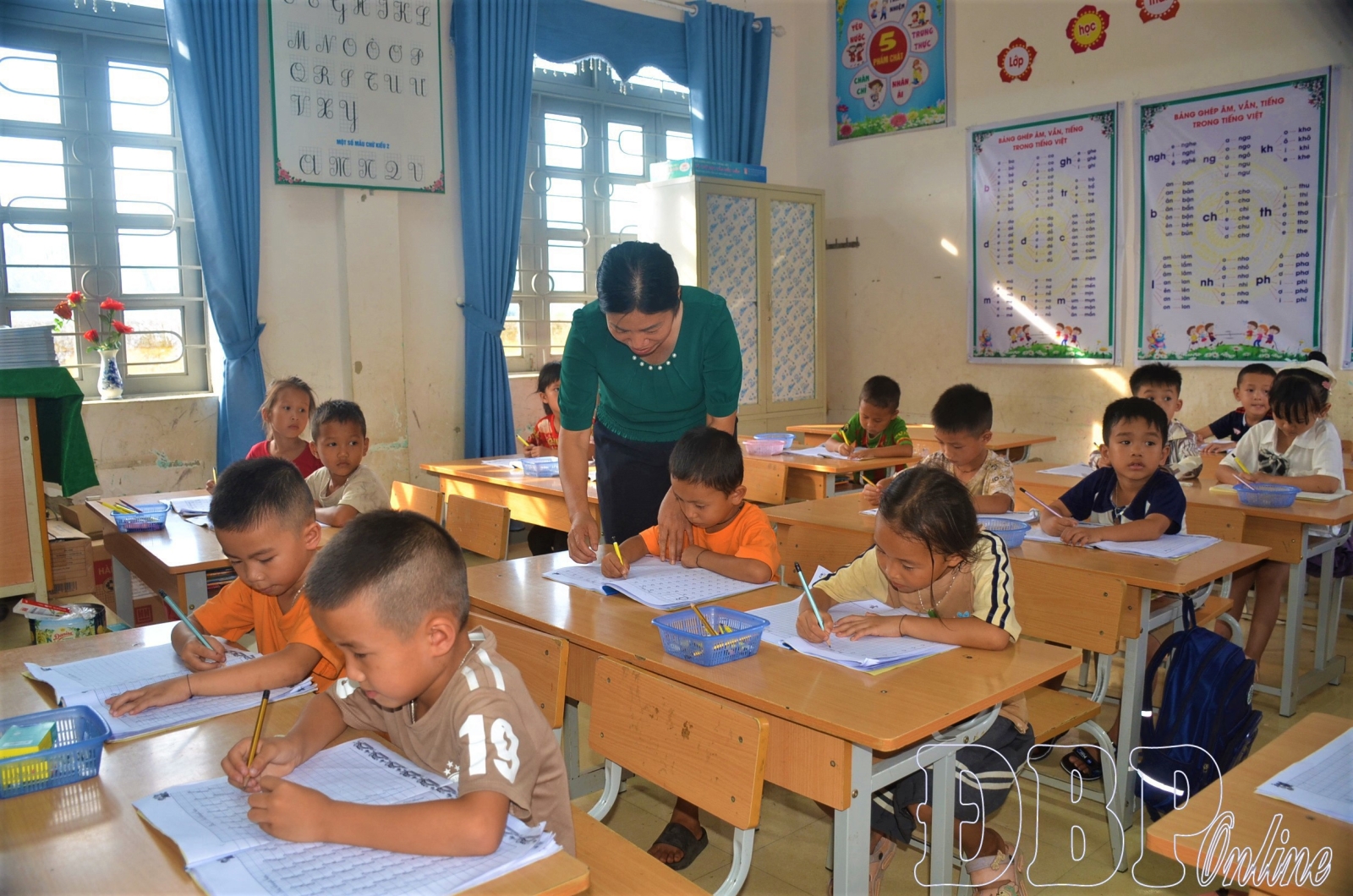
At Hua Nguống Primary School Campus, under Mường Ảng Primary School, the transition to the new model has been carried out promptly. Teacher Ngô Trọng Định, Vice Principal of Mường Ảng Primary School, said: “Since early August, when the reorganization policy was introduced, the campus has conducted an inventory and review of assets, handed over facilities, finances, equipment and teaching materials, while also carrying out student enrollment, encouraging children to attend school, and providing enhanced Vietnamese language instruction for first-grade students, in preparation for the new academic year.”
This academic year, the campus has eliminated two village-based school sites and brought first-grade students together for centralized learning, increasing the number of boarding students to 150. Three staff housing rooms have been converted into boarding rooms to meet students’ accommodation and dining needs. “Although the schools have been merged, teaching and learning as well as boarding arrangements for students have continued as planned without interruption,” teacher Ngô Trọng Định affirmed.
Investing in education in border areas
A major highlight of Điện Biên’s education sector in the 2026-2027 academic year is the opening of nine combined primary and lower secondary boarding schools in border communes. The schools were officially inaugurated simultaneously on the morning of September 5, as part of the nationwide opening ceremony for the new academic year. More than 9,100 students will study and live in these new, spacious and modern schools.
This academic year, Núa Ngam Primary and Lower Secondary Boarding School in Núa Ngam commune has 29 classes with 1,010 students, including nearly 700 boarding students and more than 300 semi-boarding students. Immediately after the school was established, its administrators and teachers focused on completing enrollment, cleaning the campus, improving the surroundings, reviewing facilities, and preparing accommodation, meals, learning spaces and other conditions for students.
Principal Phạm Trung Thành said that this is the first year the school is accommodating such a large number of boarding and semi-boarding students. Teachers have therefore been assigned to monitor each student’s circumstances and coordinate with parents to review textbooks, notebooks and learning materials so that appropriate support can be provided, helping students settle in from the beginning of the academic year.
This academic year, students in border areas will continue to benefit from support policies following the entry into force of Decree No. 188/2026/ND-CP dated May 27, 2026, stipulating policies for students at boarding schools in mainland border communes, effective from July 15, 2026. In Điện Biên, approximately 10,148 students are expected to benefit from the policy, with funding estimated at VND 51.85 billion for 2026 and VND 106.39 billion in the 2027 budget estimate. In addition, Decree No. 339/2025/ND-CP provides lunch support for 19,491 primary and lower secondary students in border communes, with funding of approximately VND 75.78 billion.
The new schools and support policies will create better conditions for students, particularly those in mountainous and border areas, to attend school with greater peace of mind. From organizational changes and improved facilities to greater care for students, the Điện Biên education and training sector expects to achieve significant progress in the 2026-2027 academic year.
According to Hoàng Tuyết Ban, Director of the Department of Education and Training, the sector expects three major improvements this academic year. First, governance will be streamlined, resources will be concentrated, administrative units reduced, and more personnel will be assigned directly to classrooms. Second, learning, dining and accommodation conditions for students in border areas will be improved. Third, education quality will be enhanced through initiatives to make English a second language in schools, develop nationally accredited schools, and promote AI literacy.
As of now, all conditions for the 2026-2027 academic year have been completed, and the reorganized network of schools and classes is ready to operate. With proactive preparations in terms of facilities, personnel and teaching arrangements, the Điện Biên education and training sector is confident in entering the new academic year and striving to achieve further positive results.
Nguyễn Hiền












You have 500/500 characters left
Please enter 5 or more characters!!!