



Vast headroom, establishing the baseline
During the 2026-2030 period, the province identifies restructuring the agricultural sector toward green, smart orientations, heightening production value, and progressively shifting from an agricultural production mindset to an agricultural economic mindset. To realize that objective, the challenge lies not only in expanding raw material zone acreages, but also in reorganizing production, elevating the deep-processing ratio, building brands, applying science and technology, and expanding consumer markets.
With over 950,000ha of natural land area - of which more than 90% is agricultural and forestry land - Điện Biên is evaluated as a locality retaining substantial headroom to develop commercial, green, and sustainable agriculture. Comparative advantages in land, climate, and topography create favorable conditions for the province to form concentrated production zones, developing distinctive products capable of competing in the market.
Following years of agricultural restructuring, numerous concentrated production zones have progressively emerged. Through the end of September 2026, the entire province recorded over 10,000ha of high-quality rice, more than 20,800ha of coffee, over 19,400ha of macadamia, and nearly 5,000ha of assorted fruit trees. Điện Biên ranks second nationwide in macadamia acreage and third in Arabica coffee acreage, following Lâm Đồng and Sơn La. Currently, the province has established 2 geographical indications alongside 9 collective and certification trademarks, contributing to elevating the value and competitiveness of local agricultural commodities.
Lê Xuân Cảnh, Director of the Department of Agriculture and Environment, stated: “Điện Biên still retains approximately 300,000ha of open land alongside substantial acreages of rice, corn, and cassava cultivation that can be converted to crops of higher economic value. This represents vast headroom for the locality to continue expanding raw material zones, yet also demands selecting suitable crops, organizing systematic production, and guaranteeing long-term efficiency. If acreage is simply increased without linkages, processing, and off-take markets, land advantages can hardly translate into economic value. In reality, the province’s production scale remains small and fragmented, value-chain linkages are not yet genuinely durable, the deep-processing ratio remains low, and the number of enterprises investing in agriculture is limited. The system of planting area codes, origin traceability, and export-serving infrastructure is still in its nascent stages. Meanwhile, market requirements are growing increasingly rigorous, especially regarding food safety criteria, provenance, emission reductions, and environmentally friendly production. Therefore, transitioning to green agriculture is becoming an imperative for Điện Biên farm produce to venture further.”
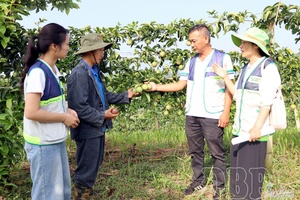
The entire province currently possesses 19.75ha under organic production and 33.05ha of cultivation granted valid VietGAP certifications. Specialized agencies maintain management, monitoring, and guidance across 16 growing zones for flagship crops such as macadamia, coffee, and fruit trees. For instance, Thảo Nguyên High-Quality Agricultural Products Cooperative in Mường Thanh ward organizes production along organic lines across an area of nearly 2ha with approximately 1,000 Shine Muscat grapevines cultivated under VietGAP standards. Cara Farm Việt Nam Co., Ltd. also applies technical advances to build a model for propagating, planting, and intensively farming sweet oranges and green-skinned pomelos in Mường Thanh ward, targeting superior yields and quality.
Technology clears the path, markets generate momentum
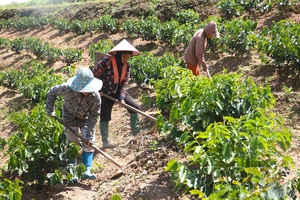
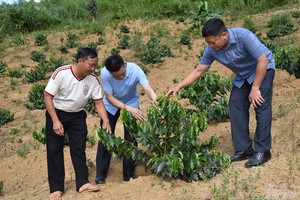
Among flagship commodity sectors, Arabica coffee is evaluated by many experts as one of the products capable of generating breakthroughs for Điện Biên agriculture. By September 2026, provincial coffee acreage reached 20,800ha and will continue expanding in the coming time. Opportunities for Điện Biên coffee stem directly from inherent soil and climate advantages, matching consumption trends and rising market standards. Alongside coffee, macadamia is also progressively affirming its standing as a flagship crop, aiming to generate more sustainable economic value.
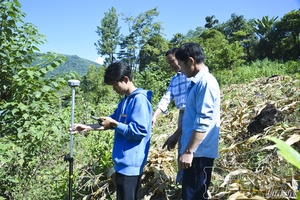
To enhance production efficiency across mountainous, complex topographies, Điện Biên has begun introducing new technologies into agriculture. In July 2026, the provincial People’s Committee issued a controlled regulatory testing sandbox plan to develop the low-altitude airspace economy utilizing unmanned aerial vehicles (UAVs). The province plans to deploy between 3 and 5 specialized UAV application models across agriculture, logistics, healthcare, and digital cartography, encompassing approximately 6,000 flights. To date, specialized agencies and enterprises have conducted field surveys, identifying 8 locations ready for trial deployment, including the Tả Phìn - Ta Pao tea zone in Sính Phình commune; the Mường Thanh valley field area; and the communes of Thanh Nưa, Tuần Giáo, and Mường Ảng.
Selected to pilot the UAV agricultural sandbox, Mường Ảng commune currently possesses approximately 2,100ha of coffee, of which around 1,600ha are under commercial harvest. With mountainous terrain and extensive production acreage situated on steep slopes, UAVs are anticipated to support growing-zone surveillance, growth assessment, precision chemical spraying, and the transport of inputs and harvested produce. Real-world testing revealed that foliar fertilizer spraying on 1ha of coffee reduced operational duration from around 4 hours to approximately 10 minutes per hectare, with fertilizer distribution productivity reaching 40 to 64ha per day. These initial results unlock potentials to apply technology to alleviate manual labor, save time, and heighten production efficiency across arduous farming terrains.
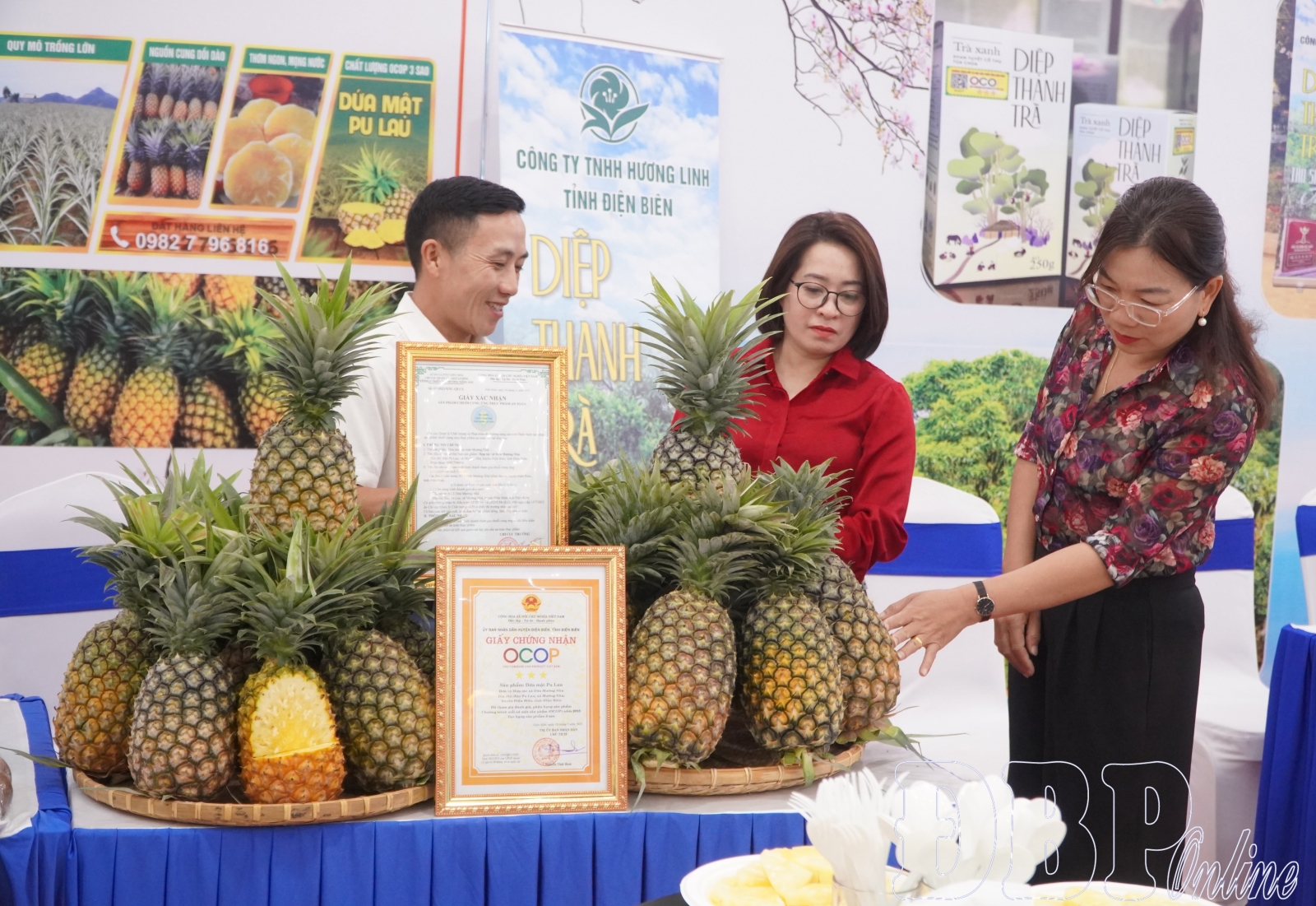
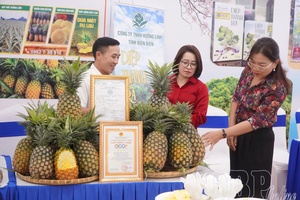
Alongside technology, consumer markets are serving as the driving engine accelerating product standardization. Recently, 400kg of Điện Biên plain-dried macadamia kernels were showcased and promoted on Việt Nam Airlines flights. The product achieved 3-star OCOP certification and was verified under a safe food supply chain. Appearing on a promotional and distribution channel with stringent requirements regarding quality, food safety, and origin traceability not only carries promotional significance, but demonstrates that standardization requirements are becoming increasingly vital for local farm produce.
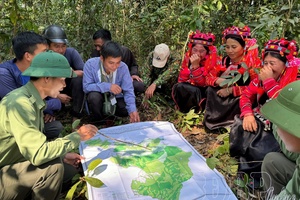
To venture further, Điện Biên must continue perfecting raw material zone planning; investing in deep processing; driving linkages among enterprises, cooperatives, and farmers; accelerating science and technology adoption and digital transformation; and building synchronized origin traceability systems. Developing OCOP products, organic agriculture, and circular farming tied to experiential tourism will thereby elevate agricultural produce value and create additional livelihoods for local people.
Đức Kiên



You have 500/500 characters left
Please enter 5 or more characters!!!